

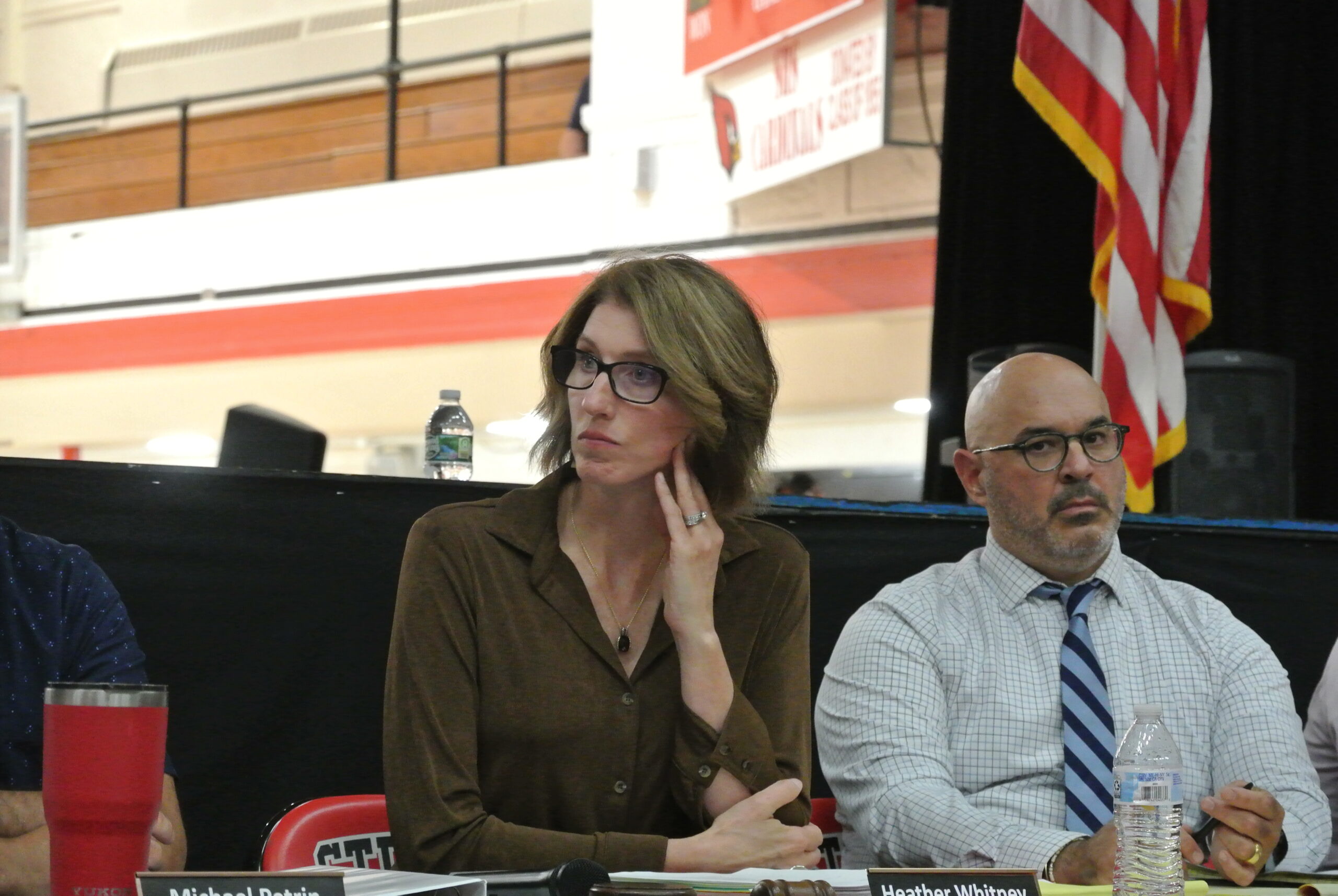
Claremont’s multi-million dollar school deficit crisis requires a criminal investigation, School Board Chair Heather Whitney told NHJournal.
“I personally believe the magnitude of our situation warrants an investigation,” Whitney said.
Whitney spoke to NHJournal on Sunday about the likely origins of the budget gap and the painful way forward for Claremont’s schools. Whitney said a thorough, forensic examination of the district’s financial records by law enforcement is necessary, if for no other reason than to rule out criminal activity.
While there’s not yet any evidence pointing to an intentional, criminal scheme behind the missing millions, Whitney wants the New Hampshire Attorney General’s Office to get involved. She hopes that the crisis started due to errors and carelessness by district administrators, rather than malfeasance, but she wants to be sure.
“It’s difficult to reconcile how errors and oversights can explain this,” Whitney said.

Claremont discovered this summer that the district is at least $5 million behind on critical bills, including employee health insurance, school food service, and $1.2 million in state retirement plan payments. Since news of the situation became public, the board has worked to find the total dollar amount and the reasons behind the gap. At the same time, Claremont has made painful staffing cuts to save millions in order to keep the schools open for the academic year.
But Whitney said the work to uncover the total deficit won’t be done for a few more weeks. In the meantime, the board knows enough that it has been forced to make decisive and difficult cuts, like 19 new teachers and 20 non-teaching staff.
“When we say we don’t know and can’t provide clarity, that’s the God’s honest truth,” she said. “We know how big this [tsunami] is, we just don’t know how many gallons.”
Superintendent Chris Pratt and Business Manager Mary Henry are still both on paid administrative leave. Interim Business Manager Matthew Angell has said he believes he will know more about the financial picture by the end of September.
Following a public hearing on Wednesday, the district officially approved a Reimbursement Anticipation Note (RAN), described by some officials as a “payday loan.”
It will allow the district to bridge the current cash-flow gap to cover immediate operational needs like payroll and benefits, until state funding arrives.
The loan was taken from Claremont Savings Bank against monies to be collected by the district in the April disbursement of the education adequacy aid grant. Notably, the loan will not reduce the existing budget deficit.
The roots of Claremont’s school funding crisis may go back to at least 2016, the last year the district completed an on-time financial audit, according to information released last week. Whitney was new to the board in 2019 when then-Superintendent Michael Tempesta discovered the district was at least three years behind on the annual audits, she said.
A key moment in the crisis appears to be in 2023, when district officials like Henry mismanaged the federal grants programs supplying millions in funds for the annual budget. Those likely errors were complicated by the previous administration’s mistakes in 2021 and 2022 when district officials falsely believed there were surpluses and returned about $2 million in total to the taxpayers.
Those fiscal missteps occurred during the COVID-19 pandemic, and while the SAU 6 offices were undergoing a major renovation, Whitney said. Many critical financial records were physically misplaced as they were not digital and still kept on paper, she said.
Going forward, the board will now require annual audits to be completed and presented to the public by the auditor, not a school district employee, so that the results cannot be misconstrued, she said. She also wants all documentation and reports on the federal grant programs to go to the board, and not just the administrators, as had been the practice.
“We were following previous practices of the board, and not what we now know are best practices,” she said.
Claremont will now have to rethink its entire educational system, she said. In a way, the financial crisis frees the board to do difficult things that it previously could not. For instance, Whitney said the political will did not exist to consolidate Claremont’s three elementary schools before the crisis, even though that is an obvious and, ultimately, necessary move.
The crisis also means Claremont schools can jettison educational programs that do nothing to help students learn. For too long, the district has been hamstrung by the current social-emotional educational theories instead of focusing on providing the best education for all students, she said.
“Now we can tear things down and start from the beginning,” Whitney said.