

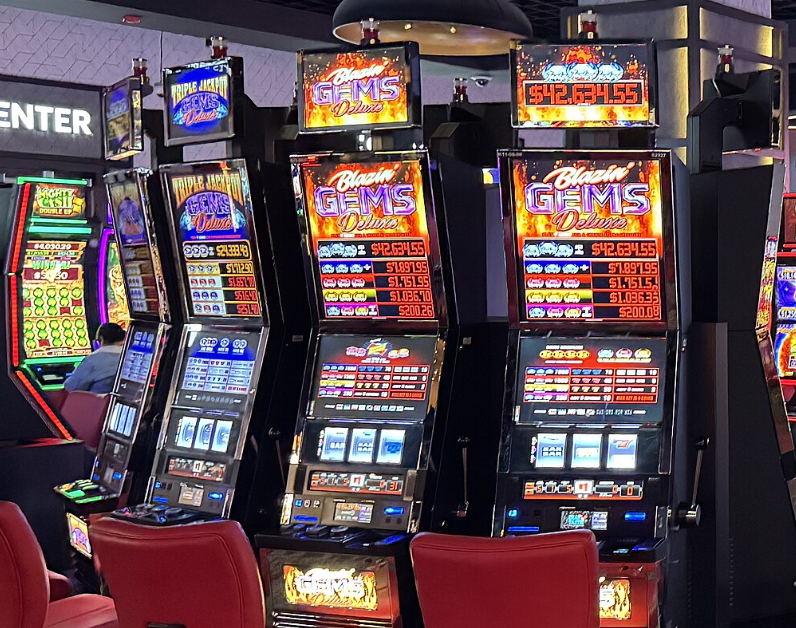
How much is a casino business closed by the state and facing possible criminal sanctions worth? If it’s Andy Sanborn’s Win Win Win, the answer is up to $40 million.
Details about Sanborn’s failed sales agreement with an unnamed out-of-state buyer were recently made public in New Hampshire Supreme Court filings. Sanborn wants the court to overrule an administrative judge’s decision that revoked his casino license after the deal was deemed unsuitable by the state.
According to court documents, the sales agreement — with its large payouts for Sanborn — hinged on the new buyer, identified as W.F., securing a Historic Horse Racing (HHR) license for Win Win Win. Even though Sanborn repeatedly said he simply wanted to sell his business and leave the gaming industry, the proposed deal would have given him control over the casino for years.
Under the terms of the sale, W.F. would pay Sanborn $1.5 million upfront and put another $1.5 million into escrow. On top of that, W.F. agreed to pay Sanborn another $7 million once he obtained a new HHR license, secured financing to build a new HHR facility, and resolved legal issues for the land intended for the facility.
Until he paid the total $10 million price, W.F. could not sell Win Win Win without Sanborn’s consent, according to the agreement. W.F. also agreed to pay Sanborn an additional $30 million in quarterly payments over five years.
As part of the sales agreement, W.F. signed a 10-year lease for the Main Street building in Concord where Win Win Win operates. Sanborn owns the building and runs a sports pub in the same location. The lease includes discounted food and beverage sales from Sanborn.
One major sticking point in the sale was the HHR license provision. Until the 2025 budget changed state law, New Hampshire did not allow slot machines in casinos, but it authorized HHR machines — extremely lucrative devices that offer a game of chance similar to slots but based on horse-race data. Slots are now legal in Granite State casinos.
However, HHR licenses are tightly controlled. Only casinos holding valid licenses between May 2020 and May 2024 were eligible to apply. According to the state’s brief, Win Win Win was excluded because its license was suspended for all of 2024.
That meant W.F. was unlikely to get an HHR license and potentially would be unable to pay the full purchase price. In that scenario, Sanborn would remain the casino’s landlord with veto power over W.F.’s ability to sell the business indefinitely. If W.F. did find a buyer before paying the full $40 million, Sanborn would be entitled to a substantial share of the transaction, according to the state.
The Lottery Commission rejected the deal because of the HHR restrictions and concerns about W.F.’s solvency. According to court records, W.F. listed $14 million in assets, but the commission found most of that inaccessible. At the time of the proposed sale, W.F. had about $114,000 in liquid cash and held a $670,000 mortgage.
“[W.F.] possesses the character and financial capacity to be individually suitable to hold a game of chance license and operate a game of chance facility in New Hampshire, but the applicant’s proposed transaction and business arrangements with Mr. Sanborn, demonstrated by the agreements provided in the course of the suitability review, are unsuitable,” a Lottery Commission investigator wrote.
Sanborn was under a Sept. 30, 2024, deadline to sell his Concord casino after he was accused of improperly obtaining $844,000 in COVID relief loans, reportedly using the money to pay himself rent and buy sports cars, according to documents filed in the case. His license was suspended Dec. 29, 2023, and he was given six months to sell. The forced-sale order allowed him to seek a three-month extension if he had a buyer lined up pending state approval. Any buyer would have to pass a Lottery Commission suitability review.
If the full nine months passed without a sale, Sanborn’s license would be formally revoked — leaving the casino business essentially worthless. Sanborn’s lawyers claim the Lottery Commission and the New Hampshire Attorney General’s Office scared off two other proposed buyers and dragged out W.F.’s review beyond the nine-month deadline.
Sanborn received a two-week extension at the end of September to allow the state to complete W.F.’s review, but he failed to secure another extension after the Lottery Commission rejected the deal.
Sanborn currently faces a criminal trial this spring on charges he fraudulently obtained COVID relief funds. Win Win Win is also a defendant in the case, meaning the business could face fines or other sanctions if found guilty along with its owner.
EDITOR’S NOTE: An earlier version of this article misreported the state of New Hampshire’s laws regarding slot machines. We regret the error.