When Steve Jobs, Steve Wozniak, and Ronald Wayne founded Apple Computer in 1976, they assembled their first batch of Apple I computers in the garage of Jobs’ family home in a Los Altos, Calif., neighborhood.
But if the next Jobs, Bill Gates, or Elon Musk tried to do the same in their parents’ New Hampshire home today, they would likely run afoul of the state’s restrictive zoning laws. The same could be true for a bakery, barber shop, or home-based child care business designed to serve a local neighborhood.
An effort is underway in Concord to change that with legislation that would give homeowners more freedom and limit restrictive zoning rules. Reps. Joe Alexander (R-Goffstown) and Joe Sweeney (R-Salem) are proposing regulations to free up small business owners and would-be entrepreneurs to work out of their homes.
“It’s the idea of allowing people to unlock their own American Dreams and saying, ‘You know what? Maybe in Year Zero I might not have the revenue to start a business in a retail center in a strip mall, so I’m going to have to start smaller,” Sweeney said.
He made his comments at a forum hosted by Americans for Prosperity-New Hampshire, where he outlined his proposal to permit small accessory commercial units (ACUs) on residential properties regardless of local zoning regulations.
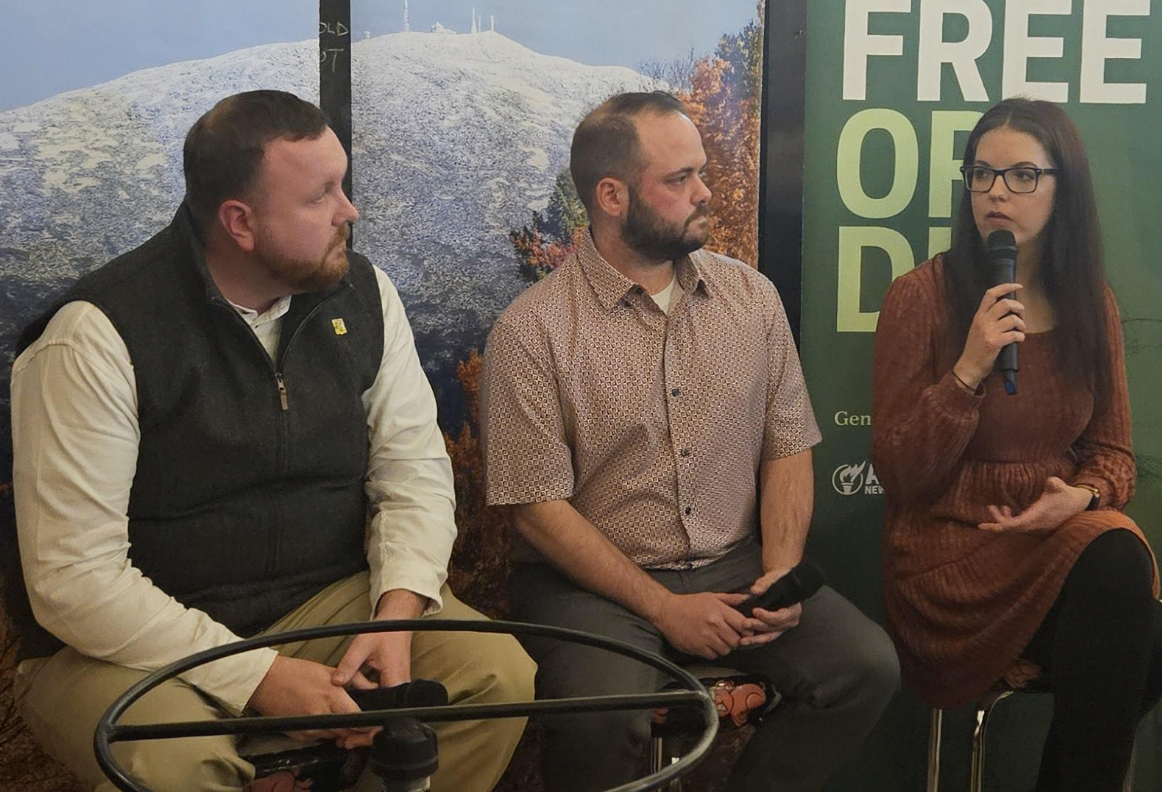
State Reps. Joe Sweeney (R-Salem) and Joe Alexander (R-Goffstown) discuss zoning regulations with AFP-NH’s Sarah Scott on October 30, 2025.
Similar to the accessory dwelling unit legislation passed earlier this year, the new ACUs would give residents more control over their property, but with limits designed to protect the community’s character.
The units must not exceed 1,000 square feet or 25 percent of the gross floor area of the principal structure, would have limited operating hours, and must comply with local nuisance ordinances.
“We think of those great American stories of people building companies in their garages or their basements,” Sweeney said. “But now it’s so limited for people actually legally do that, if you have any sort of business that actually is forward-facing to customers,” as opposed to an online business.
Sweeney’s legislation lists more than 40 business activities that would be “permitted by right” as accessory commercial units. Among them: coffee shops, farm stands, hair salons, tax preparation services, and artist studios.
AFP-NH’s Sarah Scott shared the story of a family friend. “She was a hairdresser in a salon. But when she started having kids, it was just too much for her to work away from home.
“She had a little sunroom attached to her house, and she put a salon chair and a sink in there, and she started cutting her hair out of her house, and it was a really great option for her and her family,” Scott said. “It allows her to do something that she loves doing. It also provides a service to the community, and it allows her to bring in that extra income for her family.”
Unfortunately, Scott added, the permitting and zoning process “created a lot of roadblocks — roadblocks that would have likely stopped other small businesses from opening.”
Sweeney’s list also includes home-based child care, preschool programs, and educational services. The latter is the focus of Alexander’s legislation.
His bill establishes the right to provide educational instruction to children in any zone within a municipality. As more parents choose alternatives to public schools and the microschool trend continues to grow, Alexander told the AFP-NH event, demand is likely to rise.
Microschools are very small learning environments — typically five to 15 students — that often blend elements of private schooling, homeschooling, and modern learning methods. Parents and educators have a much more direct relationship in a microschool model.
“Interest in microschools has grown steadily in recent years,” according to a March 2025 Rand report, which calls them an “emerging education model.”
But if zoning rules don’t permit microschools, parents and students may not have access to them.
“I had a constituent in town who was a big school choice champion,” Alexander said. “She called me because the town was giving her grief over opening up a (small education business) and having it based in a residential area where she could have students over to learn. You shouldn’t have to ask the government to educate your kid in your own house, or educate other kids in your own house.”
The issue of local control vs. state intervention has created divisions in the Republican coalition. It has also spurred some Democrats who have actively promoted state action on issues like mask mandates to reverse their stance and oppose rules set in Concord.
Alexander argued that one benefit of allowing small, in-home businesses is that more economic activity means more revenue — and less pressure on residential property taxes. He pointed to Goffstown’s lack of commercial property and asked why it would be a bad thing if more residents were cutting hair or offering education services in their homes.
“When people complain about their high property taxes, if there’s more commercial activity and commercial taxation happening in the town, then they have more revenue, and property taxes are going to go down.”
A 2025 WalletHub analysis ranks New Hampshire among the top 10 states for working from home. However, it ranks behind other Northeastern states, such as New Jersey, Connecticut, and Massachusetts. Freeing residents to use their homes to start new businesses could be a boon to the state.
“It just unlocks so many different opportunities,” Scott said. “Opportunities for the next up and coming business to be started here in New Hampshire. And of course, we want to encourage that kind of innovation and economic growth.”