inside sources print logo
Get up to date New Hampshire news in your inbox

Good Grief: Progressive NH Activist Busted Over Dead Mom’s Ballot

Progressive activist and filmmaker Grace Gato stopped at the Hudson Town Clerk’s Office last November with her mother’s signed absentee ballot application so the elderly Democrat could strike a blow against Donald Trump in the election.

“I’m dropping this off for my mother so she can vote,” Gato reportedly said.

Only one problem: Gatos’s mother, Ruby Cecilia Ponce, was dead. She had passed away about a week earlier.

And despite how Chicago may or may not run its elections, deceased Americans are not legally eligible to vote in New Hampshire.

That fact was pressed upon Gato, 44, on Friday when she was arrested, charged with the misdemeanor crime of wrongful voting.

Now, Gato says her act was merely an homage to her anti-Trump mother, not a sincere  — or legally binding — effort to actually cast a ballot. “It was a symbolic act, not a political one,” Gato says.

In a post on her Substack, Gato weaves a tale of a daughter trying to honor her mother’s dying wish.

“On her deathbed, she made a simple request: ‘Get my ballot,’” Gato wrote. “She had voted in every election for decades, often while hooked to dialysis, determined to do her civic duty even when the system had failed her. When she passed, I went to the Hudson Town Clerk’s office to retrieve her absentee ballot — not to fill it out, not to submit it, but to bury it with her.”

And, she adds, she never crossed the line into violating the law.

“No ballot was signed. None was mailed. No fraudulent vote was ever cast,” Gato wrote.

Gato’s defense — that she planned to bury her mother with the absentee ballot, not vote with it — is a novel one. But it doesn’t appear to be supported by the facts. 

The affidavit from New Hampshire Attorney General Election Law Unit Investigator Cristina Ostrowski points out that a few days before Ponce died on Oct. 15, 2024, Gato made clear on Twitter/X that her mother was going to vote against President Donald Trump.

“My mom is a WWII baby who is going to miss WWIII. She made sure she voted absentee ballot while in hospice care. I just have to mail it. She said make sure that son of a bitch doesn’t win,” Gato wrote.

Six days later, Gato went to the Hudson Town Clerk’s Office with her mother’s signed, absentee ballot application. She reportedly told staff her mother was going to vote with an absentee ballot, though Gato did not mention her mother’s death. Nor did she mention her mother’s dying wish, nor the intention to put the ballot in her casket. The application Gato presented to the clerk was identical to the document she would use to collect a ballot for her mother if she were still alive and ready to cast a mail-in ballot.

“The application included a signature for Ruby Ponce, dated Oct. 13, 2024. On the form, Gato signed an attestation that she assisted the applicant in executing the form because the applicant has a disability,” Ostrowski wrote.

Earlier that day, Town Clerk Michelle Brewster got a letter warning her that Gato planned to illegally vote for her dead mother. When Gato showed up to get her mother’s absentee ballot, the staff made sure she did not get one, Ostrowski said.

Instead, Gato was told her mother’s absentee ballot would be mailed to the house they shared. But Brewster put the Ponce ballot application aside and called the Attorney General’s Office rather than send a ballot to a dead woman, Ostrowski wrote. Gato herself managed to vote via absentee ballot in the Nov. 5, 2024 election.

Ostrowski spoke to Gato on Nov. 12, and the activist acknowledged her mother was in fact dead when she submitted the absentee ballot application.

New Hampshire election law does not take dying wishes into account. The state does consider submitting an absentee ballot application in the name of a dead person a problem, as it leaves the election system vulnerable to fraud. 

Chairman of the House Election Law Committee, Ross Berry (R-Weare), called Gato’s arrest proof positive that the new state law requiring an ID for absentee ballots is necessary.

“Democrats keep insisting voter fraud doesn’t happen in New Hampshire — and then it does. Thankfully, our newly enacted law, SB 287, would have stopped this Democrat activist from committing voter fraud by requiring a simple ID check before an absentee ballot is issued. We passed it because common sense tells you verification matters and today’s arrest proves why. I can only guess why the Democrats fought it,” Berry said.

Dead moms of progressive activists might be a significant voter bloc in New Hampshire elections. Rep. Tim Horrigan (D-Durham) testified before the House last year that his dead mother voted in the 2024 First-in-the-Nation presidential primary. To be fair to Horrigan’s mom, she wasn’t dead when she mailed in her own ballot.

“She was intending to be alive on Jan. 23, but she ended up passing on Jan. 16,” Horrigan said.

Horrigan told the anecdote while he was giving testimony against a proposed law that would have required executors of estates to inform town clerks of a resident’s death to help keep voter rolls current and correct.

Gato blames Brewster and the Attorney General’s Office for misinterpreting her compassion and using state power against a grieving daughter.

“New Hampshire’s wrongful voting statute exists to prevent election fraud — double voting, impersonation, deliberate manipulation of the system. It requires intent to defraud. The facts of my case meet none of those elements,” Gato wrote. “Yet here I am, facing criminal penalties because a clerk mistook compassion for conspiracy.”

Gato is due in Nashua District Court on Nov. 13 for her arraignment where she can try out her grief legal strategy.

“Grief is not voter fraud,” Gato wrote. “And if the State of New Hampshire can’t tell the difference, the problem isn’t the voters. It’s the system.”
Lax NH Voter Law Allowed Non-Citizen to Vote Three Times, Records Show

When news broke that a Jamaican citizen had been arrested for illegally voting in New Hampshire — in three different elections — the first question many Granite Staters had was “How is that possible?”

And the answer, say voting law experts, is that New Hampshire’s law at the time made it possible. But not anymore.

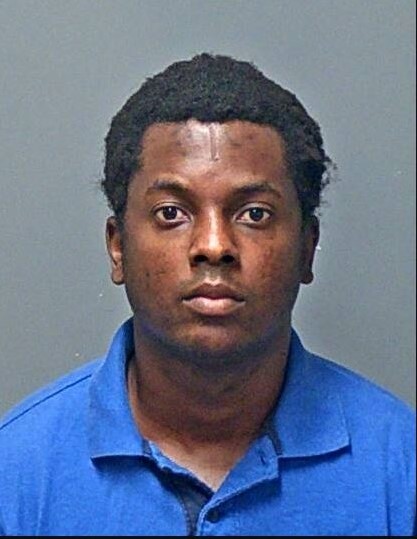
Naseef Bryan, 34, was arrested and charged this week on three felony counts of wrongful voting. At the time he started voting in Manchester, Bryan was engaged in multiple lawsuits with the federal government in an attempt to force his way into becoming a citizen.

The lawsuits indicate that Bryan knew he was not a citizen when he registered to vote in the November 2023 municipal election and could therefore not legally vote. But if he knew he wasn’t a citizen, why didn’t the New Hampshire election authorities know it, too?

According to a representative for the city clerk’s office, Manchester election officials followed the law when Bryan registered. He was asked to prove his identity, his current address or domicile, and his status as a U.S. citizen.

For the first two, Bryan presented a New Hampshire driver’s license as photo ID and his car registration to prove he lived in the city. As for his citizenship, New Hampshire law allowed voters to sign an affidavit in front of a poll worker attesting that he or she is an American citizen.

Unless the affidavit is challenged, the citizenship claim is neither questioned nor confirmed, and the vote is counted. Or at least it was.

Bryan could not register to vote today, thanks to the law signed by Gov. Chris Sununu last year. HB1569 requires people registering to vote for the first time to prove their citizenship status. Democrats and liberal groups attacked the law, calling it “unconstitutional” and “a clear attack on one of our most fundamental rights.”

Democrats in the state House and Senate overwhelmingly voted against the proof-of-citizenship requirement.

“Make no mistake: this law will disenfranchise eligible voters with no evidence or data to back up any reason as to why,” Devon Chaffee, executive director of the ACLU-NH, said at the time.

Then came the Bryan case.

“For years, Democrats told us that a signature on a piece of paper was all that was needed for proof of citizenship for voting, and for years, we told them the system was wide open for abuse,” said Rep. Ross Berry (R-Weare), chair of the House Election Law Committee. “Turns out we were right, and thankfully, we have already closed that loophole over their objections.”

The new Granite State requirements are similar to those in the federal SAVE Act, a law Democrats like U.S. Rep. Maggie Goodlander claimed — falsely — would disenfranchise married women. 

“These women would not be able to use their birth certificates to prove their citizenship under the SAVE Act. And, if they do not have a passport, which roughly 44.5 percent of Granite Staters do not, they would not be able to register to vote at all under the SAVE Act,” Goodlander said in a statement.

However, the New Hampshire law only affects new voter registrations, and married women who are already registered to vote won’t be turned away from the polls if they have taken their husband’s last name. 

Affidavit ballots have also been used for same-day registration when would-be voters show up without either proof of identity, address, or both. Under the old rules, they could fill out an affidavit and cast their vote. They then had one week to provide proof of identity, thus allowing their vote to be added to the total count.

In 2024, 27 voters who registered at the polls without an identification earlier this month were provided with affidavit ballots, the largest number ever in a single election. Of those 27, only three sent in their proof of identity, according to the New Hampshire Secretary of State’s Office.

It’s not yet clear from the available records how Bryan was caught. Speculation surrounds the fact that he’s a litigious and outspoken gadfly in the New Hampshire legal system, seeking the sort of attention that could catch the eye of election law enforcement.

It would only take a quick internet search to find his many lawsuits against various government agencies, including his legal battles with the United States Citizenship and Immigration Services.

Court Tosses Progressive Challenge to State’s New Voter Integrity Law

A New Hampshire judge tossed a lawsuit from progressive organizations challenging the state’s new “affidavit ballot” law, designed to prevent voter fraud by ensuring every voter provides ID.

As soon as Gov. Chris Sununu signed the new law, known as SB418, last year, partisan organizations like 603Forward, Open Democracy Action, the ACLU, and several progressive activists filed suit. They were represented by former Hillary Clinton campaign attorney Marc Elias, best known for his role in the now-debunked “Russia Collusion” dossier scandal.

Hillsborough Superior Court Judge Charles Temple ruled Friday none of the organizations or individuals challenging the law have a case.

Under the new law, voters who register on Election Day without state-required ID are given an affidavit ballot, which is not counted until their identity is verified. The voters are also given a packet of information, including a prepaid overnight envelope, in order to assist them in proving their identity.

Rep. Ross Berry (R-Manchester), chair of the House Election Law Committee, said the court made the right call.

“The court’s dismissal of these lawsuits is a resounding victory for common sense protections of our democratic process,” Berry told NHJournal. “Before SB418, any person could walk into any voting location on Election Day, register to vote without producing any ID or proof of residency, and be handed a ballot. This system was ripe for abuse — and we know it was abused. For example. a former Democrat poll worker voted in the morning, went to his car, put on a wig, then registered as a woman, and cast a second ballot.”

New Hampshire Democrats have long opposed voter ID requirements, and all four members of the federal delegation have voted to let the federal government override states’ voter ID laws.

The plaintiffs, including former Rep. Manny Espitia and progressive activists Dan Weeks and Louise Spencer, argued the law misuses taxpayer money, forcing the Secretary of State’s Office to pay for the information packets, envelopes, and postage. Temple rejected their argument, writing that the state spending money on stamps does not equal a significant constitutional violation.

“These minimal expenditures bear little to no relationship to the merits of the plaintiffs’ claims,” Temple wrote.

Espitia declined to comment when reached by NHJournal.

Organizations like 603Forward tried claiming SB 418 was forcing them to engage in preparing new voters to deal with the law and diverting resources and funds they would have used for other purposes. Temple, again, did not buy that argument, writing the groups failed to identify any actual constitutional rights that were being denied because of SB 418. 

Lucas Meyers with 603Forward declined to comment. 

Chris Ager, chairman of the New Hampshire GOP, applauded the ruling, saying Granite Staters who want secure elections can rest easy.

“This decision is a big step forward in the ongoing effort to ensure the integrity of New Hampshire’s elections,” Ager said. “New Hampshire Republican legislators took the lead on this very important issue. I applaud the court’s decision to further secure our elections for all who cast a ballot. The vast majority of Americans and Granite Staters want voter ID and secure elections, and that’s what New Hampshire Republicans are delivering.”

Secretary of State Dave Scanlan, whose office was a defendant in the case, tried staying above the fray when reached for comment. 

“Judge Temple’s decision is clear and speaks for itself. We have no additional comment,” Scanlan said.

The SB 418 lawsuit is open to appeals, and it is not yet known if the plaintiffs will bring their case to the state Supreme Court or if they will file a motion asking Temple to reconsider his decision first.