inside sources print logo
Get up to date New Hampshire news in your inbox

Developer Who Tried to Buy Laconia State School Pleads Guilty to Fraud

Robynne Alexander, the real estate developer who offered the state a too-good-to-be-true $21.5 million for the Laconia State School property, pleaded guilty Wednesday to a federal count of wire fraud in the United States District Court in Concord.

Alexander’s business model of offering eye-popping returns to her investors, as much as 80 percent, was actually part of a scheme to stay ahead of her creditors as her real estate empire crumbled, according to court records.

Alexander now faces up to 20 years in prison when she is sentenced at a later date. She’s already agreed to pay more than $3 million in restitution to her dozens of victims. Many of them gave Alexander their entire retirement savings, thinking she would help them make their fortunes.

Alexander presented herself as a California real estate success story when she moved to New England and taught classes as Real Estate Investor Goddess. Alexander showed people how to make big money on large-scale developments, such as apartment complexes, resorts, and even entire village complexes. In reality, she was a small-time player who flipped a few houses before she started teaching.

But someone did learn something in her classes; Alexander learned which of her students to rope in as investors for her various real estate schemes. She launched several different LLCs starting in 2018 using money from her former students, according to court records.

Under her Raxx‑LeMay, LLC., Alexander got investors to back the purchase and redevelopment of two commercial properties in Manchester. But even with her students, Alexander could only come up with $700,000 of the necessary $2 million for the purchase. Instead of giving the money back with interest to her investors, as was the agreement, Alexander bought the properties with investor money from other projects and high-interest loans. In a classic Ponzi-scheme move, Alexander paid returns to some Raxx-LeMay investors with the investor money from other LLCs she controlled.

After that, things took off for Alexander—but not for her investors. She transferred the Raxx-LeMay properties to another LLC, leaving that business and its investors $850,000 in debt and with no assets.

Alexander’s Elm and Baker, LLC., netted $750,000 in investor money to convert a Manchester property into apartments. Instead, Alexander used more than half that money to repay other, unrelated investors and her own personal loans, ultimately leading to foreclosure on the Elm and Baker property in 2023. 

Her biggest dream, the $21.5 million Laconia State School development, would have been a resort village with retail. It was the winning bid for the property. But for some reason, Alexander couldn’t close the deal. 

Alexander’s winning bid garnered negative attention as people close to the deal began asking questions about her financing. At the same time, one of her failed Manchester developments turned into a lawsuit. Former Gov. Chris Sununu recently said the state gave Alexander multiple opportunities to come up with the money before finally moving on.

“And after three or four extensions, we’re like, ‘Okay, enough is enough.’ And we pulled the plug, rightly so,” Sununu said.

Behind the scenes, Alexander struggled to raise $250,000 from investors for the $21.5 million purchase. At that point, she used $75,000 of that money on herself, including a month-long trip to Paris, Barcelona, Valencia, Nassau, Florida, and New Orleans.

Soon after the Laconia State School deal fell apart, Alexander was under investigation by both the Securities and Exchange Commission and the New Hampshire Bureau of Securities Regulation. As part of an agreement with New Hampshire authorities, Alexander will repay $96,000 to New Hampshire victims. She also agreed to give up any licensing to sell securities anywhere, and agreed not to be head of any company anywhere ever again.

Sununu gives credit to then-Executive Councilor Ted Gatsas (R-District 4) for protecting the state from getting more deeply involved with Alexander during the Laconia property process.

“Gatsas was one of the councilors who said, ‘We could have a problem here,” Sununu said during a recent radio appearance.

As the Alexander deal dragged out, “Ted was just really smart in terms of what we were potentially walking into, and putting up red flags for us. He really drove the message to get the state to pivot. And it was clearly the right thing to do.”
As NH Dems Embrace Crypto, Pappas Opts Out

Democratic candidates are scrambling for support in the growing crypto currency sphere, and many want their party’s leadership to change the perception that Democrats are hostile to the emerging financial technology.

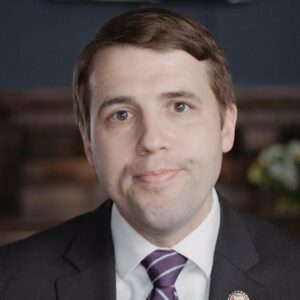
But New Hampshire’s Rep. Chris Pappas (D-Manchester) isn’t one of them.

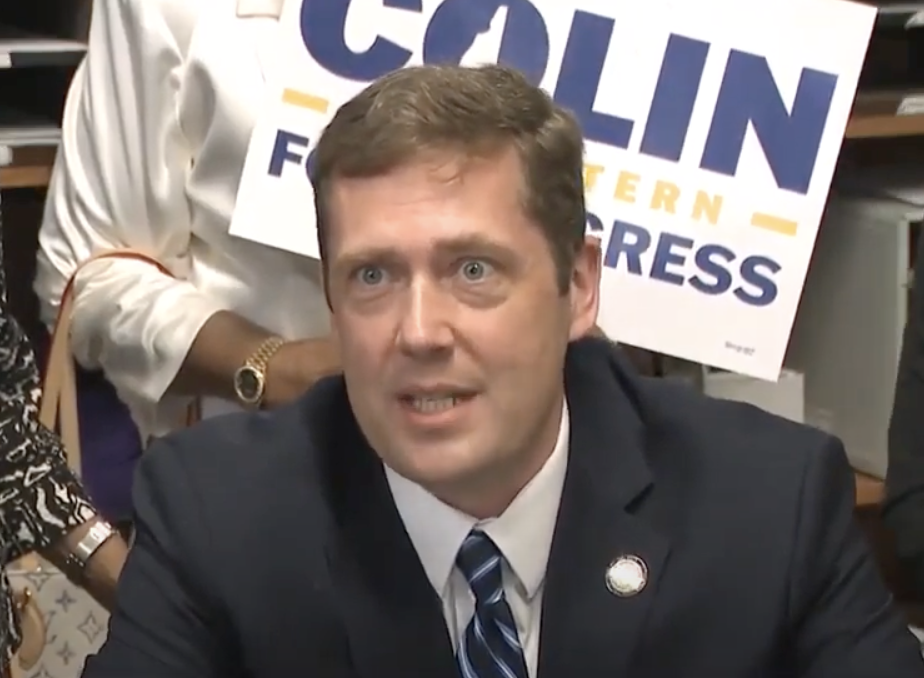
A group of congressional Democrats and candidates, including Maggie Goodlander and Colin Van Ostern, recently wrote to Democratic National Committee chair Jamie Harrison asking for changes to the party’s platform to make it more friendly to Bitcoin and other forms of cryptocurrency. Crypto support could be vital in key swing states, they said in the letter.

“From an electoral standpoint, crypto and blockchain technologies have an outsized impact in ensuring victories up and down the ballot. Crypto is at the top of voters’ minds in swing states, and a balanced approach to crypto that spurs innovation while protecting consumers is a net positive for policymakers and candidates,” they wrote.

Pappas was the only major New Hampshire Democrat running for Congress this cycle who declined to sign.

Instead of embracing crypto, Pappas has amassed a record of supporting bills that would hurt the crypto industry. 

Pappas voted against Financial Innovation and Technology for the 21st Century Act which proposed protections for crypto buyers. Pappas also voted against the CBDC Anti-Surveillance State Act, which would block the Federal Reserve from creating its own digital currency, giving the powerful bank the ability to run surveillance on crypto users.

Pappas sponsored a bill targeting the use of crypto to purchase drugs on the so-called dark web, linking the use of crypto to criminal activity. His bill would create a task force to study the use of crypto in online crimes.

President Joe Biden’s administration, especially the Securities and Exchange Commission, has been aggressive toward the crypto industry, alienating many potential supporters and donors. With Vice President Kamala Harris leading the ticket, Democrats like Goodlander and Van Ostern hope to see change in the party’s stance. 

“We believe this previous hostility does not reflect our Party’s progressive, forward-looking, and inclusive values. A refreshed leader of the ticket represents an opportunity to change that perception,” their letter states. 

According to the Financial Times, Harris’ team is already working on a “reset” with crypto industry leaders, stressing that under her leadership the party will be “pro-business, responsible business.”

Harris needs to play catch up with former President Donald Trump. A one-time crypto skeptic who once called it a “disaster waiting to happen,” Trump is now firmly behind the industry. He gave a keynote speech over the weekend at a Bitcoin conference in Nashville, Tenn., embracing the technology and calling for establishing a national Bitcoin stockpile before ending his speech in typically Trumpian manner.

“Have a good time with your Bitcoin and your crypto and everything else that you’re playing with,” Trump said.

Trump has also pledged to fire Biden’s anti-crypto Securities and Exchange Commission Chairman Gary Gensler.

Crypto is popular among New Hampshire Libertarians, and libertarian-leaning Republicans. Nationally, key voters who are political independents are more engaged in crypto currency than either Republicans or Democrats. According to Goodlander and Van Ostern, the technology is gaining ground among those traditionally part of the Democratic coalition.

“Data shows that digital assets are being adopted at higher rates among Gen Z, Black, and Latino Americans, and immigrant communities–key constituencies of the Democratic party–compared to traditional financial products. These technologies are revolutionizing opportunities for these communities, reflecting their transformative potential,” their letter states.

Crypto support comes with potential drawbacks, as Pappas can attest. Last year he was dogged by the campaign money he took from disgraced fraudster Sam Bankman-Fried’s FTX crypto exchange. 

Bankman-Fried was convicted of fraud, money laundering, and conspiracy and ordered to repay $11 billion stolen from investors. During the investigation, it was uncovered that Bankman-Fried and his cohorts made 300 illegal political donations, including thousands to New Hampshire Democrats.

Pappas eventually gave his $2,900 FTX donation to a charity, while Democratic Sen. Maggie Hassan gave up $30,000. 

Van Ostern Firm Fined, Sanctioned for Misleading Investors

As Rep. Annie Kuster’s handpicked successor, Democrat Colin Van Ostern wants voters to forget the time his financial firm was paid millions for misleading its investors.

Van Ostern was president and chief operating officer at Manchester-based Alumni Ventures from 2019 through 2023, a position he left to launch his current campaign. In 2022, federal and state regulators investigated the company, finding it lied to customers and improperly moved millions between accounts.

Van Ostern did not respond to a request for comment. 

In 2022, Alumni Ventures agreed to pay back more than $4.7 million to investors taken in an allegedly misleading fee schedule. The company also paid millions to regulators in New Hampshire and Massachusetts, as well as fines to the Securities and Exchange Commission. 

According to documents, the company misled investors by telling them the fee to manage investment funds would be “the industry standard of 2 and 20.” That’s generally understood to mean a two percent management fee every year for 10 years, and a 20 percent share in the eventual investment profits.

But that’s not what Alumni Ventures charged. Instead, the company took 10 years worth of two percent fees, or 20 percent, off the top of all investments. If a customer gave the company $100,000 to invest, Alumni Ventures would immediately take $20,000, leaving less money for the investment, according to the records. That money was then used to fund the business.

“This practice amounted to an undisclosed interest-free loan to [Alumni Ventures] from the funds it managed,” New Hampshire’s Bureau of Securities Regulation statement makes clear.

Van Ostern’s firm was also sanctioned for allegedly moving around investment fund money, effectively giving itself interest-free loans, according to the Massachusetts court order.

“The loans from [Alumni Ventures] to the Funds had no predetermined maturity date or interest rate, and their timing and repayment amount was solely in [Alumni Ventures’] discretion. The loans were not memorialized in a written debt instrument at the time the loans were made, and were not disclosed to investors,” the Massachusetts order states.

Alumni Ventures ended up paying a $700,000 fine to the SEC, and founder and CEO Michael Collins paid a $100,000 penalty to the federal agency. The company was ordered to pay $750,000 in fines and administrative costs in Massachusetts. New Hampshire regulators assessed a $600,000 fine, $100,000 for the investigation, and another $100,000 fine from Collins.

The company was also ordered to change its marketing material to inform potential customers about the real fee schedule.

The questionable conduct regulators targeted occurred between 2016 and 2020, according to the records, ending about a year after Van Ostern became COO. The Alumni Ventures job is one of many private sector positions Van Ostern occupied after he lost the 2016 gubernatorial race to Gov. Chris Sununu.

Van Ostern has long been a player in New Hampshire politics, though mostly assigned to the bench. After earning an MBA at the Tuck School of Business at Dartmouth College, Van Ostern worked as Democratic Gov. John Lynch’s majordomo as well as operating a consulting firm. His early clients were Sen. Jeanne Shaheen and Kuster.

Van Ostern was elected to the Executive Council in 2012 and served alongside Sununu until they faced off in the 2016 governor’s race.

Van Ostern also tried, and failed, to unseat Secretary of State Bill Gardner in 2018 before moving into the private sector. He did stints at yogurt maker Stonyfield and Southern New Hampshire University before landing at Alumni Ventures.

Collins started the Manchester-based Alumni Ventures in 2014 as a venture capital investment firm. The company has raised more than $1 billion in funds since it started.