inside sources print logo
Get up to date New Hampshire news in your inbox

Attorney for Bow’s Ban on Wristband Protests Compares Free Speech to ‘Poison’
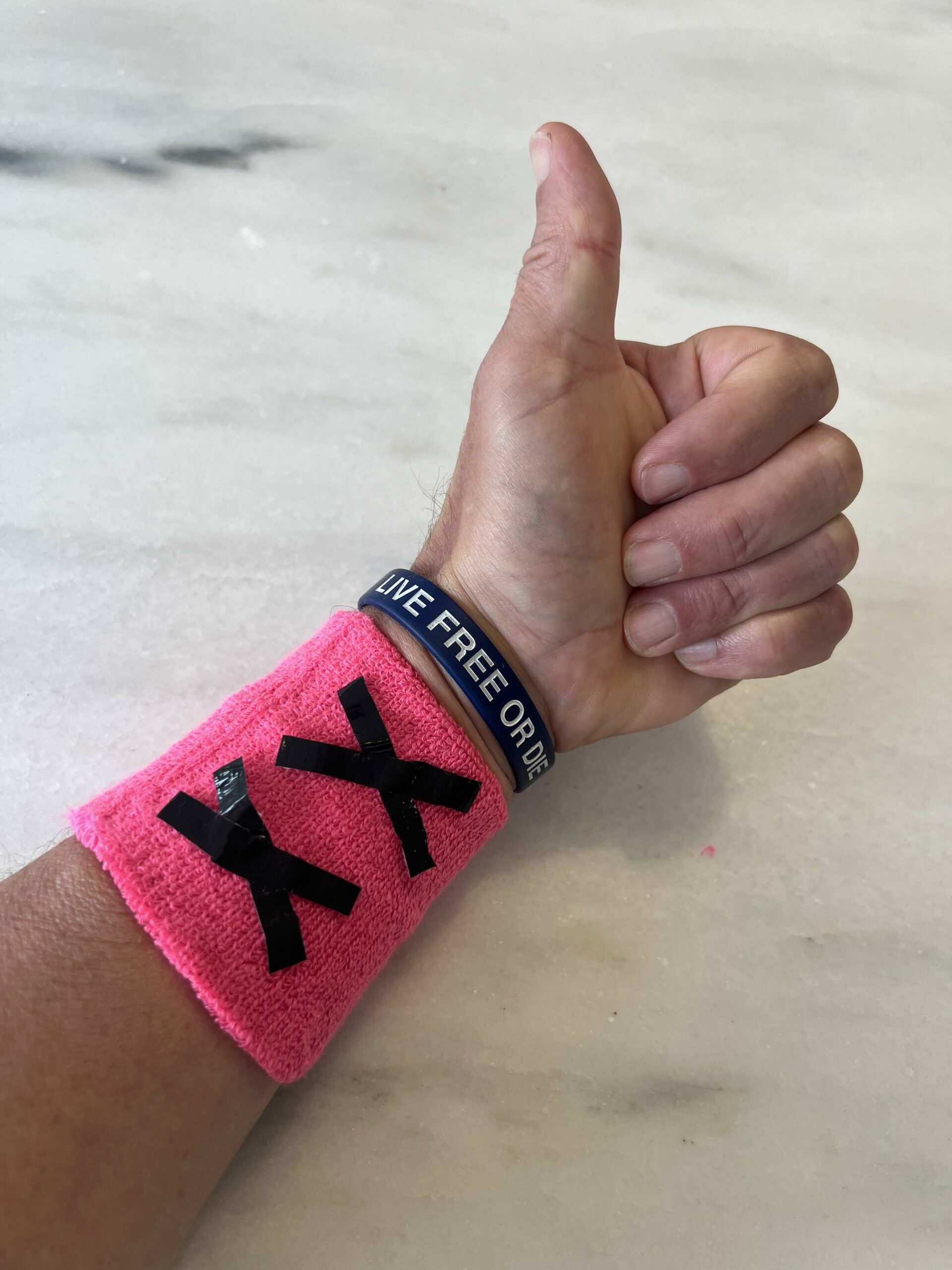
The attorney for the Bow, N.H., school district compared free speech to “poison” in his argument before a federal court Wednesday.

Jonathan Shirley, attorney for SAU 67, is defending the district’s decision to ban parents from wearing pink wristbands marked with “XX” in a silent protest of biological males in girls sports.

The district’s actions were upheld by United States District Court Judge Stephen McAuliffe in a controversial ruling that appeared to defend the government’s right to discriminate against speech based on viewpoint. In his ruling, McAuliffe labeled wearing the pink XX wristbands as a form of “assault” on people who identify as transgender. 

Parents Anthony Foote, Kyle Fellers, Nicole Foote, and Eldon Rash are appealing the decision, which was heard by a three-judge panel at the federal courthouse in Boston.

The Bow High School principal and the school’s athletic director ordered the protesting parents removed. They were later issued no-trespass orders, barring them from school property.

The parents want to be able to engage in silent protests at high school games. But Shirley told the court the potential danger presented by middle-aged parents wearing wristbands is too great.

“You know, poison is often determined by the dose,” Shirley said of their right to protest. “We’re talking about future events where we don’t have an understanding of how many people are going to be showing up with these wristbands.”

Del Kolde, the lawyer with the Institute for Free Speech representing the parents, promptly replied: “Your Honors, free speech is not poison.”

The judges were clearly puzzled by — if not outright hostile to — the district’s claims that speech that offended others or hurt their feelings should not be protected by the First Amendment.

The school district has openly engaged in viewpoint discrimination, acknowledging that pro-LGBT messaging would be allowed, but not the pink wristbands. It argues that its policy is legal due to its fear that the protest would get out of control and lead to players feeling bad about themselves.

“The school district should have the ability to step in and say, ‘Listen, we think we know where this is going. We need to stop you now,” Shirley told the justices. 

While schools have a legal obligation to protect students from harassment, they cannot be given the authority to stop protests in case they might become disruptive and lead to harassment, Kolde argued. That would allow government entities to shut down any speech they dislike.

“It essentially becomes a get out of jail free card for viewpoint discrimination,” Kodel said. “People are just going to complain and say, ‘I feel harassed by that message’ when they disagree with the message, when they don’t want it to be heard. And that will lead to much more censorship in the First District.”

The wristband protest took place a week after a federal court judge ruled in favor of transgender Plymouth High School student Parker Tirrell. Tirrell challenged the 2024 New Hampshire law banning biological boys from playing on girls’ sports teams and, on Sept. 10, 2024, won the right to play soccer on the Plymouth girls’ team. The Foote’s, Rash, and Fellers were protesting at the Bow game against Plymouth as Tirrell was on the field. 

Case records show that SAU 67 Superintendent Marcy Kelley and other officials were not concerned about a disruptive protest; they simply did not want any protest of any kind against transgender athletes, Kolde said. Kelley testified last year that she believes the XX wristbands convey an “exclusionary” message against transgender athletes competing with girls, something she could not allow. At the same time, Kelly said pro-LGBTQ symbols like rainbow flags are fine since she deems them to be “inclusionary.” But Kelley isn’t allowed to pick and choose what people say in public, Kodel told the justices.

Justices Sandra Lynch, Julie Rikelman, and Jefferey Howard seemed to accept Kolde’s argument that SAU 67 overstepped the constitution when officials directed the parents to take off the armbands. They also questioned if the district’s fear that the protests would get out of hand is enough legal justification to curb free speech rights.

Lynch pointed out that school officials actually caused a disruption when they confronted the parents at the game, but Shirley tried to blame the parents.

“The disruption was their refusal to follow the directive (to remove the armbands),” Shirley said.

“If the directive was unconstitutional viewpoint discrimination, then you have a problem,” Lynch responded.

The parents should be allowed to engage in silent, non-disruptive protests, Kodle said, even if school officials do not like the message.

“We don’t all have to agree on transgender issues, but if we’re going to get along in a pluralistic society, people have to be allowed to quietly express their views on terms equal to other parents. We all know that if they had worn pride flags and wristbands, we wouldn’t be here today,” Kolde said.

Bow ‘XX’ Wristband Parents Get Date for Appeals Court Hearing

 The parents punished by SAU 67 administrators for wearing pink “XX” wristbands to a Bow High School girls’ soccer game have an appeal hearing scheduled before the First Circuit Court of Appeals in Boston.

Anthony Foote, Kyle Fellers, Nicole Foote, and Eldon Rash are appealing U.S. District Court Judge Stephen McAuliffe’s ruling in favor of the district. McAuliffe ruled that SAU 67 has the legal authority to restrict its protest to protect a biological male playing on a girls’ soccer team.

“Because gender identities are characteristics of personal identity that are ‘unalterable or otherwise deeply rooted,’ the demeaning of which ‘strikes a person at the core of his being,’ and because Bow school authorities reasonably interpreted the symbols used by plaintiffs, in context, as conveying a demeaning and harassing message, they properly interceded to protect students from injuries likely to be suffered,” McAuliffe wrote in his April ruling.

Del Kolde, a lawyer with the Institute for Free Speech representing the parents, argues McAuliffe’s ruling gives the district permission to engage in unconstitutional viewpoint discrimination.

“Bow school officials violate this rule by banning adult spectators from silently protesting against biological males competing in girls’ sports by wearing XX wristbands on the sidelines or displaying signs in a parking lot, while allowing other spectators to display Pride flags or ‘inclusionary’ sociopolitical messages at those same events and in the same places. In a limited public forum like a school sporting event, such restrictions amount to textbook viewpoint discrimination,” Kolde wrote.

The appeal is scheduled for a Nov. 5 hearing in Boston.

Fellers, the Footes, and Rash were disciplined by school officials during a game last September when Bow played Plymouth High School, which featured male student Parker Tirrell, who identifies as female.

Bryan Cullen, SAU 67’s attorney, said the district has the authority to curtail the parents’ right to silently protest because a transgender athlete was on the field.

“While plaintiffs cast their conduct at the Sept. 17 [2024] game as ‘silent protest,’ the district reasonably viewed it as intimidation aimed at [transgender student] 15-year-old Parker Tirrell,” Cullen wrote in his brief filed Friday.

The parents were ordered to remove the wristbands or leave the field. Anthony Foote and Fellers were later served with no-trespass letters banning them from all future after-school activities.

McAuliffe overturned the ban on Fellers and Foote attending games or other activities, but sided with the district by allowing school officials to ban any protest that could be deemed as targeting transgender players.

Tirrell, the central figure in both Cullen’s argument and McAuliffe’s ruling, made headlines last year with a high-profile lawsuit against the state of New Hampshire. Tirrell successfully challenged the 2024 law preventing biological boys from playing on girls’ teams. With help from GLAAD and the ACLU of New Hampshire, Tirrell and fellow transgender student Iris Turmelle won the right to try out for and play on their respective girls’ teams.

Bow officials anticipated a disruption at the game after Foote and Fellers made their concerns known about biological boys competing against their daughters. Cullen argued that Bow had a duty to protect Tirrell from potential harassment, including protests involving the pink wristbands.

Even if Tirrell was not on the field, Cullen argued that protests such as wearing XX wristbands need to be banned at essentially every game because a transgender student could be participating without school officials’ knowledge.

“As the district explained at the preliminary injunction hearing, it is not always known to school officials who may identify as transgender or whether transgender students will or will not be attending a given event. The district needs the leeway to restrict plaintiffs’ message from all school events because school officials are unable to know which students will be attending which events,” Cullen wrote. “Plaintiffs have no constitutional right to ‘silently protest’ school-sponsored events, whether it is the girls’ varsity soccer games or other events throughout the academic year.”

Bow School District Says Protecting Trans Student Trumps Free Speech

The presence of a male player in a girls’ soccer game was all the justification Bow School District officials needed to crack down on protesting parents, according to a legal brief filed last week with the First Circuit Court of Appeals in Boston.

“While Plaintiffs cast their conduct at the Sept. 17 game as a ‘silent protest,’ the District reasonably viewed it as intimidation aimed at [biological male] 15-year-old Parker Tirrell,” wrote Bryan Cullen, attorney for the Bow School District, in the brief filed Friday.

SAU 67 is pushing back on an appeal filed by four Bow parents—Anthony Foote, Kyle Fellers, Nicole Foote, and Eldon Rash—who argue they have a First Amendment right to protest at school events. The group was disciplined last year after engaging in a silent protest against biological males participating in girls’ sports. Anthony Foote and Fellers were temporarily banned from all after-school events.

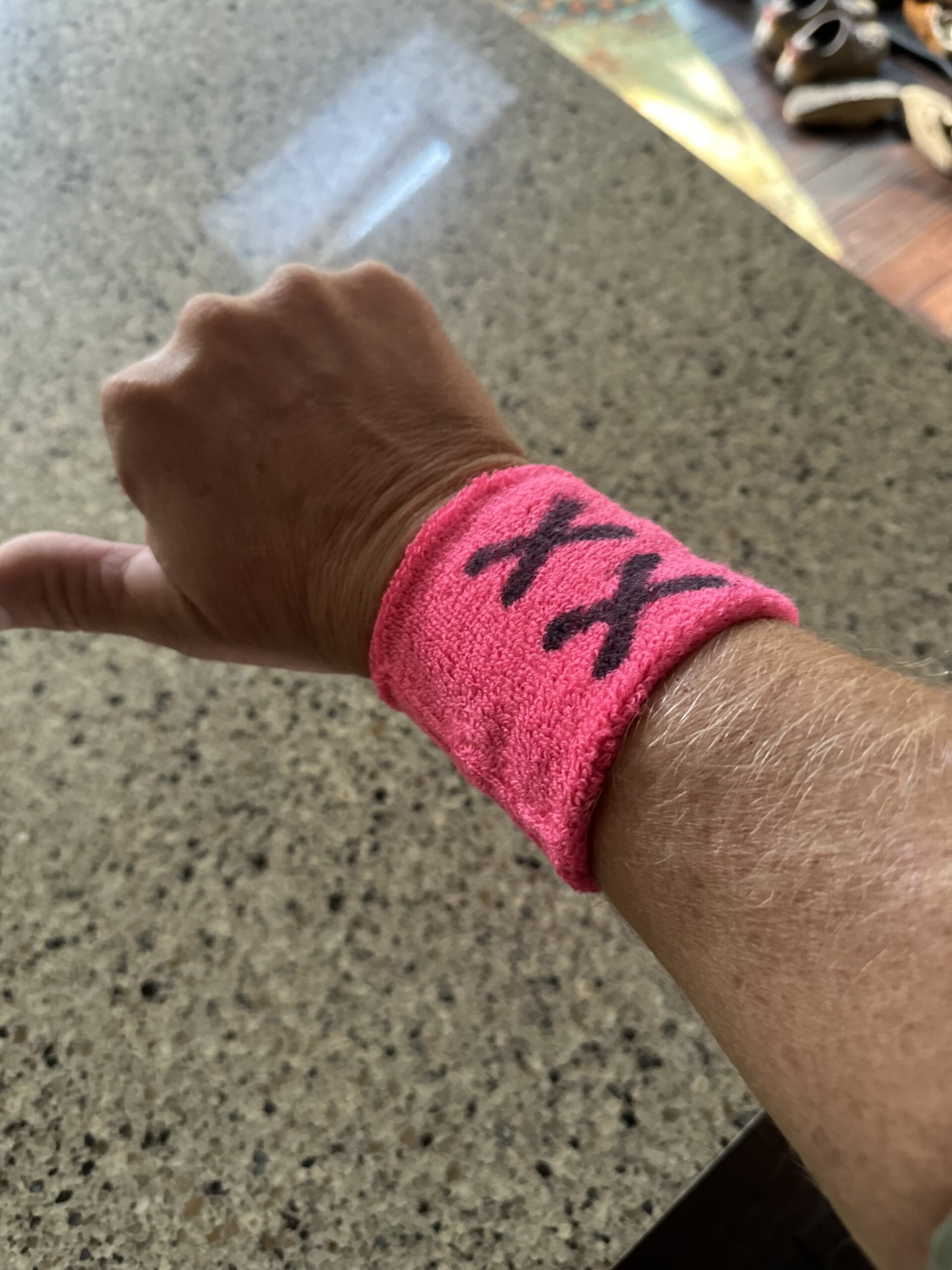
At the game between Bow High School and Plymouth High School—where Tirrell plays for the girls’ soccer team—the parents wore pink “XX” wristbands to express their opposition.

In April, U.S. District Judge Steven McAuliffe denied the parents’ request for an injunction, ruling that the school had the legal authority to restrict protest activity.

“Because gender identities are characteristics of personal identity that are ‘unalterable or otherwise deeply rooted,’ the demeaning of which ‘strikes a person at the core of his being,’ and because Bow school authorities reasonably interpreted the symbols used by plaintiffs, in context, as conveying a demeaning and harassing message, they properly interceded to protect students from injuries likely to be suffered,” McAuliffe wrote.

McAuliffe’s assertion that gender is “unalterable”—in a case involving a biological male altering his public identity to female—struck some observers as contradictory. Many political analysts believe the ruling could ultimately be overturned by the U.S. Supreme Court, which is set to hear related cases next year.

The Institute for Free Speech, representing the protesting parents, filed an appeal in June, arguing that Bow officials are engaging in viewpoint discrimination by banning their protest while allowing pro-LGBTQ+ displays.

“Bow school officials violate this rule by banning adult spectators from silently protesting against biological males competing in girls’ sports by wearing XX wristbands on the sidelines or displaying signs in a parking lot, while allowing other spectators to display Pride flags or ‘inclusionary’ sociopolitical messages at those same events and in the same places,” wrote Del Kolde, senior attorney at the Institute. “In a limited public forum like a school sporting event, such restrictions amount to textbook viewpoint discrimination.”

Tirrell is central to both Cullen’s argument and McAuliffe’s ruling. The transgender student made headlines before the Sept. 17 game due to a high-profile lawsuit against the state of New Hampshire challenging its law barring biological boys from participating in girls’ sports. With support from GLAD and the ACLU of New Hampshire, Tirrell and fellow transgender student Iris Turmelle won the right to try out and compete on their respective girls’ teams with a favorable court ruling on Sept. 10.

Bow officials anticipated potential disruption at the Sept. 17 game after Foote and Fellers voiced objections to biological boys playing against their daughters. Cullen argued that because Tirrell would be playing, the district had a duty to protect the player from any perceived harassment, including the wristbands.

Cullen went further, asserting that because school officials may not know in advance whether transgender students are attending a given event, they are justified in restricting the free speech rights of Foote, Fellers, and Rash at all future games and after-school activities.

“As the District explained at the preliminary injunction hearing, it is not always known to school officials who may identify as transgender or whether transgender students will or will not be attending a given event,” Cullen wrote. “The District needs the leeway to restrict Plaintiffs’ message from all school events because school officials are unable to know which students will be attending which events.”

He concluded: “Plaintiffs have no constitutional right to ‘silently protest’ school-sponsored events, whether it is the girls’ varsity soccer games or other events throughout the academic year.”

The case has already drawn national attention. U.S. Attorney General Pam Bondi criticized McAuliffe’s ruling earlier this year.

“I have asked my Civil Rights Division to examine this matter,” Biondi posted on Twitter/X. “This DOJ stands with women and their supportive parents.”

NHJournal has not confirmed what, if any, action the Civil Rights Division has taken since McAuliffe’s ruling was issued in April.

Bow Soccer Ref Apologizes to Dad in XX Pink Wristband Lawsuit

The high school soccer referee who reportedly threatened to cancel a Bow girl’s soccer game because parents wore pink “XX” wristbands issued an apology as part of a settlement agreement in the ongoing federal lawsuit.

Soccer dads Kyle Fellers and Anthony Foote, as well as Nicole Foote and Eldon Rash, filed the lawsuit against the Bow School District after they were ordered to remove their pro-girls sports wristbands at a Sept. 17 Bow game against another girl’s team that includes a transgender player. 

Fellers and Anthony Foote were later slapped with no trespass orders by the Bow School District.

Referee Steve Rossetti, who officiated the game, was named in the lawsuit for reportedly threatening to cancel the game if the parents did not remove the wristbands. But Rossetti was dismissed as a defendant this week. As part of an agreement reached with the parents, Rossetti wrote Fellers a letter of apology for swearing at him during a heated exchange.

“I did not choose my words very carefully during our exchange, and I regret any offense I may have caused you,” Rossetti wrote to Fellers. 

According to the original complaint filed in the United States District Court in Concord, Rossetti walked up to Fellers in the school parking lot after the game and let loose on the soccer dad.

“As the spectators and teams left to go to their vehicles, some expressed support for Fellers’ message while others criticized him. Rossetti, the referee who had threatened to cancel the game and make Bow forfeit, called Fellers a ‘f***ing a**hole’ and told him that his daughter would hate him,” the complaint states.

Rossetti works for the New Hampshire Interscholastic Athletic Association as a referee. He is not a school district employee. The lawsuit against SAU 67 and Superintendent Marcy Kelley, is still active, said Del Kolde, a senior attorney for the Institute for Free Speech which is representing Fellers and the other parents. 

“The case is proceeding against Bow School District and the named officials. We are still waiting for the district court to rule on our motion for preliminary injunction,” Kolde told NHJournal.

United States District Court Judge Steven McAuliffe has already overturned Bow’s no trespassing order that prevented Fellers and Foote from going to games and other after school events. But the parents want an injunction to allow them to be able to wear the wristbands and engage in silent protests at future games and school events.

Kelley testified in November that she deems the XX wristbands a problem because they represent an “exclusionary” anti-transgender view that only biological girls should be allowed to play in girl’s sports. Asked if she would ban rainbow wristbands to support LGBTQ+ players, Kelley said she would not.

“It’s inclusionary, it’s not targeting or harassing anyone,” she testified.

Bow’s Sept. 17 game was against the Plymouth High School girl’s team, which includes openly transgender player Parker Tirrell. The week before the Bow game, Tirrell won the right to play on the girl’s team in a lawsuit against New Hampshire’s law banning biological boys from girl’s spots, HB 1205. 

Tirrell played nearly the whole game against Bow on Sept. 17, and there are no reports of Fellers, Foote, or any other parents specifically targeting Tirrell during their wristband wearing, or making any harassing comments directed at Tirrell.