
inside sources print logo
Get up to date New Hampshire news in your inbox

NH’s EFA Oversight Gets Fiscal Thumbs Up From Independent Auditor

The nonprofit organization managing New Hampshire’s rapidly expanding Education Freedom Account program received a clean bill of financial health this week, bolstering arguments for the education choice program.

Independent auditor Grant Thornton LLP issued an unqualified opinion to the Children’s Scholarship Fund New Hampshire (CSFNH), the contractor responsible for administering the state-funded grants. An unqualified, or “clean,” audit is the highest level of assurance an outside auditor can provide, indicating that the financial statements are fairly presented and free of material errors under generally accepted accounting principles.

“We take seriously the trust that families, taxpayers, and state leaders place in this program,” said Kate Baker Demers, CSFNH executive director. “Our priority is to provide the highest level of service with the utmost accountability. This audit reinforces that commitment.”

Administrative operations costs to oversee the program declined this year to 7.83 percent. That is the share of funding CSFNH spends on its own overhead operations to administer the EFA grants and programs. Baker Demers compared that with other nonprofits that typically have an administrative cost rate of 10 percent or more.

“The program’s administrative rate of 7.83 percent directs the vast majority of funds straight to children for educational expenses,” Baker Demers said.

The positive financial review comes at a critical juncture for the EFA program. Originally designed for lower-income households, Gov. Kelly Ayotte and the GOP-controlled Legislature expanded access to all New Hampshire students earlier this year, a move opposed by Democrats. Currently, more than 10,000 students are enrolled, using state funds to pay for private school tuition, tutoring, and other nonpublic educational expenses.

Baker Demers views the 2024 audit as confirmation that CSFNH is a responsible steward of these growing public resources.

“In a time when transparency and accuracy matter more than ever, we are proud that this independent audit confirms our commitment to integrity and responsible administration,” she said.” New Hampshire families rely on us to manage this program with care, and this audit reflects the high standards we hold ourselves to every day.”

The audit results were immediately embraced by Republican leadership, who have championed the EFA model against Democratic opposition. House Majority Leader Jason Osborne, R-Auburn, argued the findings validate the decision to use a third-party contractor and prove the program’s efficacy.

“These results are further proof that this wildly successful program continues to serve Granite State families with excellence. Republicans have said all along that EFAs are transparent, accountable, and life-changing for families,” Osborne said. “Democrats desperately hoped to find something wrong because the program is Republican-led and tremendously popular. Instead, they got a clean bill of health, again.”

The audit comes out as House Democrats have been looking for ways to discredit the program. The House Office of Legislative Budget Assistant is currently conducting a performance audit of the entire EFA program, which is expected to criticize the program’s oversight.

Christine Young, director of the Legislative Budget Assistant Audit Division, told members of the Joint Legislative Performance Audit Oversight Committee last week that the audit has already listed 40 “observations” to be addressed. In performance audit terminology, an observation refers to any deviation or area that needs improvement.

But Young’s statements come months before the performance audit is anticipated to be completed, and Young herself said the findings are fluid as auditors work through the facts. The audit will not result in a public report until the spring.

Democratic lawmakers have long tried to obtain a financial audit of CSFNH but were legally blocked. Under New Hampshire law, state contractors control their own financial data and are not required to share that information. Osborne said the results of CSFNH’s independent audit put concerns about money management to rest.

“Our gratitude goes to CSFNH for their stewardship and to the thousands of families who continue to demonstrate why school choice works,” Osborne said. “The EFA program is doing exactly what it was designed to do — and doing it extraordinarily well.”

Claremont Schools Confirm $5 Million Deficit After Internal Review

The Claremont School District says its deficit stands at a staggering $5.01 million after its new leadership team completed an extensive internal review of the books.

Interim Superintendent Kerry Kennedy and new business comptroller Matthew Angell announced the revised figure Thursday afternoon, a day after canceling a school board meeting that was scheduled to reveal the numbers.

Kennedy did not respond to NHJournal’s questions on Thursday.

The district nearly delayed the start of the school year after the board learned of the deficit on Aug. 14, when estimates ranged from $1 million to $5 million. Instead, the board cut costs by canceling contracts for 19 new teachers, laying off 20 non-teaching staff, canceling athletics, and securing a $4 million loan. The cuts also forced the closure of Bluff Elementary School due to a lack of teachers.

Kennedy and Angell said they expect additional cuts will reduce the shortfall by the end of the school year, but a significant gap will remain.

“Through the process of identifying the deficit, we’ve been able to identify a number of areas we need to focus on in order to clean this up,” Angell said. “It will take some time to address these, but tightening certain controls will help reduce our deficit immediately.”

And the bad news keeps coming. Angell said the district will need even more money in the months to come.

“I’m not prepared to share a number we can reduce it by. Factors to reduce the deficit change daily … We find savings that we can implement, sometimes by tightening controls and others by eliminating spending. But we are also discovering new, unpaid bills,” he said.

Kennedy and Angell had planned to release the final number on Wednesday night, but the meeting was postponed after new accounting issues surfaced.

“Right now, our interim business administrator Matt Angell has found several new accounting issues, but they need to be unraveled,” Kennedy said in a Wednesday statement. “The accounting of any SAU is complicated enough, and the mismanagement that has led us to this point has made Claremont’s finances even more difficult to pin down.”

The district still has not explained how the crisis began. Claremont stopped conducting annual audits in 2016, and audits for fiscal years 2023 and 2024 remain incomplete.

Former board member Frank Sprague, who resigned in frustration, said administrators misled the board for years.

“We, the board, were seeing financial reports on a somewhat regular basis, which showed us as solvent. This makes no sense whatsoever,” Sprague said.

Sprague said board members were discouraged from scrutinizing the budget too closely, advice that came from the district’s law firm, Drummond and Woodsum.

“It’s interesting every year after the election for board members, we would have our lawyer … meet with the whole board about roles and responsibilities,” Sprague said. “Every year, I heard the same thing: ‘Stay in your lane and let the administration run the district. Your role is to develop a budget in collaboration with administrators, supervise the superintendent, and follow and develop policies.’ Bad advice.”

In its most recent report, auditing firm Plodzik and Sanderson attributed the deficit to “poor financial management practices, including failure to properly request reimbursements for federal and state grants, and the return of excess fund balance to reduce the local tax rate based on inaccurate financial assumptions.”

Mike Campo of Plodzik and Sanderson has said the deficit likely began in fiscal year 2023, when Business Administrator Mary Henry joined SAU 6.

Superintendent Chris Pratt, who started in January 2024, resigned earlier this month with a $40,000 severance package after weeks on paid leave. Henry was also placed on leave, though the district has not clarified her employment status.

Ousted Claremont Superintendent Gets $40K Parting Gift From Taxpayers

As the Claremont School District reels from a massive budget crisis that’s forced layoffs, canceled sports, and even discussions of closing an elementary school, taxpayers are venting outrage at the nearly $40,000 severance package granted to the man who led the district during its financial collapse.

On Friday, SAU 6 announced it had “mutually agreed” to part ways with Superintendent Chris Pratt, who has been on paid administrative leave for weeks. Under the separation agreement, Pratt will collect $39,500 — the equivalent of three months’ salary — plus health insurance coverage for three months.

That payout, residents say, is salt in the wound for a community still reeling from revelations that the district is $5 million in arrears on bills, including health insurance, food service, and employee retirement contributions.

“Send the kids out to beg for sports money, get to the point of closing a school because of cut employees, have teachers try to raise money for printer paper … pay the resigned f**k up 40K,” resident Erica Sweetser wrote on Facebook.

Claremont’s shortfall came to light this summer, stunning taxpayers and forcing the elimination of nearly 40 positions. The district has already frozen purchases, canceled sports programs, and shelved hiring plans. Bluff Elementary School could close its doors as early as next year, though that proposal is currently on hold.

Independent auditor Michael Campo said the financial mess “likely began on Pratt and (Business Administrator Mary) Henry’s watch.” State officials had warned Claremont not to hire Henry due to her poor track record working for other districts.

Both Pratt and Henry were placed on paid leave as the deficit ballooned. Henry, who earned $135,000 annually, remains on leave.

Pratt, who took over as superintendent in January 2024 after serving as principal at Stevens High School, is the second consecutive Claremont superintendent to exit under controversy. His predecessor, Michael Tempesta, earned $147,000 a year.

School Board Chair Heather Whitney has publicly called for the New Hampshire Attorney General’s Office or the Sullivan County Attorney to open a criminal investigation into the crisis, saying taxpayers deserve to know if misconduct — not just incompetence — is to blame.

Claremont residents, already paying more than $23,000 per pupil, say Pratt’s severance is indefensible.

“Give the people who brought this disaster a summons, not a check,” resident Steve Scott posted. “A few hundred citizens, students, and parents should begin a protest on his front lawn demanding he donate that $40K to the deficit.”

Another resident, Tina Rock, questioned why the board approved the payout while the district contemplates shuttering a school.

“Disgusting,” she wrote. “He just opts out and asks for three months plus health care, knowing the predicament he helped put SAU 6 in. Whoever decided to go along with this … should be ashamed. He failed his job.”

Even before the budget meltdown, Claremont schools faced long-standing challenges. Despite significant funding subsidies from the state, 36 percent of students tested proficient in English language arts. Just 20 percent met standards in math and science, below state averages.

The SAU 6 Board issued a statement praising Pratt’s service and promising “a search for new leadership will begin immediately.” But taxpayers say words won’t be enough.

Pratt’s departure clears the way for Claremont Middle School Principal Kerry Kennedy to step in as interim superintendent. The board initially tapped Human Resources Director Patrick O’Hearn, but quickly reversed course after criticism over his lack of state certifications.

For now, the focus remains on stabilizing the district’s finances, avoiding school closures, and restoring public trust. Whether Pratt’s $40,000 payout will be the last straw for fed-up taxpayers remains to be seen.

In Claremont Deficit Disaster, Bluff Elementary Could Be First Casualty

The Claremont School District’s deficit crisis may force the closure of one of the city’s three underutilized elementary schools, Bluff Elementary Principal Dale Chenette told staff this week.

“The unprecedented financial crisis faced by our district has negatively impacted our Bluff community,” Chenette wrote in a message to staff Sunday night.

The proposed closure of Bluff, home to about 170 students, comes as the district struggles with a sudden $5 million deficit that has already led to the cancellation of contracts for 19 new teachers and layoffs of 20 non-teaching staffers, among other deep cuts.


Chenette told staff an emergency proposal will be presented to the Claremont School Board when it meets Wednesday.

Other steps taken by the board include a hiring freeze, which left Bluff unable to meet its special education obligations, Chenette said in his email.

“Part of the issue was created by the hiring freeze, which left vacant positions open. The problem has grown more dire due to the ripple effect of employment uncertainty and staff resignations,” he wrote.

The plan would send all of Bluff’s K-5 students and their teachers to either Maple Avenue or Disnard elementary schools. Bluff would then close.

School Board Chair Heather Whitney told NHJournal this week that the political will did not exist to consolidate Claremont’s three elementary schools before the crisis, even though that is an obvious and, ultimately, necessary move.

“Now we can tear things down and start from the beginning,” she said.

Bluff, Disnard and Maple Avenue currently enroll 563 students in grades one through five. Another 118 kindergartners are split among the three schools. Claremont attempted to reconfigure the schools in 2020 to make better use of taxpayer resources, but parents fearful of change rejected the proposal.

Under the 2020 plan, put forward by then-Superintendent Michael Tempesta, Maple Avenue would have become home to pre-K through first grade, Disnard to grades 2 and 3, and Bluff to grades 4 and 5.

Claremont now houses its 24 pre-K students in a separate facility. Instead of restructuring the three elementary schools in 2020, voters were asked to approve a $500,000 line item for building maintenance and repairs.

But the emergency is already taking its toll on students and staff, Bluff teacher Tammy Yates told the Valley News. Yates, who is also president of the Sugar River Education Association, said the rapid changes are harming morale.

“To say the rapid-fire changes and rumors have been destabilizing would be an understatement,” Yates said in a statement. “The pressure being placed on teachers and staff right now is untenable, and the demands are demoralizing and not in the best interest of Claremont’s children.”

Bluff, Maple Avenue and Disnard all currently offer kindergarten through fifth grade classes. All three schools have average class sizes well below the state limit and the state average.

According to state data from December 2024, Bluff’s average class size for first and second grade was 14.3 students. The state allows a maximum of 25 students in first and second grade, with a state average of 15.9. Bluff’s third and fourth grades average 12.3 students per class, compared with the state maximum of 30 and a state average of 17.1. Data for Claremont’s fifth grade is less clear, and the averages published may include other grades.

Claremont School Chair Wants Criminal Investigation Into Budget Crisis

Claremont’s multi-million dollar school deficit crisis requires a criminal investigation, School Board Chair Heather Whitney told NHJournal.

“I personally believe the magnitude of our situation warrants an investigation,” Whitney said.

Whitney spoke to NHJournal on Sunday about the likely origins of the budget gap and the painful way forward for Claremont’s schools. Whitney said a thorough, forensic examination of the district’s financial records by law enforcement is necessary, if for no other reason than to rule out criminal activity.

While there’s not yet any evidence pointing to an intentional, criminal scheme behind the missing millions, Whitney wants the New Hampshire Attorney General’s Office to get involved. She hopes that the crisis started due to errors and carelessness by district administrators, rather than malfeasance, but she wants to be sure.

“It’s difficult to reconcile how errors and oversights can explain this,” Whitney said.

Claremont discovered this summer that the district is at least $5 million behind on critical bills, including employee health insurance, school food service, and $1.2 million in state retirement plan payments. Since news of the situation became public, the board has worked to find the total dollar amount and the reasons behind the gap. At the same time, Claremont has made painful staffing cuts to save millions in order to keep the schools open for the academic year. 

But Whitney said the work to uncover the total deficit won’t be done for a few more weeks. In the meantime, the board knows enough that it has been forced to make decisive and difficult cuts, like 19 new teachers and 20 non-teaching staff.

“When we say we don’t know and can’t provide clarity, that’s the God’s honest truth,” she said. “We know how big this [tsunami] is, we just don’t know how many gallons.”

Superintendent Chris Pratt and Business Manager Mary Henry are still both on paid administrative leave. Interim Business Manager Matthew Angell has said he believes he will know more about the financial picture by the end of September. 

Following a public hearing on Wednesday, the district officially approved a Reimbursement Anticipation Note (RAN), described by some officials as a “payday loan.”

It will allow the district to bridge the current cash-flow gap to cover immediate operational needs like payroll and benefits, until state funding arrives.

The loan was taken from Claremont Savings Bank against monies to be collected by the district in the April disbursement of the education adequacy aid grant. Notably, the loan will not reduce the existing budget deficit.

The roots of Claremont’s school funding crisis may go back to at least 2016, the last year the district completed an on-time financial audit, according to information released last week. Whitney was new to the board in 2019 when then-Superintendent Michael Tempesta discovered the district was at least three years behind on the annual audits, she said. 

A key moment in the crisis appears to be in 2023, when district officials like Henry mismanaged the federal grants programs supplying millions in funds for the annual budget. Those likely errors were complicated by the previous administration’s mistakes in 2021 and 2022 when district officials falsely believed there were surpluses and returned about $2 million in total to the taxpayers. 

Those fiscal missteps occurred during the COVID-19 pandemic, and while the SAU 6 offices were undergoing a major renovation, Whitney said. Many critical financial records were physically misplaced as they were not digital and still kept on paper, she said. 

Going forward, the board will now require annual audits to be completed and presented to the public by the auditor, not a school district employee, so that the results cannot be misconstrued, she said. She also wants all documentation and reports on the federal grant programs to go to the board, and not just the administrators, as had been the practice.

“We were following previous practices of the board, and not what we now know are best practices,” she said. 

Claremont will now have to rethink its entire educational system, she said. In a way, the financial crisis frees the board to do difficult things that it previously could not. For instance, Whitney said the political will did not exist to consolidate Claremont’s three elementary schools before the crisis, even though that is an obvious and, ultimately, necessary move. 

The crisis also means Claremont schools can jettison educational programs that do nothing to help students learn. For too long, the district has been hamstrung by the current social-emotional educational theories instead of focusing on providing the best education for all students, she said. 

“Now we can tear things down and start from the beginning,” Whitney said.

Claremont’s Fiscal Disarray Flagged by State Reviews Years Before Current Crisis

The Claremont School District misused federal grant money for years, using the funds to pay people it later could not identify during a New Hampshire Department of Education review, among other financial red flags.

NHJournal obtained several state compliance letters revealing the disarray inside the SAU 6 business offices that led to the state withholding all federal grant funding for most of 2024. While the issues that halted the money were supposedly corrected in October of last year, a blistering 59-page compliance letter sent to suspended Superintendent Chris Pratt in July cited a host of old and new federal grant violations.

Hundreds of millions of dollars in federal grant funding pass through the state Department of Education to local school districts every year, with the state responsible for making sure local districts follow federal requirements. Claremont received approximately $14 million in federal funds between 2022 and 2024.

The letters and reports obtained by NHJournal show the district repeatedly failing to meet basic guidelines for spending this money. District officials were also unable to account for how that money was used.

Both Pratt, who started in January 2024, and Business Administrator Mary Henry have been placed on paid administrative leave. The Claremont School Board learned of a multimillion-dollar deficit that appears to have begun sometime in 2023, when Henry was hired.

The district is seeking an emergency $4 million loan to keep schools open this year as officials try to resolve the fiscal issues and fill the funding gap.

According to the monitoring report sent to Pratt, Henry, and Assistant Superintendent Michal Koski on July 7 by NHED Administrator Ryanne Dennis, there was a great deal going wrong with the federal grants programs.

For starters, Claremont could not prove it used certified teachers or certified paraeducators for Title I services as required by federal law. That’s because the district apparently could not name the people it employed based on its own records.

“We noted that (Claremont) indicated that it did not know the names of the educators providing equitable services through 2023-2024 Title I, Part A Activity #151757. As a result, (Claremont) was unable to verify whether the educators providing these services met applicable state certification and licensure requirements,” Dennis wrote.

Title I also requires that the district inform parents when a teacher or paraprofessional does not have state certification. Claremont did not do that, either.

“(Claremont) did not submit documentation showing that parents were notified when a student was assigned or taught for four or more consecutive weeks by a teacher who does not meet state certification requirements,” Dennis wrote.

Claremont repeatedly failed to show that it was following guidelines for the money it accepted. Even though it took money to help homeless students, the district failed to have appropriate policies in place as required and failed to provide the services paid for by the grant. Dennis noted Claremont administrators pointed to a 2009 policy that has never been updated to show compliance in 2025.

In addition to its failings on behalf of public school students, records reviewed by NHJournal indicate the district is not following Title I rules for non-public school students, either.

Title I services, such as reading assistance, special education tutors, or vocational programs, are required for non-public school students. That has been part of federal law since President Lyndon Johnson signed the original Elementary and Secondary Education Act in 1965.

“Upon such review, we noted that (Claremont) did not have evidence of engaging teachers and families of participating non-public school students in the inclusion of family engagement services and activities,” Dennis wrote.

For the services it did provide non-public students, the district was inappropriately paying unknown third parties to provide these programs while exerting little or no control over the grant money. In one instance, Claremont paid a private school to operate a summer school program for private school students with no oversight from the district and no federally approved contract. When asked, Claremont officials could not even name the tutors who taught at the program.

“This response raises additional concerns regarding [Claremont’s] oversight and suggests that the non-public school may be controlling the provision of equitable services,” Dennis wrote. “This lack of sufficient written procedures for monitoring the federal programs in which non-public schools participate, combined with potential misuse of federal funds through possible direct payment to a non-public school, is non-compliant with ESSA.”

Dennis also noted there is no documentation showing Claremont does not use federal funds to supplant, or replace, local funding altogether.

Claremont had its federal funding withheld in April 2024 when district officials did not have any documentation prepared for a state review, according to an NHED letter sent to Pratt.

“Given Claremont School District’s failure to comply with the ESEA Federal Programmatic Consolidated Monitoring requirements, the New Hampshire Department of Education (NHED) is required to withhold federal funding as a remedy of noncompliance until [Claremont] can provide required documentation and sufficiently demonstrate federal funds are being administered appropriately,” NHED Administrator Emily Fabian wrote.

In August 2024, Fabian responded to Pratt’s inquiry about the funding by again explaining that the district needed to come up with a corrective action plan for failing to provide records.

“This act of noncompliance was one of many throughout the monitoring process, and as such, the New Hampshire Department of Education (NHED) implemented remedies of noncompliance,” Fabian wrote.

By the time Claremont managed to come into compliance for the 2024 review, it was October, and the district had already lost out on any federal grants with Sept. 30, 2024, deadlines. According to former Claremont School Board member Frank Sprague, administrators have yet to submit applications for $1 million in federal grant funds due at the end of this September.

Claremont School Board Vice Chair Resigns, Slams ‘Architects of Disaster’

The same day that word leaked of a possible $4 million bailout loan for the Claremont School District, Vice Chair Frank Sprague abruptly resigned, declaring he could no longer work with the “architects of this disaster.”

“I can’t work with these people. I don’t have any confidence in what they say,” Sprague told NHJournal, blaming Business Administrator Mary Henry and Superintendent Chris Pratt for overspending and recordkeeping failures that left the district millions of dollars in the red.

“Their 2025 budget, it was like teenagers with dad’s credit card,” Sprague said.

News of Sprague’s resignation broke the same day teachers were told the district had secured a $4 million loan from Claremont Savings Bank to keep schools afloat. Assistant Superintendent Michael Koski emailed staff Wednesday morning to say the money was on its way.

“Claremont Savings Bank has agreed to give the Claremont Schools a $4 million loan! Sleep well tonight and get ready for a great first day,” Koski wrote.

The loan, however, has yet to be finalized. And City Councilor Nick Koloski questioned whether the district even had the legal authority to move forward, noting there had been no School Board vote or public hearing.

“Citizens, myself included, are understandably apprehensive about handing over what feels like a blank check without knowing the full scope of a plan or the district’s true financial position,” Koloski said.

The loan report comes at a critical moment. The district has already cut 19 new teachers and 20 non-teaching staff in a desperate bid to reduce costs. Administrators warned there would be no money for substitutes, raising fears among educators that their paychecks might not clear on Friday.

Some teachers told NHJournal they were ready to leave the district entirely if the situation worsened.

The fiscal collapse did not come without warning. State education officials issued five letters between May 2022 and October 2024 warning Claremont of their “federal programmatic non-compliance.” Those letters are in addition to three fiscal compliance reports dating back to 2019 that flagged the district as high-risk for losing federal grant funding.

Independent auditor Mike Campo, brought in to assess the damage, said last week the trouble likely began in 2023, when the district failed to complete federal grant applications correctly. That mistake cost Claremont millions in reimbursements for money it had already spent.

Board member William Madden said those errors account for a large share of the current budget gap.

Sprague insisted that administrators, including Pratt, Henry, and former Superintendent Michael Tempesta, withheld key information from the board, noting that as late as May, the budget reports showed a positive balance.

“It wasn’t until Campo found a $2 million hole from 2023 that we even knew there was a problem,” Sprague said.

Many Claremont parents and taxpayers expressed their frustration that, while teachers and staff are being laid off, both Henry and Pratt remain on the district payroll — though they’re not being allowed to work.

When the district announced its fiscal crisis to the public, school officials urged parents and taxpayers to contact the state and demand help. Asked if a state bailout for Claremont was possible, Gov. Kelly Ayotte told NHJournal Wednesday that, while the students are the priority, there are major concerns about incompetence.

“For the parents of these kids, I can understand why they’re angry. I mean, I’m a mother, and I’d be very angry at what happened here, too,” Ayotte said.

The state is watching the situation closely, Ayotte said, “We’ve also asked the community college to partner here and see if there is any way they can help the local school districts.”

But concerns about the district’s fiscal track record are also weighing on her mind,

“We understand that kids have to be at the forefront of this, but we need to have a position where there’s good fiscal management of the local dollars,” Ayotte said. “There has been some serious mismanagement, from what I’m hearing.”

Ex-Manchester Teacher Found Guilty in Child-Sex Sting

Jurors found a former Manchester teacher who solicited sex with a child during work hours guilty Thursday on one count of attempted sex trafficking of a minor.

Stacey Lancaster, 46, a Navy veteran and Manchester West High School’s lead NJROTC teacher, was busted last year as part of a federal sting operation nabbing several men. Lancaster was arrested in the parking lot of the Manchester Econo Lodge where he thought he was meeting a child’s pimp.

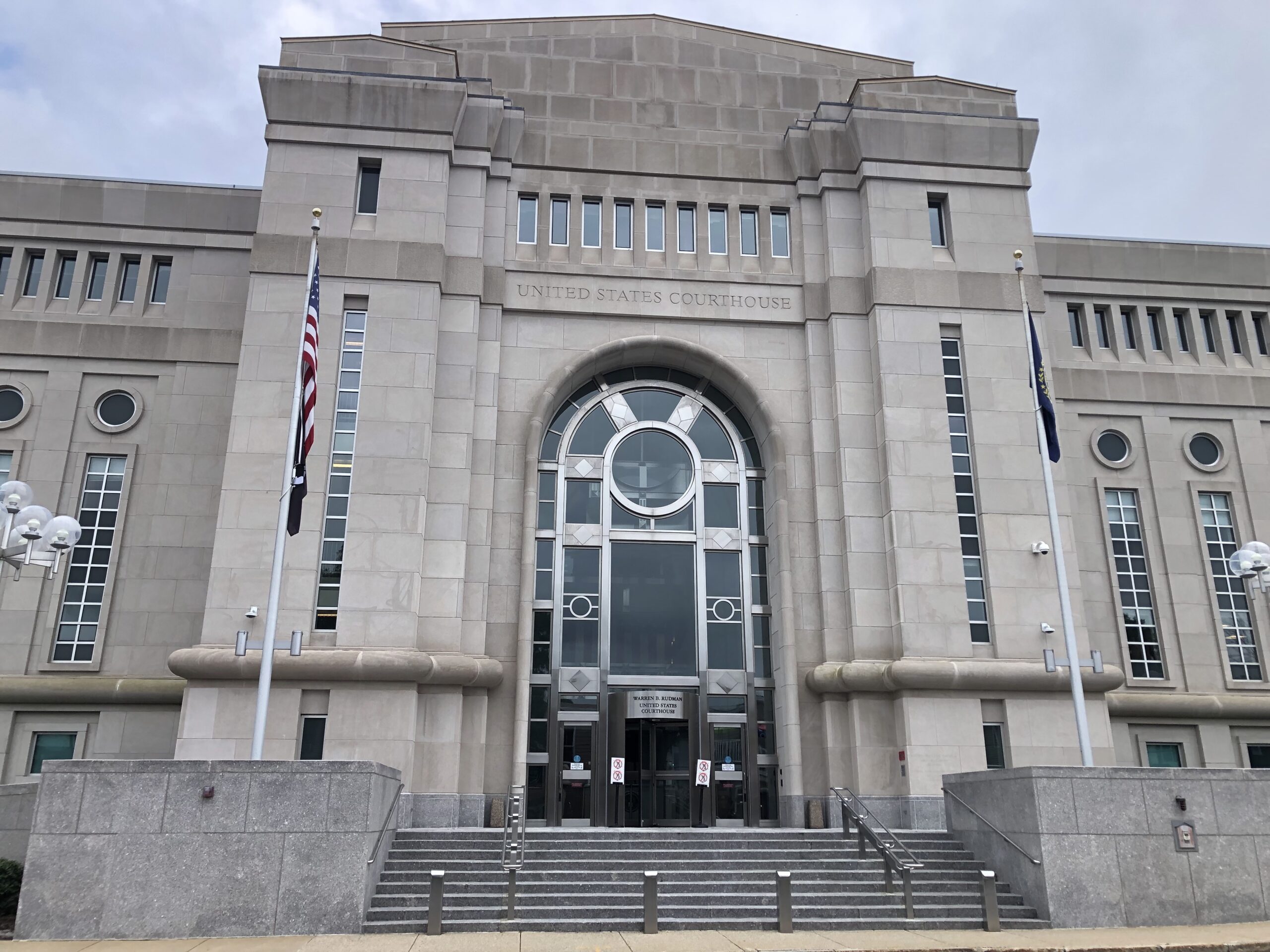
Lancaster was fired by the school district shortly after his arrest. His trial started this week in the United States District Court in Concord.

Federal agents set up a sting last year, using an online ad to draw out men interested in sex with children, according to court records. Lancaster responded to the ad while at work and engaged in a text conversation with an undercover agent.

Lancaster texted back and forth online with someone offering up two young girls for paid sex. Lancaster was first given the choice of the 12-year-old, but seemed incredulous at the girl’s photo.

“Did you say she’s 12? Are you being serious? That’s really bad if it’s true,” Lancaster texted after seeing the child’s photo, according to court records.

The pimp offered a 14-year-old girl to Lancaster instead, but Lancaster decided to go with the 12-year-old, and agreed to pay $100. He finished up his work at the high school that afternoon, and a short time later went to the Manchester hotel to meet the pimp and the girl, according to court records. 

In the hotel parking lot, Lancaster frisked the pimp to make sure there was now hidden police microphone, and then proceeded to close the deal. That’s when agents with Homeland Security Investigations and Manchester Police pounced, taking Lancaster into custody on attempted sex trafficking charges.

Lancaster is the latest New Hampshire school employee recently busted for inappropriate behavior with children.

  • A Portsmouth High School assistant track coach is being accused of paying for sex with an underage girl who was actually an undercover officer.
  • The superintendent of the Sanborn Regional School District just announced he’s resigning after the arrest of a special education teacher who was allegedly abusing children on his watch.
  • A Claremont Middle School teacher was recently arrested for violating a restraining order requiring her to stay away from a 14-year-old boy.
  • A former substitute teacher from the Bedford school district was charged with possession of child sex abuse images.

Opponents of GOP-backed parents’ rights legislation currently working its way through the State House argue teachers and school staff should be allowed to have information about students’ behavior regarding sex and gender that is denied to parents. State House Democrats have repeatedly argued adult teachers and students should be allowed to share secrets because parents can’t be trusted with that information. Parents might harm — or even kill — their children if they are allowed to know what teachers do, Democrats say.

Supporters of parents’ rights point to the significant number of cases of criminal behavior by teachers to remind lawmakers that teachers are no more or less trustworthy than parents.

Lancaster will be sentenced at a later date in federal court.

Claremont SAU Knew Teacher Was Under Investigation, Didn’t Remove Her From School

Claremont school officials have known for months that Claremont Middle School teacher Erin Mullen was under investigation for sexual misconduct with a student, yet allowed her to teach anyway.

Mullen, 38, was arrested last week for stalking the 14-year-old boy she repeatedly tried to take from his family, according to court records. On Wednesday, SAU 6 Superintendent Chris Pratt told NHJournal Mullen was suspended in the fall after allegations of her inappropriate behavior became known. But, Pratt said, Mullen was allowed back in the classroom because she had obtained custody of the boy through an emergency court order.

SAU 6 Superintendent Chris Pratt

“The school was made aware of the initial allegations and she was placed on administrative leave for an extended period of time until the police investigation was completed. She was brought back as a teacher only after the courts gave her temporary guardianship of the student,” Pratt said.

But did Mullen have legal guardianship of the teen? The answer isn’t clear, and  Pratt did not respond to follow up questions about his statement, which is at odds with what NHJournal has learned from court records and speaking with people involved. 

For instance, Anthony DiPadova, the lawyer representing the boy’s mother, told NHJournal that Mullen never meaningfully had guardianship of the boy. Both her attempts to take the boy through court order failed.

“What’s [Pratt is] talking about was dismissed,” DiPadova said. 

The school placed Mullen on leave around October and conducted its own investigation, DiPadova said. That only happened after the boy’s mother and DiPadova complained about the situation to school and district officials several times.

As far as DiPadova understands, the decision to bring Mullen back into the classroom was made after the school’s internal investigation cleared her.

“They apparently didn’t believe anything was going on,” DiPadova said.

Claremont Police Sgt. Trevor Dickerman told NHJournal school officials knew in November, when Mullen was put back to work, that the criminal investigation was still ongoing. Dickerman said SAU 6 officials made the decision to reinstate Mullen based on their own internal conversations, and not input from police.

“They informed us, and they had put in place a number of stipulations on her,” Dickerman said. 

The district restricted Mullen from speaking to the boy in the school building, but she reportedly sought him out after school most days at the Claremont Savings Bank Community Center located across the street from the school.

Mullen has been working in the school uninterrupted since November, until her arrest last week. That’s despite Police Chief Brent Wilmot telling a family court judge in November about the ongoing investigation into alleged sexual misconduct, and the judge stating, “I have serious concerns about Ms. Mullen’s judgment, perception of the situation, and stability.”

DiPadova said Mullen had originally been barred from talking to the boy earlier in the fall via a no contact order, but she violated that order sometime in October. 

The full court file on the stalking petition includes disturbing details, like Mullen advising the boy on how best to poison his mother. Mullen’s mother, Noreen Harvey, reportedly told police, DiPadova, and his paralegal that Mullen was obsessed with the boy.

“Erin told (the boy) that he should (give his mother rat poison) in small doses, and not in one big clump,” Harvey said, according to the stalking petition filed in court.

Harvey also told police and the legal team Mullen had the boy spending nights in her bedroom at her Springfield, Vermont home. Harvey believes something “inappropriate” had occurred. 

Mullen has been communicating with the boy via social media apps and through his X-Box account, but evidence has since surfaced that she was deleting messages during the investigation, according to the petition. Police still have a five-page handwritten note from Mullen to the boy in which she refers to him as “Babes,” according to the petition.

The teen’s mother, a military veteran, and single mom is afraid Mullen won’t stop until she takes the boy away from her. The mother’s nightmare started in the summer when Mullen offered to mentor the boy as the mom was stressed working multiple jobs.

Mullen started taking the boy out of state for overnight trips alone, according to the petition, and keeping the boy at her house in Vermont overnight. The mother went to the police when Mullen would not send her boy home at the end of the summer. That prompted Mullen to file for an emergency guardianship order. The emergency order was initially granted but soon after dismissed because Mullen failed to appear in court for the subsequent hearing. 

According to the petition, Mullen filed another emergency guardianship petition almost immediately after the missed hearing but was denied. Instead, the judge ordered a full guardianship hearing, which took place on Nov. 22. This is the hearing where Wilmot disclosed the investigation and Mullen was again denied custody of the boy.

DiPadova said the mother was forced to seek a stalking petition after not being able to rely on the school to keep Mullen away from her son. The stalking order was granted last week, and Mullen was served with it on Wednesday afternoon. She allegedly violated the petition within an hour, seeking the boy out again at the community center.

Pratt announced Monday that Mullen had been “immediately terminated” following her arrest. 

The whole community is owed an explanation from Pratt and other school officials why Mullen was allowed to continue allegedly grooming the boy despite several red flags, and why she was allowed to be around other children in the middle school, DiPadova said.

“We’ve all got a lot of questions about how they handled this,” DiPadova said.

Wilmot told NHJournal this week the investigation into Mullen is still ongoing, though he declined to discuss possible criminal charges that could result.

Obsessed NH Teacher Tried to Take Boy, But Was Allowed To Continue Teaching

While many Granite Staters may have been shocked by the story of a Claremont Middle School teacher arrested last week for violating a restraining order protecting a 14-year-old boy, the story has been public information for months in this working-class community.

In fact, the teacher, 38-year-old Erin Mullen, attempted to take custody of the student months ago. And yet she continued to teach in the local public school.

Mullen has been the subject of an ongoing police investigation for alleged sexual misconduct, but she kept her job until her arrest last week. 

SAU 6 officials won’t say when they actually learned there was something amiss with Mullen and the boy she is accused of stalking. Superintendent Chris Pratt and School Board Chair Heather Whitney both declined to respond to NHJournal’s requests for comment on Tuesday.

Mullen was arrested Wednesday about an hour after she was served with a court order to stay away from the boy. The officer who served her the order spotted Mullen talking to the boy at the Claremont Community Center, across the street from the middle school, that same afternoon, according to police.

The boy’s mother, who NHJournal is not naming at this time in order to protect her son’s identity, declined to speak when contacted on Tuesday. The mother is a military veteran who was working multiple jobs last summer when Mullen began grooming the boy, according to the stalking petition, telling the mother she wanted to take the boy “under her wing.” 

Mullen’s own mother told police her daughter was “obsessed” with the boy, and she believed Mullen had done something “inappropriate” to him, according to the petition.

“She is going to mess that kid’s mind,” Mullen’s mother reportedly told police.

Mullen’s relationship included out-of-state trips to Atlantic City and New York City with the student during the summer. Mullen, who has children of her own, did not bring her children on those trips, according to the petition. By the end of the summer, the boy was spending nights with Mullen at her Springfield, Vt. house and refusing to go home, his mother states.

When the boy’s mother sought help from Claremont Police to get her son back, Mullen went to court and filed an emergency petition to take guardianship of the boy. Mullen did not show up for that hearing and was, therefore, not granted custody.

But she pulled the same stunt again in November, filing another emergency petition to legally take the boy away from his mother, according to the stalking petition. Mullen did show up for that hearing, and so did a representative from the Claremont Police Department. That was when police disclosed in open court Mullen was being investigated for “inappropriate sexual contact.”

Law enforcement agencies, as a rule, do not disclose the fact of an open investigation into any individual unless there is a safety concern. 

At that point, the boy’s mother got to keep her son. More problematic was the fact that Mullen got to keep her job working with children. It is unclear if police formally told school administrators about the ongoing investigation at that point after making the disclosure in court. Since the November hearing, Mullen has not been charged with sexual misconduct.

Mullen was finally placed on leave after her arrest last week for violating the stalking order, and then fired sometime between the arrest last Wednesday and Monday of this week. Pratt on Monday announced Mullen’s “immediate termination,” though his statement does not specify when, exactly, she was terminated. 

Claremont is a small town where it’s hard to hide a controversy for long. Claremont Middle School has about 400 students and 50 teachers and staffers. Pratt, Whitley, and the rest of the school district administration are free to speak out, if they choose, and clarify what they were told and when about the Mullen investigation,

The question many are asking is what did school administrators and staff know about Mullen’s behavior and when did they know it?


EDITOR’S NOTE: An earlier version of this article misreported the name of SAU6 Board Member Heather Whitney. We regret the error.