
inside sources print logo
Get up to date New Hampshire news in your inbox

Good Grief: Progressive NH Activist Busted Over Dead Mom’s Ballot

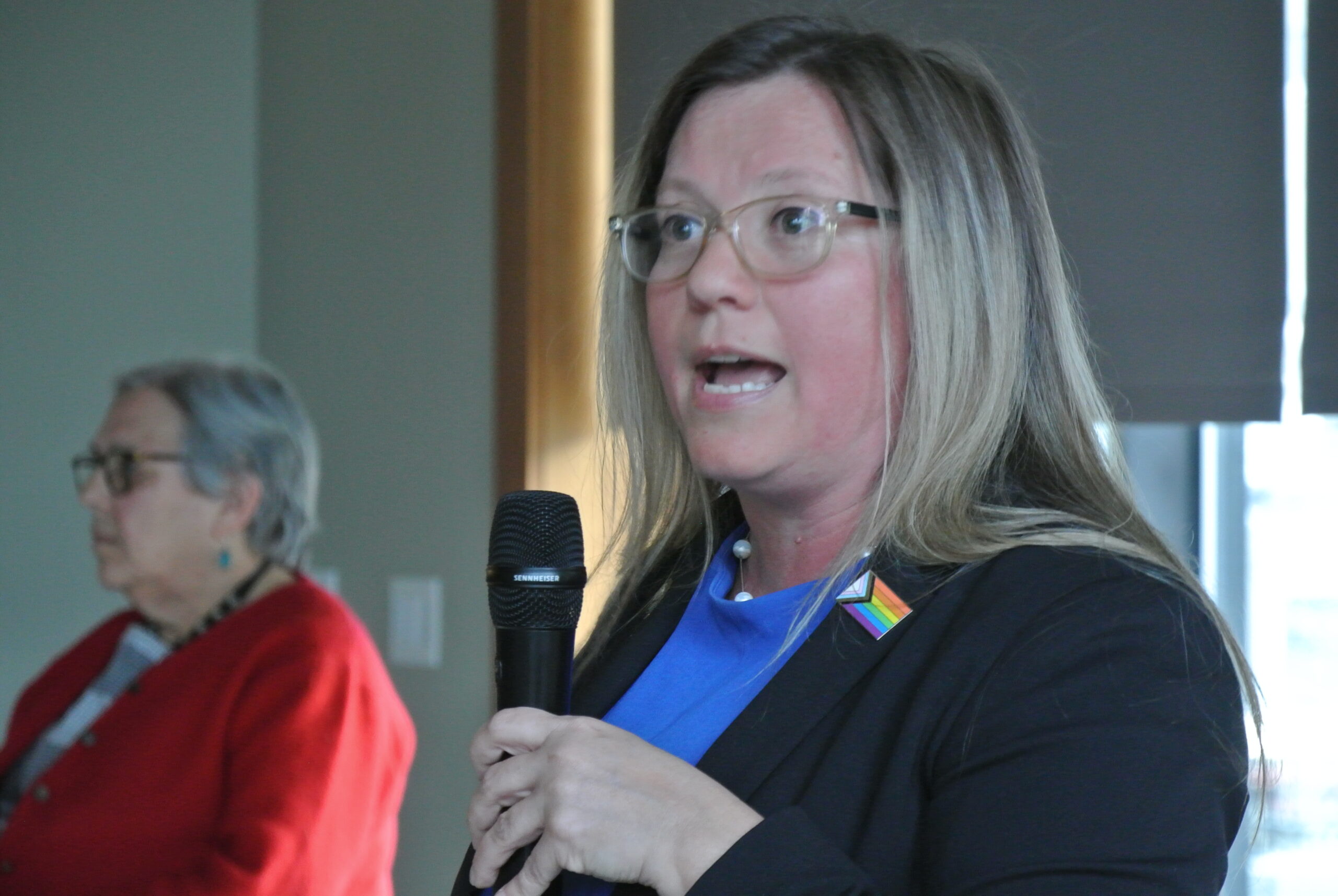
Progressive activist and filmmaker Grace Gato stopped at the Hudson Town Clerk’s Office last November with her mother’s signed absentee ballot application so the elderly Democrat could strike a blow against Donald Trump in the election.

“I’m dropping this off for my mother so she can vote,” Gato reportedly said.

Only one problem: Gatos’s mother, Ruby Cecilia Ponce, was dead. She had passed away about a week earlier.

And despite how Chicago may or may not run its elections, deceased Americans are not legally eligible to vote in New Hampshire.

That fact was pressed upon Gato, 44, on Friday when she was arrested, charged with the misdemeanor crime of wrongful voting.

Now, Gato says her act was merely an homage to her anti-Trump mother, not a sincere  — or legally binding — effort to actually cast a ballot. “It was a symbolic act, not a political one,” Gato says.

In a post on her Substack, Gato weaves a tale of a daughter trying to honor her mother’s dying wish.

“On her deathbed, she made a simple request: ‘Get my ballot,’” Gato wrote. “She had voted in every election for decades, often while hooked to dialysis, determined to do her civic duty even when the system had failed her. When she passed, I went to the Hudson Town Clerk’s office to retrieve her absentee ballot — not to fill it out, not to submit it, but to bury it with her.”

And, she adds, she never crossed the line into violating the law.

“No ballot was signed. None was mailed. No fraudulent vote was ever cast,” Gato wrote.

Gato’s defense — that she planned to bury her mother with the absentee ballot, not vote with it — is a novel one. But it doesn’t appear to be supported by the facts. 

The affidavit from New Hampshire Attorney General Election Law Unit Investigator Cristina Ostrowski points out that a few days before Ponce died on Oct. 15, 2024, Gato made clear on Twitter/X that her mother was going to vote against President Donald Trump.

“My mom is a WWII baby who is going to miss WWIII. She made sure she voted absentee ballot while in hospice care. I just have to mail it. She said make sure that son of a bitch doesn’t win,” Gato wrote.

Six days later, Gato went to the Hudson Town Clerk’s Office with her mother’s signed, absentee ballot application. She reportedly told staff her mother was going to vote with an absentee ballot, though Gato did not mention her mother’s death. Nor did she mention her mother’s dying wish, nor the intention to put the ballot in her casket. The application Gato presented to the clerk was identical to the document she would use to collect a ballot for her mother if she were still alive and ready to cast a mail-in ballot.

“The application included a signature for Ruby Ponce, dated Oct. 13, 2024. On the form, Gato signed an attestation that she assisted the applicant in executing the form because the applicant has a disability,” Ostrowski wrote.

Earlier that day, Town Clerk Michelle Brewster got a letter warning her that Gato planned to illegally vote for her dead mother. When Gato showed up to get her mother’s absentee ballot, the staff made sure she did not get one, Ostrowski said.

Instead, Gato was told her mother’s absentee ballot would be mailed to the house they shared. But Brewster put the Ponce ballot application aside and called the Attorney General’s Office rather than send a ballot to a dead woman, Ostrowski wrote. Gato herself managed to vote via absentee ballot in the Nov. 5, 2024 election.

Ostrowski spoke to Gato on Nov. 12, and the activist acknowledged her mother was in fact dead when she submitted the absentee ballot application.

New Hampshire election law does not take dying wishes into account. The state does consider submitting an absentee ballot application in the name of a dead person a problem, as it leaves the election system vulnerable to fraud. 

Chairman of the House Election Law Committee, Ross Berry (R-Weare), called Gato’s arrest proof positive that the new state law requiring an ID for absentee ballots is necessary.

“Democrats keep insisting voter fraud doesn’t happen in New Hampshire — and then it does. Thankfully, our newly enacted law, SB 287, would have stopped this Democrat activist from committing voter fraud by requiring a simple ID check before an absentee ballot is issued. We passed it because common sense tells you verification matters and today’s arrest proves why. I can only guess why the Democrats fought it,” Berry said.

Dead moms of progressive activists might be a significant voter bloc in New Hampshire elections. Rep. Tim Horrigan (D-Durham) testified before the House last year that his dead mother voted in the 2024 First-in-the-Nation presidential primary. To be fair to Horrigan’s mom, she wasn’t dead when she mailed in her own ballot.

“She was intending to be alive on Jan. 23, but she ended up passing on Jan. 16,” Horrigan said.

Horrigan told the anecdote while he was giving testimony against a proposed law that would have required executors of estates to inform town clerks of a resident’s death to help keep voter rolls current and correct.

Gato blames Brewster and the Attorney General’s Office for misinterpreting her compassion and using state power against a grieving daughter.

“New Hampshire’s wrongful voting statute exists to prevent election fraud — double voting, impersonation, deliberate manipulation of the system. It requires intent to defraud. The facts of my case meet none of those elements,” Gato wrote. “Yet here I am, facing criminal penalties because a clerk mistook compassion for conspiracy.”

Gato is due in Nashua District Court on Nov. 13 for her arraignment where she can try out her grief legal strategy.

“Grief is not voter fraud,” Gato wrote. “And if the State of New Hampshire can’t tell the difference, the problem isn’t the voters. It’s the system.”

Dem Liot Hill, Still Under Investigation, to Skip AG Confirmation Vote

New Hampshire’s self-styled “Top Democrat,” Executive Councilor Karen Liot Hill (D-Lebanon), says her decision to recuse herself from the upcoming vote on Attorney General John Formella’s reappointment is the result of partisan politics.

Critics say the real issue is much simpler: How can Liot Hill vote on an attorney general whose office is currently investigating her on charges of campaign finance violations?

Approving the attorney general and other key state government nominees is a central part of an Executive Councilor’s duties. In a statement to the left-leaning news outlet InDepthNH, Liot Hill blamed her recusal on the GOP.

“Since the Republicans are continuously calling for AG investigations of my work, most recently emails I sent from my official email address advocating for my constituents’ right to vote, I will be recusing myself from the Attorney General’s confirmation vote to prevent even the perception of a conflict of interest,” Liot Hill said.

She did not mention the fact that the Attorney General’s Election Law Unit is conducting an ongoing campaign finance investigation of Liot Hill, one that has been underway for nearly a year.

“Frankly, I don’t understand why this is taking so long,” said Executive Council Chair Dave Wheeler (R-Milford).

The scheduled Sept. 17 vote on Formella’s reappointment is likely a foregone conclusion. Formella is a GOP holdover from Gov. Chris Sununu’s administration who is unlikely to be rejected by the council’s 4-1 Republican majority.

Wheeler suspects Liot Hill’s recusal statement is more about managing the optics of her vote against Formella than the vote itself.

It’s hardly a surprise that a progressive Democrat like Liot Hill would oppose Formella’s nomination. Her predecessor, and fellow progressive, Councilor Cinde Warmington, voted against Formella when he was first nominated in 2021.

Still, Wheeler says, the current circumstances are problematic for Liot Hill. Casting a vote against Formella with the open investigation pending would look bad, he said.

“My guess is she would be inclined not to vote for a conservative, and it would then look like she voted that way for being investigated,” Wheeler said.

It’s not unheard of for councilors to recuse themselves from voting on appointments when there’s a conflict of interest, such as when the nominee happens to be related to a councilor. But Wheeler, who has been a councilor off and on since 2001, can’t recall a councilor ever recusing themself due to a pending investigation.

“Not that I can think of,” Wheeler said.

Liot Hill stopped responding to questions from NHJournal after it began reporting on her campaign finance filings, as well as her efforts to help a Democratic law firm sue the Granite State. NHJournal reached out to her again on Wednesday seeking comment, to no avail.

The investigation into Liot Hill’s campaign finances was opened in October, soon after NHJournal found that the Lebanon Democrat spent thousands in campaign cash on meals, clothes, and visits to salons during the 2024 race. Her campaign expenditures included a $190 ferry ride to the Hamptons and $181 to register her car, as well as repairs around her home. The New Hampshire Attorney General’s Office confirmed to NHJournal on Aug. 14 that the campaign finance probe is still ongoing.

Last week, Liot Hill told InDepthNH that as a result of the investigation, she has already repaid her campaign $2,000 “mostly for clothes and other expenses,” and amended her campaign finance reports. But those reports were amended in November of last year.

NHJournal uncovered emails Liot Hill sent from her government email account last month on behalf of the Elias Law Group seeking to help recruit plaintiffs for a voting rights lawsuit against the state over SB 287. Liot Hill refused to answer when NHJournal asked if she was getting paid by Elias to help find plaintiffs.

Elias Law Group, founded by Marc Elias, is a prominent — and notoriously partisan — D.C. law firm connected to the 2016 Russia hoax scandal. Liot Hill later claimed she was merely helping constituents by finding potential plaintiffs for Elias.

“My job as an elected official is to advocate for my constituents, which is exactly what I do every day,” she told InDepthNH.

That kind of advocacy can get pricey, however. According to recent campaign finance reports, Liot Hill drove more than 9,700 miles for her upcoming 2026 campaign and paid herself $6,771.70 in mileage reimbursement out of those donor funds. The campaign paid her another $2,518 for candidate travel, of which $2,462 was spent at Gills Point S Tire and Auto Service in West Lebanon. Taxpayers also chipped in $11,970 for her annual Executive Councilor mileage/expense stipend.

After her Elias-related constituent services were revealed, House Deputy Majority Leader Joe Sweeney (R-Salem) called for Liot Hill to resign or face impeachment.

“That’s not public service; that’s political lawfare run out of a taxpayer-funded inbox,” Sweeney wrote in a statement.

New Hampshire Republican Party Chairman Jim MacEachern sent a letter to the Attorney General’s Office asking for an investigation into Liot Hill’s emails on behalf of Elias.

“Granite Staters expect their elected officials to use their positions to serve the people, not to further their political interests. Liot Hill’s decision to use her official capacity to communicate on behalf of a political law firm adds to the ethical concerns that have already been generated by her previous scandals,” MacEachern wrote.

The Attorney General’s Office never confirms or denies the existence of any pending investigation. After MacEachern’s letter was sent, Department of Justice spokesman Michael Garrity said the letter would be taken under advisement.

“We will assess the information provided and determine the appropriate course of action based on the facts and applicable law.”

Dem Woodburn’s Domestic Abuse Drama Ends With Jail

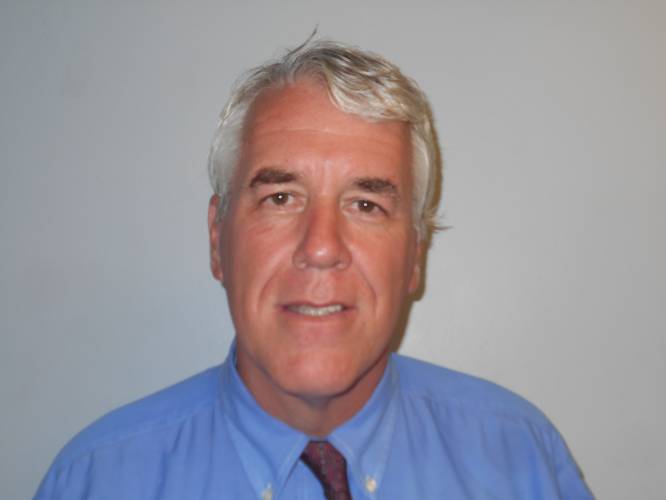
Democrat Jeff Woodburn’s journey from state Senate Minority Leader with his eye on the Corner Office in Concord to convicted petty criminal came to a close Wednesday when the Coos County politician was carted off to jail.

Woodburn appeared before Grafton Superior Court Judge Lawrence MacLeod after the state Supreme Court rejected his last appeal to avoid serving jail time. MacLeod denied defense attorney Mark Sisti’s request to suspend the two 30-day jail terms, and his request to stay the sentence for another appeal. 

MacLeod said the sentences for the two criminal mischief convictions are appropriate based on Woodburn’s violent behavior.

“I’m not going to second guess that,” MacLeod said.

Sisti then tried a last-ditch argument to keep Woodburn out of jail, saying his client had already been punished enough.

“The expense of litigation has been backbreaking, his reputation has been attacked for years, and the impact on him cannot be measured,” Sisti said in his motion for a suspended sentence.

Sending Woodburn to jail is unjust, and serves no purpose, especially in light of the dozens of similar cases Sisti cites that resulted in no incarceration, he argued.

“The real question is: why is Jeff being singled out for incarceration when many others, some as high profile or higher profile than he is, receiving suspended sentences for offenses as bad or worse than his,” Sisti wrote.

Sisti claimed in court on Wednesday that Woodburn is being singled out and given an unfair sentence by prosecutors angry that he went to trial and appealed his domestic violence and simple assault convictions and won.

“You’re looking at the living, breathing personification of a trial penalty. He had the audacity to go to trial,” Sisti said.

But Senior Assistant Attorney General Joshua Speicher rejected that argument, saying it’s Woodburn who is trying to upend justice and get special treatment. Speicher called Sisti’s argument an “11th-hour Hail Mary.”

“Although he claims that he is the victim of unfair punishment, what the defendant actually asks of this court is special treatment that is unavailable to other defendants,” Speicher wrote. “The defendant is not special, and does not deserve special treatment. He stands before this court as a convicted criminal who has been sentenced to serve stand committed time, and has exhausted all rights to appeal.”

Woodburn’s political career crashed in 2018 when he was charged with assaulting his former girlfriend in a domestic abuse case. Woodburn had been grooming the woman to be his first lady when he ran for governor, according to court records.

The case against Woodburn has dragged on for seven years, with the former state senator getting his 2021 convictions for simple assault and domestic abuse overturned by appealing to the state Supreme Court.

A second trial on the assault charges ended with a hung jury earlier this year, and New Hampshire Attorney General John Formella opted to drop the case rather than go for a third trial. That left just the two criminal mischief convictions, which the Supreme Court refused to reconsider. 

According to court records, Woodburn bit the woman during a December 2017 argument as she drove him home from a party. An intoxicated Woodburn demanded to be let out of the car and planned to call a friend for a ride. When the woman reached to take his phone, he allegedly bit her hand, according to the allegations.

Woodburn argued in this year’s second trial that he was acting in self defense when he bit the woman. 

As for the criminal mischief, Woodburn kicked in the door to the woman’s house and she refused to let him inside about a week after the fight in the car, according to court records. Earlier that year, in August 2017, he reportedly kicked her clothes dryer, breaking the appliance, according to court records. 

Amanda Grady Sexton with the New Hampshire Coalition Against Domestic and Sexual Violence, said today’s hearing represents accountability, finally, for Woodburn.


“Former Senator Woodburn will begin serving his jail sentence today, despite repeated efforts to avoid accountability—even after being found guilty by a jury of his peers. We commend the bravery of the survivor, and hope this outcome brings some sense of closure after nearly 7 years,” Grady Sexton said.


Shaheen Bragged About Writing $42 Billion Broadband Program. It’s Connected Zero People to Internet

One year ago this week, U.S. Rep. Chris Pappas was patting his own political back over nearly $200 million in federal tax dollars coming to New Hampshire to improve broadband internet access.

“Access to high-speed internet enables our businesses to compete, communities to thrive, and Granite Staters to succeed,” Pappas was quoted in a press release. “I was proud to help pass the bipartisan infrastructure law to secure these funds.”

He wasn’t alone.

Rep. Annie Kuster said she was “thrilled” by the broadband funding, and Sen. Maggie Hassan called it one of her “key priorities.”

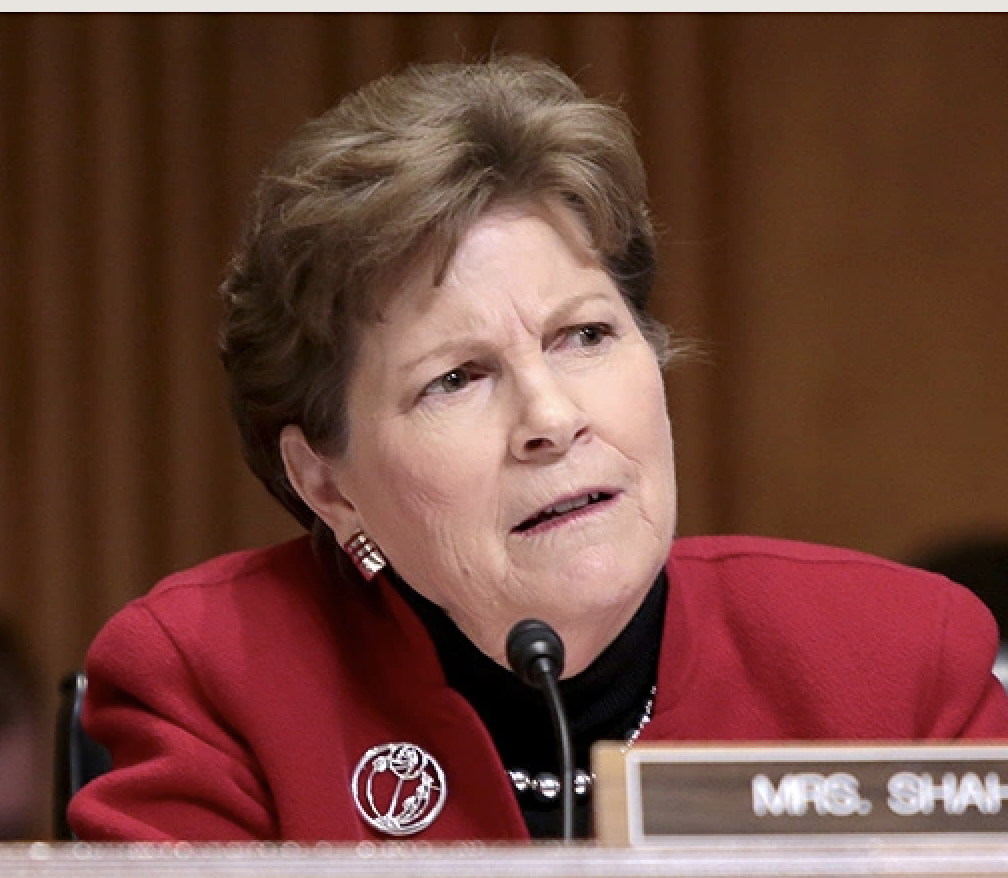
And Sen. Jeanne Shaheen was the most excited of all, sending a “breaking news” press release taking credit for “writing the broadband provisions that created the BEAD program.”

“This is precisely what we had in mind,” Shaheen said of the $200 million broadband cash haul.

But ask Shaheen about the Broadband, Equity, Access, and Deployment (BEAD) program today, and she’s a “no comment.” The rest of the delegation is suddenly silent as well. 

Perhaps that’s because of a new report saying the $42 billion program launched in 2021 has yet to connect a single person to the internet.

Not one.

“In 2021, the Biden administration got $42.45 billion from Congress to deploy high-speed Internet to millions of Americans. Years later, it has not connected even one person with those funds. In fact, it now says that no construction projects will even start until 2025 at the earliest,” Federal Communications Commissioner (FCC) Brendan Carr reported.

According to the Washington Times, the reason Biden’s expensive, high-speed rollout is stuck in dial-up mode is progressive politics.

The law Shaheen helped write imposes burdensome requirements like climate change mandates, preferences for hiring union workers and the requirement that eligible companies prioritize the employment of “justice-impacted” people with criminal records to install broadband equipment.

“The Biden administration’s failure to turn even a single shovel’s worth of dirt with these dollars flows directly from its own choices,” Carr says. “The administration chose to pursue DEI goals and climate change priorities and to add layers of Byzantine process that senators warned would delay internet builds.”

Among the mandates is a requirement “to prioritize certain segments of the workforce,” such as “individuals with past criminal records” and “justice-impacted participants.”

Carr compared the years of spending and billions of dollars — all without result — to the recent news that Biden’s billion-dollar push for electric vehicle charger stations has led to just seven or eight actually constructed.

“A lot of people look at the seven EV chargers, and they thought that was a big miss,” Carr said. “And you know, at least you got seven EV chargers. Here, we’ve got $42 billion, and we’ve got no shovels in the ground — nobody connected at all.”

As critical as high-speed internet service is for New Hampshire families, getting them connected is taking a back seat to a shopping list of liberal items, according to Sen. John Thune (R-S.D.). He joined nine other Senate Republicans in a letter to the National Telecommunications and Information Administration (NTIA) demanding the agency drop its “bureaucratic red tape and far-left mandates” that have kept the program offline.

“As numerous states and stakeholders have articulated, current BEAD rules divert resources away from bringing broadband service to rural America in a manner that is inconsistent with NTIA’s statutory authority in the Infrastructure Investment and Jobs Act (IIJA). NTIA’s failure to resolve these concerns will prolong the digital divide and put billions of scarce taxpayer dollars at risk,” the senators wrote.

Meanwhile, Carr says, the Biden administration has added insult to injury for Americans in rural areas like northern New Hampshire who could have been helped by the BEAD program.

“While the Biden administration’s $42.45 billion plan from 2021 has not resulted in even a single shovel’s worth of dirt being turned, the government in 2022 revoked an award to Starlink that would have delivered high-speed internet to 642,000 rural locations,” Carr said.

Worse, Carr said, a group of moderate Republicans led by Sen. Susan Collins (R-Maine) wrote the Biden administration in 2022 warning the heavy-handed regulations proposed for the BEAD program would prevent it from fulfilling its mission.

“Certain provisions go beyond the authority granted to NTIA and will discourage or deter broad provider participation. This undermines our shared goal of delivering broadband service to all Americans as soon as possible,” the senators wrote.

Then, as now, the New Hampshire delegation had no comment.

Judge Blocks Woodburn’s Request for ‘Blame the Victim’ Defense in Domestic Violence Case

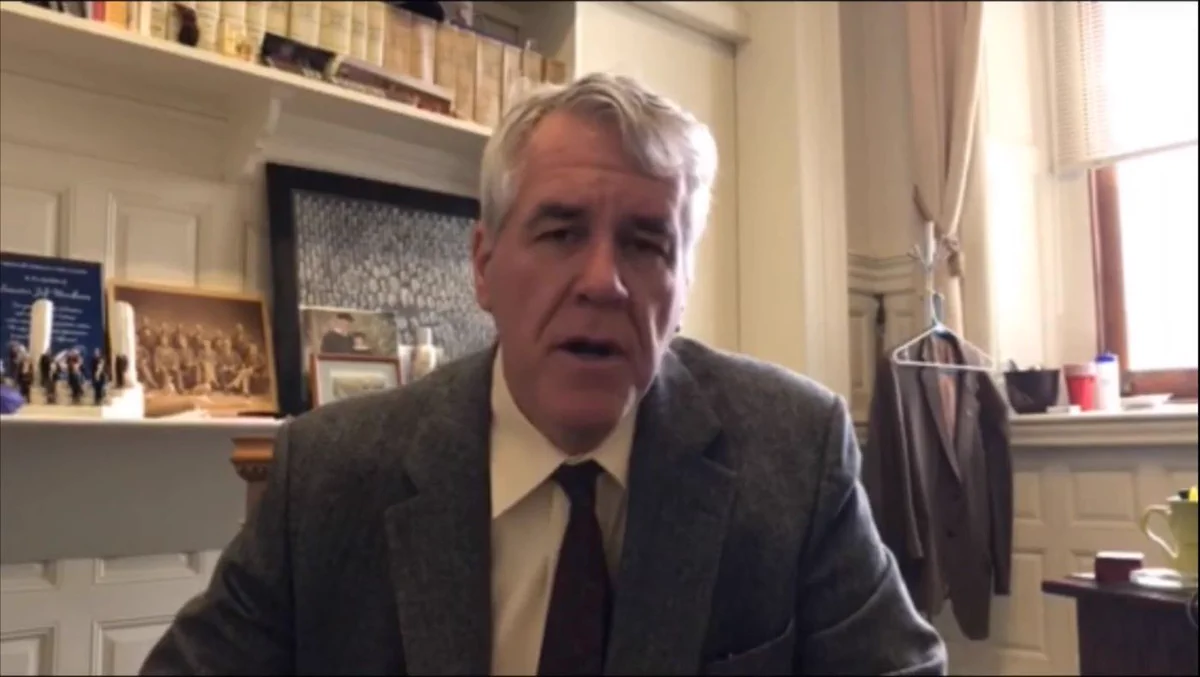
Disgraced former State Sen. Jeffrey Woodburn is not being allowed to introduce evidence that he claims shows the alleged victim had a history of causing the kind of fights that led to his alleged crimes.

Woodburn, once one of the highest-ranking elected Democrats in state government, continues to fight hard against the domestic violence charges that have hung over him since his 2018 arrest. He is heading for a new trial on one count of domestic violence and one count of simple assault after the New Hampshire Supreme Court ruled he was denied the ability to argue self-defense.

On Friday, Coos Superior Court Judge Peter Bornstein denied Woodburn’s request to introduce evidence of prior instances that “physically interfered with his attempts to avoid conflict.”

Woodburn’s attorney, Mark Sisti, filed a motion to allow this evidence, even though it detailed incidents that predate the alleged violence for which he had originally been convicted. 

“Testimony concerning Jeff Woodburn’s prior attempts to avoid conflict and the alleged victim’s behavior about those attempts are admissible and relevant to his mental state at the time of this alleged offense,” Sisti wrote.

Assistant Attorney General Zachary Wolfe’s objection pointed out Sisti and Woodburn supply no details about this “vague, amorphous” evidence, making it impossible to counter in court or even prove they actually happened.

“The defendant’s motion fails to identify not only the specific instances of conduct he wishes to introduce, but also any specific legal grounds justifying his request,” Wolfe wrote.

While the Supreme Court ruled Woodburn can use evidence demonstrating his claim of self-defense for the actions covered in the trial, Bornstein wrote in his order that it does not open the door for what is essentially the unspecified evidence Woodburn is claiming.

“Among other things, the defendant has not identified any of the alleged victim’s prior acts as to which he seeks to introduce evidence or the approximate date(s) on which he alleges occurred,” Bornstein wrote. 

The simple assault and domestic violence convictions stem from Woodburn’s violent actions related to three separate incidents, according to court records. In the first instance, Woodburn and the woman arrived in separate vehicles at a Dec. 15, 2017, Christmas party, and the woman agreed to drive him home so that Woodburn could drink at the party. During an argument on the drive home, Woodburn had the woman pull over, and during a struggle over his phone, he bit her hand, according to court records.

On Christmas Eve that same year, Woodburn kicked the door to the woman’s house when she refused to let him inside. In August 2017, he reportedly kicked her clothes dryer earlier that year, breaking the appliance, according to court records.

The woman went on record telling Bornstein that at one point during one of her struggles with Woodburn, she tried to grab his phone without permission. Bornstein stated in court that it did not rise to the level of behavior allowing Woodburn’s self-defense claims.

Woodburn’s new trial on the two charges is slated for next year. The North Country Democrat has already been convicted on two counts of criminal mischief and is facing 30 days in jail. He is also free while he appeals Bornstein’s August ruling denying a new trial on these charges.

Woodburn is just one of several Granite State Democrats embroiled in legal scandals. Strafford County Sheriff Mark Brave is on paid leave and facing charges of stealing tax dollars to pay for trysts with a series of paramours. Former state Rep. Stacie Laughton (D-Nashua) is in jail awaiting trial on child pornography charges. And two-time Democratic candidate for governor, former Portsmouth Mayor Steve Marchand, has just been called out for a second time by the state attorney general over illegal campaign tactics he used in local political races.

In addition, both U.S. Sen. Maggie Hassan (D) and the state Democratic Party are still holding on to cash donated to them by notorious fraudster Sam Bankman-Fried after he allegedly stole it from clients. Hassan and the NHDP were two of the top recipients of the more than $100 million in political campaign contributions federal prosecutors say Bankman-Fried made before the 2022 midterm elections.