
inside sources print logo
Get up to date New Hampshire news in your inbox

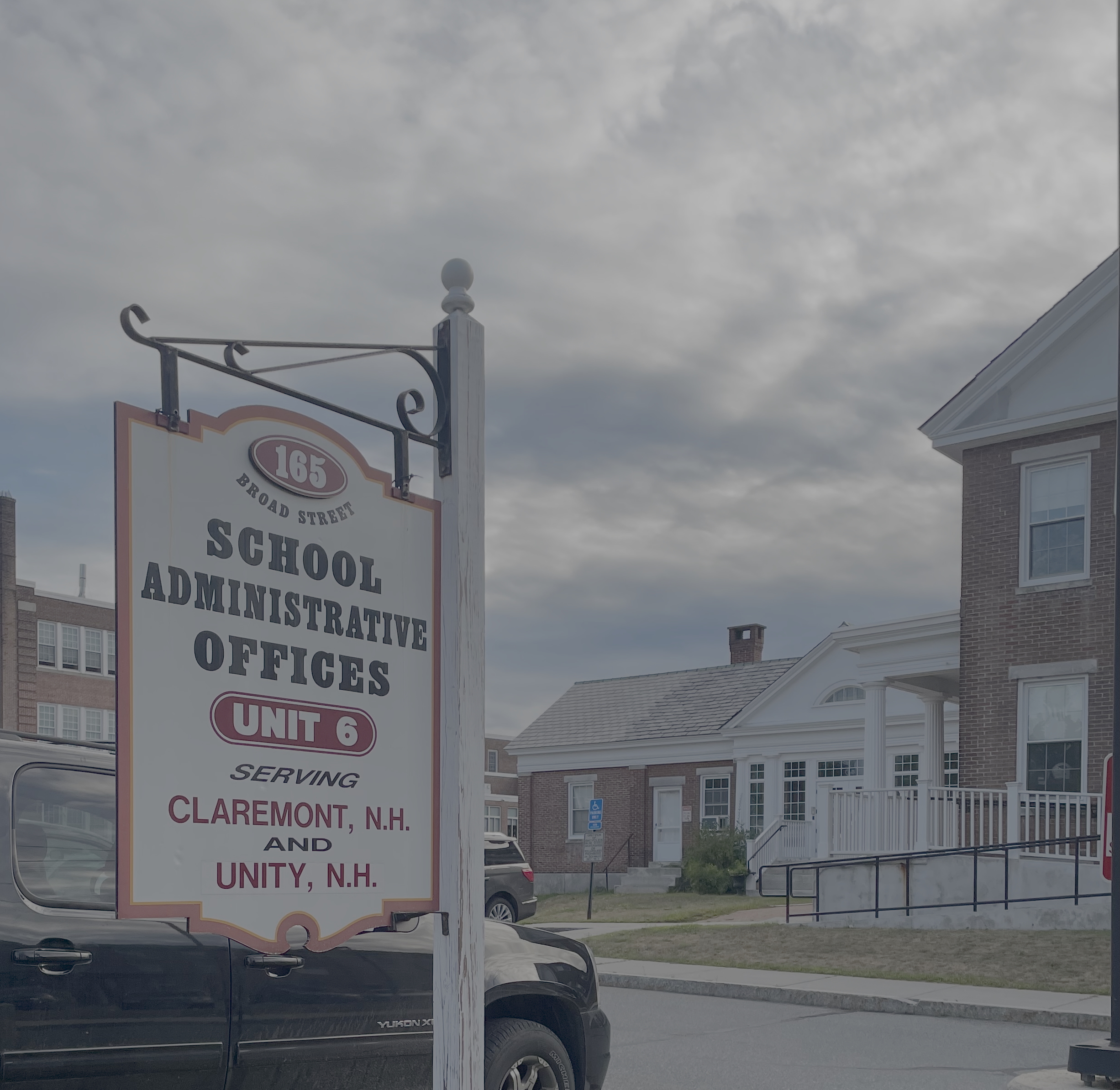
State Begins Audit as Claremont Says Bye Bye to Bluff Elementary

It’s been more than a month since Claremont residents learned the school district’s mismanagement was so bad the school year might not be completed. Soon, they will find out just how deep the deficit hole is.

One thing taxpayers do know: It’s so deep the district is shutting down Bluff Elementary School to save money.

The Claremont School District is currently facing a shortfall estimated to be between $1 million and $5 million, a shocking number for a small, academically underperforming school system.

Claremont’s school year wasn’t delayed as many feared. Emergency measures were taken, such as canceling contracts for 19 teachers, laying off 20 nonteaching staffers, and shutting down extracurricular activities like athletics. All that was done without knowing the total dollar amount of the deficit.

Matthew Angell, the comptroller brought in to help clean up the disaster, said Wednesday he may be able to pinpoint the total amount of the multimillion-dollar deficit by early next week.

“I’m 60 percent of the way to figuring out what the (actual) deficit is,” Angell said.

Angell has said the financial records were in such disarray when he stepped into the job last month that the district’s general ledger was not usable and had to be rebuilt. That is nearly done and will allow for the completion of the 2023 fiscal year audit. But New Hampshire Department of Education officials aren’t waiting, Angell said. Starting next week, state officials will be looking at the books.

“The state is coming in and doing some audits, some program audits, and that is unusual to what I’ve seen in other school districts. Because they’re also concerned,” he said.

Former Superintendent Chris Pratt informed the board in August that the district was $5 million behind on bills and hamstrung by a structural deficit that could be anywhere between $1 million and $5 million. Pratt exited the district last week after being on paid administrative leave since late August.

Personnel chaos in the administrative building, incompetence, and a negligent lack of oversight have all been cited as causes for the crash. Claremont’s school district stopped doing annual financial audits in 2016. In the last couple of years, under Business Administrator Mary Henry, the district was repeatedly warned by the New Hampshire Department of Education about sloppy financial records. The situation got so bad the state was forced to withhold Claremont’s federal grant revenue for much of 2024 until the problems were corrected.

Bluff’s closure was largely opposed by teachers and parents in the district, but interim Superintendent Kerry Kennedy said it had to happen sooner or later.

“Nobody wants this, but it cannot be sustainable for years and years,” Kennedy said.

Bluff is home to about 170 students in kindergarten through fifth grade out of about 560 Claremont elementary school students. The city’s declining student population means much of the space in the three elementary school buildings has gone empty in recent years. The loss of teachers this year, between the canceled contracts and other teachers leaving, left Bluff without enough teachers to justify keeping the building open.

The plan approved Wednesday night will see all Bluff students and teachers move either to Maple Avenue or Disnard. The Bluff classes will stay together with their current teachers in the new buildings. The move is expected to be completed by Oct. 20.

Loren Howard, the sole school board member who voted against the closure, blamed the emergency cuts made earlier this fall for the shutdown. Of the 19 teachers who had their contracts canceled, five were set to work at Bluff.

“I just don’t see how we didn’t see this coming,” Howard said.

Howard said the board acted rashly in making the major cuts without knowing the total deficit figure, or exactly how the deficit was created.

Claremont’s Fiscal Disarray Flagged by State Reviews Years Before Current Crisis

The Claremont School District misused federal grant money for years, using the funds to pay people it later could not identify during a New Hampshire Department of Education review, among other financial red flags.

NHJournal obtained several state compliance letters revealing the disarray inside the SAU 6 business offices that led to the state withholding all federal grant funding for most of 2024. While the issues that halted the money were supposedly corrected in October of last year, a blistering 59-page compliance letter sent to suspended Superintendent Chris Pratt in July cited a host of old and new federal grant violations.

Hundreds of millions of dollars in federal grant funding pass through the state Department of Education to local school districts every year, with the state responsible for making sure local districts follow federal requirements. Claremont received approximately $14 million in federal funds between 2022 and 2024.

The letters and reports obtained by NHJournal show the district repeatedly failing to meet basic guidelines for spending this money. District officials were also unable to account for how that money was used.

Both Pratt, who started in January 2024, and Business Administrator Mary Henry have been placed on paid administrative leave. The Claremont School Board learned of a multimillion-dollar deficit that appears to have begun sometime in 2023, when Henry was hired.

The district is seeking an emergency $4 million loan to keep schools open this year as officials try to resolve the fiscal issues and fill the funding gap.

According to the monitoring report sent to Pratt, Henry, and Assistant Superintendent Michal Koski on July 7 by NHED Administrator Ryanne Dennis, there was a great deal going wrong with the federal grants programs.

For starters, Claremont could not prove it used certified teachers or certified paraeducators for Title I services as required by federal law. That’s because the district apparently could not name the people it employed based on its own records.

“We noted that (Claremont) indicated that it did not know the names of the educators providing equitable services through 2023-2024 Title I, Part A Activity #151757. As a result, (Claremont) was unable to verify whether the educators providing these services met applicable state certification and licensure requirements,” Dennis wrote.

Title I also requires that the district inform parents when a teacher or paraprofessional does not have state certification. Claremont did not do that, either.

“(Claremont) did not submit documentation showing that parents were notified when a student was assigned or taught for four or more consecutive weeks by a teacher who does not meet state certification requirements,” Dennis wrote.

Claremont repeatedly failed to show that it was following guidelines for the money it accepted. Even though it took money to help homeless students, the district failed to have appropriate policies in place as required and failed to provide the services paid for by the grant. Dennis noted Claremont administrators pointed to a 2009 policy that has never been updated to show compliance in 2025.

In addition to its failings on behalf of public school students, records reviewed by NHJournal indicate the district is not following Title I rules for non-public school students, either.

Title I services, such as reading assistance, special education tutors, or vocational programs, are required for non-public school students. That has been part of federal law since President Lyndon Johnson signed the original Elementary and Secondary Education Act in 1965.

“Upon such review, we noted that (Claremont) did not have evidence of engaging teachers and families of participating non-public school students in the inclusion of family engagement services and activities,” Dennis wrote.

For the services it did provide non-public students, the district was inappropriately paying unknown third parties to provide these programs while exerting little or no control over the grant money. In one instance, Claremont paid a private school to operate a summer school program for private school students with no oversight from the district and no federally approved contract. When asked, Claremont officials could not even name the tutors who taught at the program.

“This response raises additional concerns regarding [Claremont’s] oversight and suggests that the non-public school may be controlling the provision of equitable services,” Dennis wrote. “This lack of sufficient written procedures for monitoring the federal programs in which non-public schools participate, combined with potential misuse of federal funds through possible direct payment to a non-public school, is non-compliant with ESSA.”

Dennis also noted there is no documentation showing Claremont does not use federal funds to supplant, or replace, local funding altogether.

Claremont had its federal funding withheld in April 2024 when district officials did not have any documentation prepared for a state review, according to an NHED letter sent to Pratt.

“Given Claremont School District’s failure to comply with the ESEA Federal Programmatic Consolidated Monitoring requirements, the New Hampshire Department of Education (NHED) is required to withhold federal funding as a remedy of noncompliance until [Claremont] can provide required documentation and sufficiently demonstrate federal funds are being administered appropriately,” NHED Administrator Emily Fabian wrote.

In August 2024, Fabian responded to Pratt’s inquiry about the funding by again explaining that the district needed to come up with a corrective action plan for failing to provide records.

“This act of noncompliance was one of many throughout the monitoring process, and as such, the New Hampshire Department of Education (NHED) implemented remedies of noncompliance,” Fabian wrote.

By the time Claremont managed to come into compliance for the 2024 review, it was October, and the district had already lost out on any federal grants with Sept. 30, 2024, deadlines. According to former Claremont School Board member Frank Sprague, administrators have yet to submit applications for $1 million in federal grant funds due at the end of this September.

Claremont School Board Vice Chair Resigns, Slams ‘Architects of Disaster’

The same day that word leaked of a possible $4 million bailout loan for the Claremont School District, Vice Chair Frank Sprague abruptly resigned, declaring he could no longer work with the “architects of this disaster.”

“I can’t work with these people. I don’t have any confidence in what they say,” Sprague told NHJournal, blaming Business Administrator Mary Henry and Superintendent Chris Pratt for overspending and recordkeeping failures that left the district millions of dollars in the red.

“Their 2025 budget, it was like teenagers with dad’s credit card,” Sprague said.

News of Sprague’s resignation broke the same day teachers were told the district had secured a $4 million loan from Claremont Savings Bank to keep schools afloat. Assistant Superintendent Michael Koski emailed staff Wednesday morning to say the money was on its way.

“Claremont Savings Bank has agreed to give the Claremont Schools a $4 million loan! Sleep well tonight and get ready for a great first day,” Koski wrote.

The loan, however, has yet to be finalized. And City Councilor Nick Koloski questioned whether the district even had the legal authority to move forward, noting there had been no School Board vote or public hearing.

“Citizens, myself included, are understandably apprehensive about handing over what feels like a blank check without knowing the full scope of a plan or the district’s true financial position,” Koloski said.

The loan report comes at a critical moment. The district has already cut 19 new teachers and 20 non-teaching staff in a desperate bid to reduce costs. Administrators warned there would be no money for substitutes, raising fears among educators that their paychecks might not clear on Friday.

Some teachers told NHJournal they were ready to leave the district entirely if the situation worsened.

The fiscal collapse did not come without warning. State education officials issued five letters between May 2022 and October 2024 warning Claremont of their “federal programmatic non-compliance.” Those letters are in addition to three fiscal compliance reports dating back to 2019 that flagged the district as high-risk for losing federal grant funding.

Independent auditor Mike Campo, brought in to assess the damage, said last week the trouble likely began in 2023, when the district failed to complete federal grant applications correctly. That mistake cost Claremont millions in reimbursements for money it had already spent.

Board member William Madden said those errors account for a large share of the current budget gap.

Sprague insisted that administrators, including Pratt, Henry, and former Superintendent Michael Tempesta, withheld key information from the board, noting that as late as May, the budget reports showed a positive balance.

“It wasn’t until Campo found a $2 million hole from 2023 that we even knew there was a problem,” Sprague said.

Many Claremont parents and taxpayers expressed their frustration that, while teachers and staff are being laid off, both Henry and Pratt remain on the district payroll — though they’re not being allowed to work.

When the district announced its fiscal crisis to the public, school officials urged parents and taxpayers to contact the state and demand help. Asked if a state bailout for Claremont was possible, Gov. Kelly Ayotte told NHJournal Wednesday that, while the students are the priority, there are major concerns about incompetence.

“For the parents of these kids, I can understand why they’re angry. I mean, I’m a mother, and I’d be very angry at what happened here, too,” Ayotte said.

The state is watching the situation closely, Ayotte said, “We’ve also asked the community college to partner here and see if there is any way they can help the local school districts.”

But concerns about the district’s fiscal track record are also weighing on her mind,

“We understand that kids have to be at the forefront of this, but we need to have a position where there’s good fiscal management of the local dollars,” Ayotte said. “There has been some serious mismanagement, from what I’m hearing.”

Dem Attack on Proposed PragerU Course Flunks Fact Check

New Hampshire’s political social media was abuzz Wednesday over word the state Board of Education was considering approving a video series from the conservative nonprofit PragerU for the Learn Everywhere program.

Granite State Democrats were in high dudgeon, filling Twitter with accusations of hate and homophobia. House Democratic Caucus Leader Matt Wilhelm (D-Manchester) warned PragerU content depicts cartoons “that suggest slavery was ‘no big deal,’” and “peddle anti-LGBTQ+ hate.”

It was an odd accusation, given the video series in question is about personal finances and balancing your checkbook.

The PragerU course under consideration (which can be viewed here) is called “Cash Course” and covers the basics of financial literacy, from how paychecks work, to getting a bank loan, to how to invest for retirement. The videos viewed by NHJournal do not discuss politics or present information with a political slant, and there was no mention of either slavery or sexuality.

“It’s disingenuous of the Democrats not to look at the actual material before making a judgment,” Frank Edelblut, New Hampshire’s Education Commissioner, said of the controversy.

PragerU, started by talk radio personality Dennis Prager, seeks to add its online financial literacy course to the state’s Learn Everywhere offerings. Learn Everywhere allows students to earn high school credits for skills and knowledge attained outside the classroom through optional undertakings.

In the wake of New Hampshire Democrats’ coordinated complaints, State Board of Education chair Drew Cline said he has heard from people upset about the state using PragerU content. But he has not heard from anyone who has looked at the materials and videos.

“The fear-mongering being done about this is unfortunate because these financial literacy videos are quite useful and entirely apolitical and provide students with quite valuable knowledge of how to manage their finances,” Cline said.

The videos offer straightforward lessons about basic money handling, free from political ideology or any of the hot-button culture war topics sometimes associated with Prager. That hasn’t stopped leading Democrats from blasting the state for even considering PragerU for Learn Everywhere, though none of them appear to have viewed the actual content.

“PragerU does not reflect New Hampshire values, and I’m appalled this organization has been put forward to work with NH students,” said Democratic candidate for governor Manchester Mayor Joyce Craig. “As governor, I’ll work with New Hampshire educators to strengthen public schools so every student receives a quality education.” 

Executive Councilor Cinde Warmington (D-District 2), who is running against Craig in the Democratic primary, said adding PragerU to the Learn Everywhere program would harm democracy.

“Pushing PragerU’s radical, political bias into our education system is yet another attempt by Edelblut to intentionally undermine the bedrock of our democracy. As governor, I’ll fight to strengthen our public schools so all NH children have the opportunity to succeed & thrive,” Warmington said.

NHJournal asked Rep. Wilhelm where in the PragerU series slavery is referred to as ‘no big deal’ as he claims. The top House Democrat declined to respond.

Cline and Edelblut argue the critics haven’t reviewed the material in question and don’t understand how Learn Everywhere works. 

“The important thing for people to realize, contrary to some irresponsible reporting this week, PragerU is not up for approval. The financial literacy course created by PragerU is up for approval,” Cline said.

Conservatives point to a double standard from Democrats in the area of academics, such as their support for racist classroom material in New Hampshire classrooms from author Ibram X. Kendi, who teaches White students are inherently bigoted due to their skin color.

“We have approved charter schools with strong left-of-center perspectives, we’ve approved schools with strong DEI (diversity, equity, and inclusion) components, and no one complained about that. We’re not trying to impose a political view on students; we’re trying to create options for students,” Cline said.

Learn Everywhere gives New Hampshire families more options for educational opportunities by allowing students to earn high school credits from approved programs at no cost to New Hampshire taxpayers. The Learn Everywhere classes are entirely optional and are meant to encourage students to learn outside the classroom.

Financial literacy is a valuable skill that many children are not learning at home. That puts them behind when they enter the working world or when they try to navigate decisions like taking out student loans.

“I wish somebody had taught me that in high school,” Cline said. “Not every kid has people in their family who can teach them basics about how to manage their finances.”

Learn Everywhere includes robotics courses, science classes, karate classes, music classes, and even after-school programs at High Brothers and Big Sisters venues.

“We think it’s important that our students learn,” Edelblut said. “Different students are going to connect in different ways.”

If the course is approved, students who opt for the PragerU financial literacy class would get a half credit, meaning they would still need to take another financial literacy class in order to get the whole credit.

Cline understands people who are turned off by Prager’s political views would be concerned about the course. That is why he encourages everyone to look at the videos online, which are posted for free. 

“There is nothing in this proposal that is political at all,” Cline said.

The State Board of Education will take up PrageU’s application on Thursday.

Prenda Kindling Fires of Learning, But NH Public Schools Take a Pass

Kelly Smith is on a mission to change how children are educated, giving them the tools they need to learn and strive for a better life.

Smith is the founder and CEO of Prenda, the microschool company that now has 30 learning pods operating in all 10 counties of the state. He told NHJournal he wants to break the mold when it comes to thinking about how children learn best. And, he said, he rejects the “mind is a vessel” model of education.

“If you think of it as ‘sit in this chair, and I will give you assignments and lessons and education. I’m going pour this into your head,’ that’s one model,” Smith said. And, he believes, it is the wrong one.

“The correct metaphor is a fire to be kindled. We’re asking questions, setting goals, saying, ‘What do you want out of life?’”

Education pods and microschools exploded onto the education scene during the COVID-19 lockdowns as frustrated parents sought ways to get organized, adult-led education for kids otherwise abandoned to “Zoom school.” And test results in the wake of the closed-classrooms lockdowns pushed by teachers unions showed they were an academic disaster.

On the other hand, a study by the Rand Corporation found students using the “personalized study” model similar to microschools experienced significant improvements, often surpassing the national averages in math and reading achievement.

But Granite State public schools are not interested in using the successful model to help their own students.

Prenda has thousands of microschools nationwide, all with the goal of leading children to learn and think and grow. The company works with local parents to set up the microschools by training the teachers, called guides, to lead classes of about five to 10 students per class.

Though similar to the homeschool cooperative systems many families use, Prenda offers a unique approach to increase motivation and engagement in students while also taking care of their emotional well-being and teaching them the ability to work with others. The Prenda approach, Smith believes, sets students up for a life of meaning and purpose.

“If humans individually and society collectively are going to get to where we are capable of, we’ve got to push through. We need learners. And so I’m inviting people, but again, it has to be a choice,” Smith said.

Prenda families tend to be people who hit a brick wall with traditional education, he said. Many of the parents have children in public schools, but they come to realize their child needs something different in order to thrive and be a leader for the future.

In the post-COVID era, parents are exploring the choices now available, choices many didn’t have just a few years ago.

“They’re making choices, and they’re thoughtful choices. These are the people that endlessly research whatever they’re going to do for their child’s nutrition, their child’s healthcare. Of course, they’re going to think about education hard,” Smith said. “I think the difference is, in the past, there wasn’t really a choice. It was just, ‘There’s only one thing I can do.’”

Prenda was introduced into New Hampshire using federal COVID relief funds as a way to help families close the learning gaps created by the pandemic lockdowns. Smith said the company initially tried to build partnerships with local school districts to build up learning pods that would work alongside the traditional schools. For example, Smith told NHJournal, they could set up microschools to assist students struggling in a specific subject, like math or science, to enhance the public school experience.

But Granite State public schools weren’t interested.

“One of the first things we did was we went to all the superintendents. I went to Mount Washington when they had an annual meeting. We talked to everybody,” Smith said. “They’d heard about microschools and pods, and there was definitely interest among many of the school leaders in the state. So, we’ve had ongoing conversations.

“Ultimately, there’ve been roadblocks, and we haven’t been able to get to a completed partnership with any of those,” Smith said.

Prenda’s learning pods can also be funded beyond the COVID program using New Hampshire’s Education Freedom Account program. The aim isn’t to replace traditional schools but to give parents choices to find what works best for their children.

“It really comes down to this decision to learn. What we’re doing is inviting people to be what we call empowered learners. And an empowered learner makes a choice. They say, ‘I’m going to learn things. I’m going set goals for myself,’” Smith said. 

ConVal School District Demands More Cash As Supt. Takes Home $170K

As the legal battle over school funding plays out in the ConVal lawsuit trial in the Rockingham Superior Court this week, new data show the massive increase in school spending is tied to the nearly 60 percent increase in the number of district administrators.

School superintendents are among the highest-paid public employees in the state, with salaries more than double that of the average teacher. That is certainly the case in the Contoocook Valley Regional School District, which is currently in court demanding more state funding.

According to data compiled by the New Hampshire Department of Education, Superintendent Kimberly Rizzo Saunders’s salary is more than $171,000 a year. That makes her one of the highest-paid superintendents in the state.

A study released this week by the Josiah Bartlett Center for Public Policy showed taxpayer spending on New Hampshire school districts rose by $1.5 billion over the last 30 years even as the number of students fell by 14 percent. Even adjusting for inflation, taxpayers poured in an additional $937 million to educate fewer kids.

“This massive spending increase–40 percent when adjusted for inflation–occurred as public school enrollment was cratering. From 2001-2019, New Hampshire district public school enrollments fell by more than 29,946 students or 14 percent,” the report stated.

It was particularly true for administrative costs. According to the report, that 14 percent drop in enrollment was accompanied by a 15 percent increase in district administrative staffing.

“Adjusted for inflation, per-pupil spending increased 83 percent for support services, 82 percent for general administration, [and] 74 percent for school administration.”

The trend appears to be at work in ConVal schools. For example, in 2001, the Contoocook Valley Regional School District had 3,227 enrolled students. By 2019, it had fallen to 2,176, or 32.5 percent.

At the same time, school spending — mostly paid for by property taxpayers — rose from $37.3 million a year to more than $47 million, an increase of 26 percent.

The numbers don’t lie, said Ben Scafidi, the author of the report and a professor of Economics at Kennesaw State University and director of the school’s Education Economics Center. “Taxpayers are spending more money on fewer students,” he said.

The problem isn’t teacher pay, which has risen modestly. Instead, one of the biggest cost drivers in public schools has been the number of district-level administrators and staff, up 57 percent, Scafidi said. They are employees who do not teach and who generally do not interact with students.

“Most of the spending increase went outside the classroom,” Scafidi told WFEA radio’s Drew Cline Wednesday. Cline is also the president of the Josiah Bartlett Center.

While the number of students dropped 14 percent, the number of school principals overseeing their education dropped by just two percent.

“It’s very out of whack with the decrease in students,” Scafidi said.

In the same period, schools were beefing up spending and losing students, and the rest of New Hampshire’s government was growing at a much smaller pace, Scafidi said. He said that public colleges and universities saw an 8 percent increase in the number of students and responded with a more than 7 percent increase in staff. All other state agencies grew by about 1.2 percent, with more than 300 employees, even though the state population went up 8 percent.

New Hampshire is now spending thousands more per pupil than other states; he said, around $3,900 more. The average state spending per pupil is close to $19,000. This hasn’t stopped districts like ConVal from fighting the state for more per-pupil spending.

The state sends nearly $4,000 per pupil to each school district as part of the adequate education grants. ConVal’s lawsuit claims the real cost of the constitutionally mandated adequate education is much higher, and it wants the state to send $10,000 per pupil.

In addition to Rizzo Sanders’ $171,000 a year — which puts her in the top bracket of school superintendents — the assistant ConVal superintendent earns more than $141,000. That’s more than many superintendents in nearby districts, where the pay ranges from about $100,000 to $150,000.

Not that ConVal is at the top of the heap for administrative salaries.

Hanover’s superintendent brings in $178,000, and Nashu pays its superintendent $172,500. Oyster River’s superintendent is the top earner, taking home more than $192,000.

Part of the blame for the increase in the number of outside-the-classroom administrators falls on state and federal governments issuing rules and mandates for local schools.

“Public schools get funding from the federal government, the state government, and local property taxes,” Sacfidi said. “You have many layers of government telling schools what to do, and each layer of government has its preferences, and they impose them on public schools.”

According to Sacfidi, the result is more taxpayer money going to schools that teach fewer students, and more of that money goes to employees who do not step inside the classrooms as part of their jobs.