inside sources print logo
Get up to date New Hampshire news in your inbox

How Sanborn’s $40M ‘Win Win Win’ Deal Became Lose-Lose-Lose

historic horse racing machines casino

How much is a casino business closed by the state and facing possible criminal sanctions worth? If it’s Andy Sanborn’s Win Win Win, the answer is up to $40 million.

Details about Sanborn’s failed sales agreement with an unnamed out-of-state buyer were recently made public in New Hampshire Supreme Court filings. Sanborn wants the court to overrule an administrative judge’s decision that revoked his casino license after the deal was deemed unsuitable by the state.

According to court documents, the sales agreement — with its large payouts for Sanborn — hinged on the new buyer, identified as W.F., securing a Historic Horse Racing (HHR) license for Win Win Win. Even though Sanborn repeatedly said he simply wanted to sell his business and leave the gaming industry, the proposed deal would have given him control over the casino for years.

Under the terms of the sale, W.F. would pay Sanborn $1.5 million upfront and put another $1.5 million into escrow. On top of that, W.F. agreed to pay Sanborn another $7 million once he obtained a new HHR license, secured financing to build a new HHR facility, and resolved legal issues for the land intended for the facility.

Until he paid the total $10 million price, W.F. could not sell Win Win Win without Sanborn’s consent, according to the agreement. W.F. also agreed to pay Sanborn an additional $30 million in quarterly payments over five years.

As part of the sales agreement, W.F. signed a 10-year lease for the Main Street building in Concord where Win Win Win operates. Sanborn owns the building and runs a sports pub in the same location. The lease includes discounted food and beverage sales from Sanborn.

One major sticking point in the sale was the HHR license provision. Until the 2025 budget changed state law, New Hampshire did not allow slot machines in casinos, but it authorized HHR machines — extremely lucrative devices that offer a game of chance similar to slots but based on horse-race data. Slots are now legal in Granite State casinos.

However, HHR licenses are tightly controlled. Only casinos holding valid licenses between May 2020 and May 2024 were eligible to apply. According to the state’s brief, Win Win Win was excluded because its license was suspended for all of 2024.

That meant W.F. was unlikely to get an HHR license and potentially would be unable to pay the full purchase price. In that scenario, Sanborn would remain the casino’s landlord with veto power over W.F.’s ability to sell the business indefinitely. If W.F. did find a buyer before paying the full $40 million, Sanborn would be entitled to a substantial share of the transaction, according to the state.

The Lottery Commission rejected the deal because of the HHR restrictions and concerns about W.F.’s solvency. According to court records, W.F. listed $14 million in assets, but the commission found most of that inaccessible. At the time of the proposed sale, W.F. had about $114,000 in liquid cash and held a $670,000 mortgage.

“[W.F.] possesses the character and financial capacity to be individually suitable to hold a game of chance license and operate a game of chance facility in New Hampshire, but the applicant’s proposed transaction and business arrangements with Mr. Sanborn, demonstrated by the agreements provided in the course of the suitability review, are unsuitable,” a Lottery Commission investigator wrote.

Sanborn was under a Sept. 30, 2024, deadline to sell his Concord casino after he was accused of improperly obtaining $844,000 in COVID relief loans, reportedly using the money to pay himself rent and buy sports cars, according to documents filed in the case. His license was suspended Dec. 29, 2023, and he was given six months to sell. The forced-sale order allowed him to seek a three-month extension if he had a buyer lined up pending state approval. Any buyer would have to pass a Lottery Commission suitability review.

If the full nine months passed without a sale, Sanborn’s license would be formally revoked — leaving the casino business essentially worthless. Sanborn’s lawyers claim the Lottery Commission and the New Hampshire Attorney General’s Office scared off two other proposed buyers and dragged out W.F.’s review beyond the nine-month deadline.

Sanborn received a two-week extension at the end of September to allow the state to complete W.F.’s review, but he failed to secure another extension after the Lottery Commission rejected the deal.

Sanborn currently faces a criminal trial this spring on charges he fraudulently obtained COVID relief funds. Win Win Win is also a defendant in the case, meaning the business could face fines or other sanctions if found guilty along with its owner.


EDITOR’S NOTE: An earlier version of this article misreported the state of New Hampshire’s laws regarding slot machines. We regret the error.


AG’s Office Strikes Out: Third Defendant in Marconi Scandal Gets No Jail Time

Continuing the trend out of Attorney General John Formella’s office, Geno Marconi’s criminal co-defendant, Bradley Cook, is entering into a plea deal that will keep him out of jail.

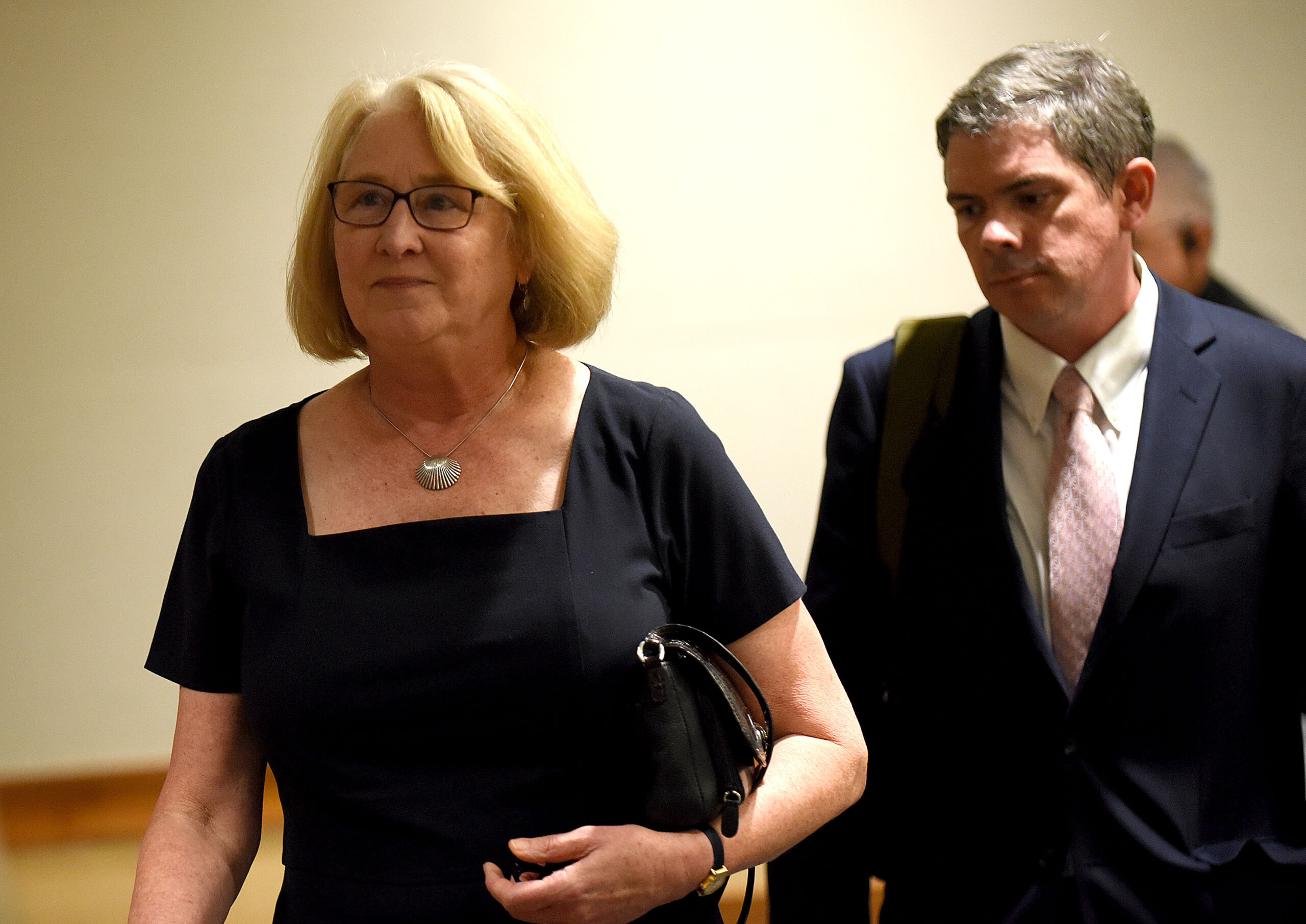
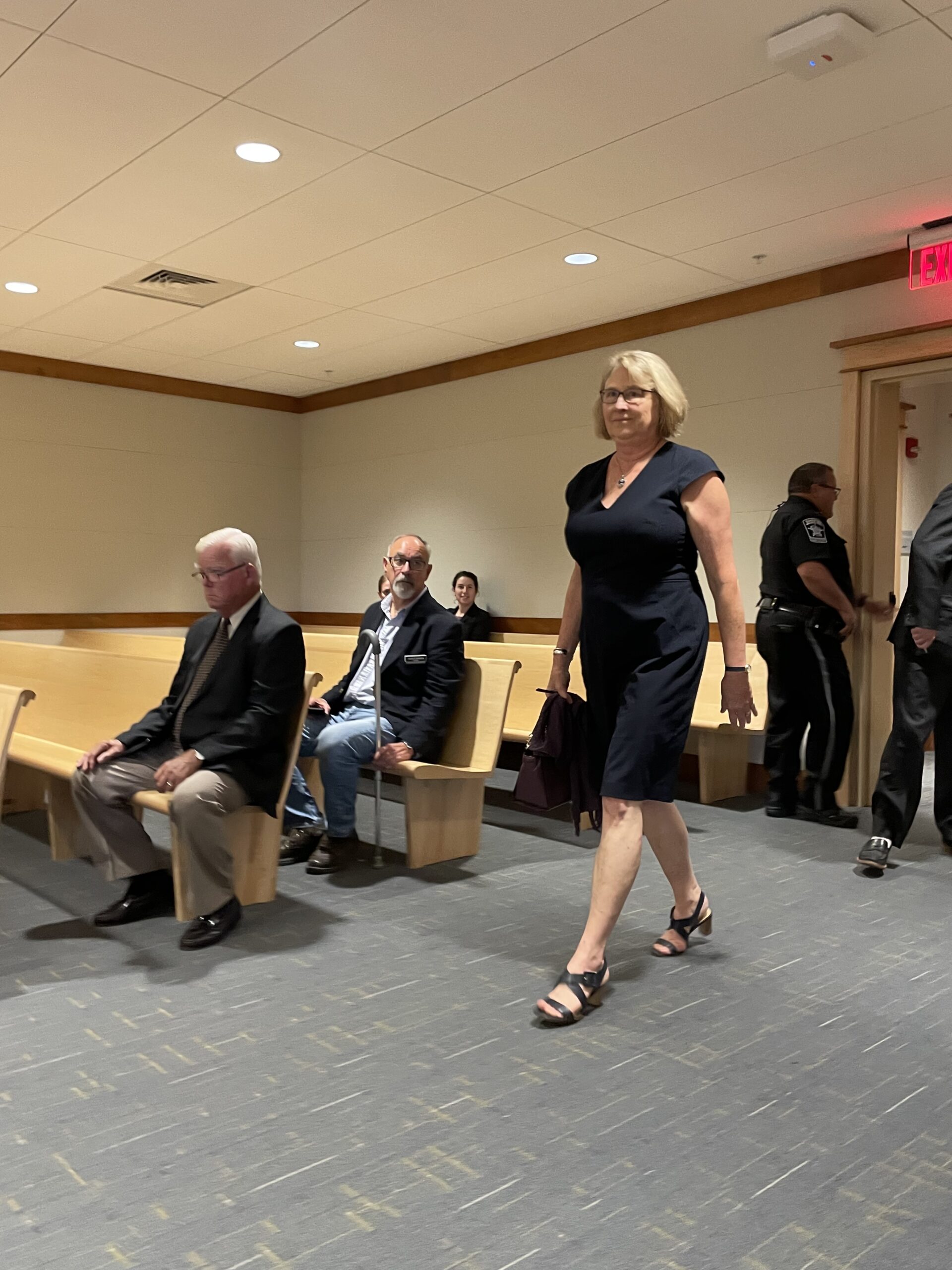
It’s been just over a year since Marconi, Cook, and Marconi’s wife, New Hampshire Supreme Court Justice Anna Barbara Hantz Marconi, were indicted on felonies for their alleged roles in a scandal involving Marconi’s actions as director of the Division of Ports and Harbors.

But in the last month, both Marconi and Hantz Marconi walked away with plea deals that imposed minimal punishment. Hantz Marconi even got to keep her law license and has returned to her job on the Supreme Court.

Cook, the former chairman of the Division of Ports and Harbors Advisory Council, was indicted last year on one Class B felony charge of perjury, as well as two counts of Class A misdemeanor false swearing, as part of the case against former Ports Director Geno Marconi.

Tuesday afternoon, Cook’s lawyer, Anthony Naro, filed notice of an intent to enter into a plea agreement. Under the deal, Cook will plead guilty to one Class B misdemeanor for obstructing government administration. He won’t serve any jail time, but he will pay a $1,200 fine.

Cook allegedly accepted copies of Pease Development Authority Vice Chair Neil Levesque’s vehicle registrations from Marconi. Last week, Marconi pleaded guilty to a misdemeanor for violating the Driver Privacy Act as part of his plea agreement. Marconi paid $2,000 and received a 30-day suspended jail sentence.

Marconi’s deal came two weeks after Hantz Marconi agreed to plead no contest to a Class B misdemeanor for allegedly trying to get Gov. Chris Sununu involved in the investigation. Her punishment was a fine and a rapid return to the court.

The New Hampshire Attorney General’s Office reportedly investigated Marconi for years. It has emerged from court filings that investigators were looking into allegations that Marconi took illegal kickbacks and engaged in COVID relief fraud. They also reportedly looked at a 20-year-old embezzlement case involving other former Ports employees.

What do those accusations all have in common?  Investigators never produced evidence to charge Marconi.

No Jail (and No Job) for Geno as Ports Director Lands Plea Deal

With just days to go before his criminal trial was set to begin, Division of Ports and Harbors Director Geno Marconi reached a plea deal with prosecutors that will keep him out of jail — but cost him his state job.

His wife, however, remains on the bench.

Late Thursday afternoon, Marconi filed a notice of intent to plead guilty to a Class A misdemeanor for violating the state’s Driver Privacy Act. His trial was scheduled to start Monday on felony charges of witness tampering and falsifying physical evidence, along with two misdemeanor counts of violating the Driver Privacy Act and obstructing government administration. All remaining charges will be dropped under the agreement.

Under the plea deal, Marconi will serve 30 days in jail, but the sentence is suspended for one year contingent on good behavior. He must also pay a $2,000 fine and — most significantly — resign as ports director.

The Pease Development Authority previously claimed Marconi was already retired. But the 73-year-old disputed that assertion and held onto the post despite being suspended pending trial.

The hearing for the plea and sentencing is scheduled for 10 a.m. Friday morning.

Marconi has a history of controversial and sometimes offensive behavior. Still, he has allies who insist he’s the target of what they call “New Hampshire lawfare.”

“Geno has been harassed by the Attorney General’s Office for doing his job,” state Rep. Jack Flanagan (R-Brookline) told NHJournal after news of the plea deal broke. “He’s followed processes that have been in place for more than 23 years of service to New Hampshire. The AG has manipulated state law versus federal law on sharing driver’s license information — even when it was with the commission he reports to.”

The notice of intent to plead includes a telling line: “Def. shall resign as DPH Director prior to plea.” Legal and political observers who spoke to NHJournal on background say that phrasing was intentional.

“I think [Attorney General John] Formella is still in shock that Bobbi is still on the bench,” one legal insider said.

“Bobbi” is State Supreme Court Justice Barbara Hantz Marconi, Geno Marconi’s wife, whose own misconduct added to the state’s Marconi mess. She, too, faced multiple charges and, like Geno, struck a plea deal resulting in a single misdemeanor conviction.

The situation took a remarkable turn when, despite pleading no contest to abuse of office, Justice Hantz Marconi returned to the state’s highest court just one week later — a move made possible by the lenient terms of her deal with Formella’s office.

As a result, cases before the state’s highest court will be heard by a judge who is also a convicted criminal.

In Geno Marconi’s case, prosecutors allege he improperly accessed the vehicle registration information of Pease Development Authority Vice Chair Neil Levesque and shared it with Bradley Cook, the former chair of a harbor advisory committee.

The state contends Marconi was angered by Levesque, who had raised complaints about Marconi’s management of Rye Harbor. It remains unclear what, if anything, Marconi and Cook intended to do with the information, which Levesque had submitted as part of a pier permit application.

Cook is scheduled to stand trial on related charges early next year.

Legal and political observers are questioning how both Marconis managed to secure what appear to be lenient plea agreements. Many believe the answer lies in Formella’s reluctance to testify.

Marconi’s defense sought to compel Formella to take the stand. But that request was denied last week. However, Rockingham Superior Court Judge David Ruoff ruled that Marconi’s team could place Formella under oath if testimony at trial “opened the door.”

Marconi claims Formella initiated the investigation against him while serving as Gov. Chris Sununu’s legal counsel, and that he continued to pursue it after becoming attorney general.

Before her plea deal, Justice Hantz Marconi’s legal team had also sought to compel Formella’s testimony. Court filings show he was the original and sole investigator searching for evidence that she had attempted to pressure Sununu to intervene in her husband’s case — an allegation Sununu himself denied, according to court records.

The plea agreements mean both Marconis will avoid jail time and emerge with misdemeanor convictions. They also ensure that Formella will not be required to testify — at least for now.

‘Top Dem’ Liot Hill Fined for Campaign Finance Violations

Executive Councilor Karen Liot Hill describes herself as “the top Democrat in state government in New Hampshire,” but that didn’t stop the New Hampshire Attorney General’s Office from hitting her with a fine and a cease-and-desist letter over her 2024 campaign filings.

The good news is she can use campaign funds to cover her $1,000 fine.

A letter from Senior Assistant Attorney General Brendan O’Donnell this week informed the Lebanon Democrat of the penalty for her campaign committee’s multiple 2024 violations. She was caught using thousands of dollars in donor funds for personal expenses, according to the letter.

“Expenditures for personal subsistence, such as clothing, home heating oil, groceries, and personal meals, are not proper expenditures,” O’Donnell wrote.

Liot Hill declined to respond to NHJournal on Friday when contacted for this story.

Whatever her ranking in the state party — real or imagined — O’Donnell made clear that she has an obligation as an elected official to follow the law. Noting that Liot Hill was a first-time candidate for statewide office in 2024, he wrote, “You chose to run for Executive Council and to accept more than $100,000 in campaign contributions.

“Those decisions created an obligation for you to familiarize yourself with campaign finance requirements, ensure that your personal and campaign accounts were kept separate, and ensure that no contributions were expended for personal subsistence.”

The letter ends the investigation that began after NHJournal broke the story of Liot Hill’s spending irregularities. After NHJournal began looking into her finances, Liot Hill filed amended reports to correct some of the spending. She also took the unusual step of removing her campaign treasurer, Corinne Morris, from the reports and listing herself as the campaign’s treasurer for the “corrected” filings.

But her amended reports raised more questions than they answered, setting off the investigation, according to O’Donnell’s letter.

Liot Hill told investigators the fixes were necessary, in part, because she occasionally mixed up her campaign credit card with her personal card at places like the grocery store, an urgent care clinic, or when paying for home heating oil.

The Democratic executive councilor also claimed she mistakenly believed she was allowed to use campaign donations to pay for expenses such as clothes, house cleaning, gifts for volunteers, and the cost of her car registration.

O’Donnell’s letter gives Liot Hill credit for cooperating with investigators and paying back expenses deemed improper. Under the terms of the letter, she is to cease and desist from any more campaign finance violations, and her campaign committee must pay a $1,000 civil fine.

Meanwhile, Liot Hill’s unconventional approach to campaign finance continues.

While the first-term councilor won’t face voters again until at least September 2026, her June 2025 campaign finance report claims she covered more than 9,670 miles on the campaign trail as of June 1. As a result, she paid herself $6,771.70 from her campaign fund to cover the costs.

In addition to the mileage, Liot Hill’s campaign filings include $2,518 for candidate travel. However, the report indicates that $2,462 of those “travel” expenses were actually three separate payments to Gills Point S Tire & Auto Service in West Lebanon.

But that’s not all for the District 2 road warrior.

Every executive councilor receives an annual mileage and expense stipend on top of their modest $18,000-a-year salary. Councilors from Districts 3, 4, and 5 get $7,980 per year. But because Districts 1 and 2 — Liot Hill’s — are so geographically large, they receive $11,970.

Adding six months of her Executive Council travel to her campaign filing, Liot Hill had already received more than $15,000 in travel reimbursements from donors and taxpayers as of June 1.

“My takeaway is that she’s a disaster,” one campaign veteran with direct knowledge of the state’s financial disclosure system told NHJournal on background.

“In theory, she was basically laundering money. She was using the campaign to pay for her basic living expenses and then spending her personal money on campaign stuff (totally believe that), then not reimbursing herself the full amount because it was offset by her accidental charges to the campaign?”

“It’s either entirely untrue or she has the personal finance skills of a 12-year-old,” the campaign professional added.

The Attorney General’s Office also levied fines against three GOP committees, all for missing filing dates:

  • A $2,000 fine against House Majority Leader Jason Osborne (R-Auburn);
  • A $1,500 fine against the Committee to Elect House Republicans;
  • A $500 fine against Granite Solutions,  a Political Advocacy Organization organized by Rep. Joe Sweeney (R-Salem) to support the election of fiscal conservatives.

DOJ: Berlin Police Ignored Warning Before Marisol Fuentes’ Murder

Two days before Marisol Fuentes was viciously gunned down by her estranged husband, Michael Gleason Jr., Berlin police failed to take action on a report that Gleason was planning to kill her.

The revelation that Berlin police could have stopped Gleason before he killed his wife and turned the gun on himself is one of the many systemic failures found in the New Hampshire Attorney General’s Office report released Tuesday.

“Based on the facts developed to date, the DOJ concludes that the Berlin PD officer’s actions in response to the information Berlin PD received from the Carroll County Sheriff’s Department were wholly insufficient under the circumstances,” the report states.

Gov. Kelly Ayotte said the DOJ report shows New Hampshire has a long way to go when it comes to helping victims of domestic violence.

“Our justice system failed Marisol Fuentes at every level, from the local police to the magistrates. We must do better so that this never happens again,” Ayotte said.

The report is the first step in fixing the system, Executive Councilors Joe Kenney (R-Wakefield) and John Stephen (R-Manchester) said in a statement. They want full investigations into all the police and judicial officials who allowed Gleason to remain free until the July 6 murder.

“Marisol’s story is a stark reminder that domestic violence knows no boundaries, and our response must match its urgency. We stand ready to support these reforms through the Executive Council and will continue advocating for resources to make New Hampshire a safer place for all,” Stephen and Kenney said.

Amanda Grady Sexton, director of public affairs for the New Hampshire Coalition Against Domestic and Sexual Violence, said New Hampshire needs to take steps to share information about domestic violence cases between police and courts, such as requiring the use of lethality assessments for domestic violence cases.

“Only when police, prosecutors, and the courts have full information about an offender’s history and access to evidence-based lethality assessment tools can they make informed decisions that best prioritize the safety of victims and the public,” Grady Sexton said. “The coalition will continue working closely with survivors, surviving family members, and state partners, including the legislature, to ensure that lasting change is made. Every survivor in New Hampshire deserves to be believed, supported, and protected when they reach out for help.”

Gleason let himself into the La Casita Mexican Restaurant in Berlin with a stolen key on the morning of July 6, hours before it opened, according to the report. The violence was captured on the restaurant’s surveillance cameras.

Gleason hid behind a corner booth for hours waiting for Fuentes to get to work. When Fuentes started working alone behind the counter, Gleason left his hiding place, carrying a sawed-off shotgun. He shot her at close range and continued shooting her as she lay on the kitchen floor.

Gleason then went to the nearest bathroom and shot himself in the face with the shotgun. But the blast didn’t kill him, according to the report. The horribly disfigured Gleason stumbled out of the bathroom and walked around the dining area to the front door of the restaurant, and finally back to where Fuentes was on the floor.

After a minute of shambling, Gleason went back to the bathroom and can be seen by the camera picking up the shotgun, aiming it under his face, and firing the fatal shot.

But days before he committed that terrible violence, Gleason told his friend, Walter Marchiso, what he planned to do. Marchiso saw Gleason on July 2 and 3 and was so alarmed by what he heard, he called the Carroll County Sheriff’s Department on July 4. According to Marchiso, Gleason repeatedly talked about killing himself and Fuentes.

“Gleason (told Marchiso), not being in his right state of mind, that he had been having a hard time with the woman he married and that he should just kill himself and maybe take her out too,” the report states.

Marchiso called the Carroll County Sheriff’s Department at 6:17 a.m. on July 4, and Carroll County got that information to Berlin police before 6:31 a.m. the same morning. By 6:36 a.m., Berlin Officer Jarod Beale was fully aware of Marchiso’s concerns. But from there, Beale did little to investigate and closed the case by 7:30 a.m., according to the DOJ report.

“[Beale] contacted Gleason by phone, and that Gleason denied both knowing anyone by the name of Marchiso and that he needed any assistance. No further action was taken by Berlin PD relative to Marchiso’s call,” the DOJ report states.

Gleason wasn’t a stranger to Berlin police when the July 4 report came through. He had been on police radar since at least April of this year, when he was first arrested for assaulting Fuentes. He was in and out of court for no-contact orders and criminal hearings, as well as an accusation that he sexually assaulted a minor child.

Bail Magistrate Stephanie Johnson already lost her job when it came out that she allowed Gleason to remain free on $5,000 cash bail after his April arrest on charges of kidnapping, domestic violence, aggravated felonious sexual assault, domestic violence, and theft by unauthorized taking. At the time, the Berlin police prosecutor wanted Gleason held without bail due to the danger he represented to Fuentes.

The DOJ report faults Berlin police for not taking any action to protect Fuentes after receiving the report from Carroll County, but is careful not to blame any individual officer. There’s currently a pending internal investigation in the Berlin department, and the DOJ states its report illustrates the need for more training.

“This lack of action highlights the need for further training for law enforcement in communicating with and supporting victims in domestic violence cases,” the report states.

Attorney General John Formella said Fuentes’ murder is exactly the type of crime the Domestic Violence Fatality Review Committee, created this year by an act of the Legislature, is designed to prevent. Formella announced the membership of the committee on Tuesday after the report was made public.

“Historically, more than half of the homicides handled by the Attorney General’s Office have been related to domestic violence,” Formella said. “Each of these tragedies has a devastating impact—not only on the families and friends of the victims but on the broader community. The work of this committee is designed to ensure that we are learning from these cases, strengthening our systems, and doing everything we can to prevent future fatalities.”

Formella Suffers Setback as Court Clears Way for Hantz Marconi’s Return

A day after Attorney General John Formella’s prosecution of Supreme Court Justice Barbara Hantz Marconi fizzled into a single misdemeanor charge, the state’s top law enforcement officer suffered another setback as the courts cleared the way for her return.

Formella was asked about the court’s decision during a State House press event on Wednesday, announcing the Ayotte administration’s new plan to increase highway safety.

“As to the decision that the court made to rescind the orders putting her on leave, that’s not a decision we expected. It’s not a decision we were aware would happen,” Formella said.

In fact, Formella’s office played a key role in fast-tracking Hantz Marconi’s swift return to the state’s highest court. A stipulation in her negotiated plea deal required prosecutors to state on the record, in court, that she did not commit a “serious crime,” as defined by the rules governing the New Hampshire Attorney Discipline Office.

That opened the door for her defense attorney, Richard Guerriero, to seek Supreme Court approval to reinstate her law license on Wednesday.

After Formella’s office indicted Hantz Marconi last year on seven criminal charges — two felonies and five Class A misdemeanors — she was immediately placed on leave from the court and agreed to an interim suspension of her law license.

But moments after the case was resolved, with the attorney general dropping all previous charges and Hantz Marconi pleading no contest to a single Class B misdemeanor, the Supreme Court issued an order allowing her to return to work once her license was reinstated.

Guerriero then filed a motion with the Supreme Court late Wednesday in which Attorney Discipline Office General Counsel Brian Moushegian agreed that Hantz Marconi should get her license back, because she did not commit a “serious crime.”

“Moushegian specifically authorized (Guerriero) to represent the assent of his office to this motion to vacate the (2024) order suspending Justice Hantz Marconi from the practice of law on an interim basis and to reinstate that right,” Wednesday’s motion states.

Guerriero was unavailable for comment.

Several Granite State attorneys told NHJournal on background that they were surprised by Formella’s handling of the case — particularly his final move, which is allowing Hantz Marconi to return to the bench.

“Saying ‘I didn’t know this would happen’ is ridiculous. They had to know this was a strong probability when they agreed to the plea deal,” one veteran attorney told NHJournal. “There’s a reason the defense attorneys put the attorney general’s declaration of ‘no serious offense’ in the negotiations.”

There are also questions in the legal community about whether Hantz Marconi will actually return, with at least one potential hurdle remaining: the Attorney Discipline Office (ADO).

The ADO will still conduct its own investigation into Hantz Marconi, but that review can take place while she serves on the court, attorney Tony Soltani told NHJournal. And because Formella agreed to the “serious crime” declaration, the most the ADO could impose is a formal censure or reprimand — not removal from the bench.

“There’s nothing to stop her from going back to work,” Soltani said.

When WMUR’s Adam Sexton asked Formella about the court’s actions, he tried to put on a brave face, insisting that justice had been done.

“We ultimately charged the case because we felt that Justice Hantz Marconi had violated the law … by asking Gov. (Chris) Sununu to secure privileges for her that she wasn’t entitled to, and ultimately she was convicted of that conduct,” Formella said.

“I think I would say that from the perspective of the DOJ, we’re disappointed in (the court’s) decision, but it’s not our decision to make. That’s a decision for the court to make.”

Formella’s office did not respond to NHJournal’s inquiries on Wednesday about the likelihood of Hantz Marconi’s license being reinstated. But Hantz Marconi and her legal team appear to be following the path they negotiated with the Attorney General’s Office in her plea agreement.

Soltani likened the entire affair to Tom Wolfe’s novel “The Bonfire of the Vanities,” in which an overzealous prosecutor plays a central role.

“Ever since day one, this whole thing stunk to high heaven,” Soltani said.

Hantz Marconi’s prosecution is already having a chilling effect on lawmakers, Soltani added. A former Republican state representative, he said legislators have told him they are now wary of contacting state officials with constituent complaints.

“They don’t want to get indicted,” Soltani said. “I don’t think the AG did any favors for anybody in this state.”

“The state likely spent a small fortune investigating and prosecuting Hantz Marconi, brought seven indictments against her as a tactic to overwhelm her defense, and hobbled the New Hampshire Supreme Court for more than a year. Then they pled this thing down to aggravated jaywalking with a fine, and agreed it wasn’t a serious offense,” Soltani said.

“The Supreme Court was firing at 80 percent horsepower for over a year now, and for what? I still don’t know what her crime was. … This should never have gone as far as it did.”

EDITOR’S NOTE: Tony Soltani has represented reporter Damien Fisher in previous, unrelated 91A court cases. 

‘Misdemeanor’ Marconi Headed Back to State’s Highest Bench After Plea Deal

Anna Barbara Hantz Marconi isn’t planning to leave the New Hampshire Supreme Court just because she pleaded no contest to a misdemeanor count of attempting or soliciting improper influence from former Gov. Chris Sununu.

Moments after her plea and sentencing hearing Tuesday in Merrimack County Superior Court, Hantz Marconi’s legal team issued a defiant press release declaring her intent to remain on the state’s highest court for the rest of her term.

“Justice Hantz Marconi is very comfortable that she has made the best decision for herself, her family, and the State of New Hampshire. She looks forward to getting back to work,” the statement read.

The high court moved quickly to welcome her back, issuing an order late Tuesday lifting her administrative leave. Hantz Marconi will be allowed to resume serving on the Supreme Court if, as expected, the New Hampshire Attorney Discipline Office reinstates her law license. She voluntarily suspended her license last year when she was first indicted.

Meanwhile, Attorney General John Formella was notably absent from the courthouse on Tuesday. Despite his central role in the investigation—and the high stakes for his office—Formella was nowhere to be found.

Formella’s office indicted Hantz Marconi last October for allegedly attempting to involve Sununu in the criminal case against her husband, retired Portsmouth Ports Director Geno Marconi. She has been on administrative leave from the court since the controversial conversation with Sununu in June 2023.

Overall, Hantz Marconi’s no-contest plea represents a surprising victory for the embattled justice. It does not require her to resign from the Court or surrender her law license. She faces no jail time, and prosecutors agreed not to bring additional charges connected to the case — essentially, preemptive immunity. That is significant given the ongoing case against her husband, which could theoretically reveal evidence implicating her in his case.

It’s an embarrassing outcome for the Attorney General’s Office, several Granite State attorneys told NHJournal.

“Formella got outlawyered,” one Concord attorney said on background. “Then again, Bobbi (Marconi) had very good lawyers.”

Despite the plea resulting in a guilty finding, Hantz Marconi maintains her innocence.

Her lead attorney, Richard Guerriero, said in court that the charge alleged she improperly sought privileged information about the investigation into her husband through Sununu. She disputes the allegation, but by pleading no contest, she acknowledged prosecutors had sufficient evidence to proceed.

“We’re not contesting that the state could prove beyond a reasonable doubt that she solicited Gov. Sununu to seek information regarding the investigation of Geno Marconi,” Guerriero said. “We’re not agreeing with those allegations, but we agree the state could make an offer of proof that would show she was soliciting Gov. Sununu to seek information into the investigation.”

Even with a misdemeanor conviction, Hantz Marconi emerged with a favorable outcome. Prosecutors dropped seven felony indictments that collectively carried up to 20 years in prison. Instead, she pleaded no contest to a single Class B misdemeanor, resulting in a $1,200 fine and $288 in court costs.

Prosecutors also stipulated in court that the misdemeanor does not qualify as a “serious crime” when reviewed by the New Hampshire Attorney Discipline Office. That makes it more likely Hantz Marconi will keep her law license and return to the bench.

Despite dropping all the original charges, Formella insisted that justice had been served.

“This is a sad and unfortunate case that reflects a serious breach of the public trust. Justice Hantz Marconi was an associate justice of the New Hampshire Supreme Court when she arranged for a private meeting with the governor and then sought to obtain special treatment regarding an active criminal investigation involving her husband,” Formella said in a prepared statement.

“That conduct was unlawful and unethical, and it undermines confidence in our criminal justice system. Today’s conviction holds her accountable under the law.”

While Formella did not appear in court, Deputy Attorney General James Boffetti attended, accompanied by Public Integrity Unit prosecutors Dan Jimenez and Joe Fincham, during the plea and sentencing hearing.

Afterward, Fincham and Jimenez denied that the dismissal of the original indictments—or Formella’s absence—signaled any concession that Hantz Marconi had been correct in alleging bias. Jimenez said the deputy attorney general’s presence merely showed support for the line prosecutors—an unusual move, but not unprecedented.

There has been little standard procedure in the prosecution of Hantz Marconi for her conversation with Sununu last June. Both Sununu and a witness to the conversation, Rudolf Ogden, told investigators they did not believe she made any improper requests. Neither did witness Steve Duprey, chair of the Pease Development Authority, which oversees Geno Marconi’s work.

Hantz Marconi was initially charged with allegedly trying to get Duprey to intervene on her husband’s behalf, but those charges were dropped as part of the plea deal.

This summer, Guerriero accused prosecutors of trying to obscure Formella’s central role in the investigation. Evidence that Formella acted as the initial—and possibly sole—investigator was withheld from the defense for months, Guerriero said. Although the case was later reassigned to the Public Integrity Unit, Guerriero noted that no written complaint had been filed to open the PIU case, as is typically required for such cases.

Formella’s handling of the matter was expected to be a central issue at trial. The defense had subpoenaed him to testify and was pursuing motions to dismiss the charges and to disqualify the Attorney General’s Office entirely. Judge Martin Honigberg had not yet ruled on those motions when the plea deal was announced.

Interestingly, prosecutors suggested over the summer that if Formella were removed from the case, his deputy, Boffetti, could still oversee the prosecution. That is essentially what occurred—without any formal court order.

The trial would have featured a lineup of high-profile witnesses, including Sununu, Formella, Chief Justice Gordon MacDonald, and potentially all associate justices of the Supreme Court. Ogden, Sununu’s former counsel and now a Superior Court judge, was also expected to testify.

In her press release, Hantz Marconi said she sought to avoid a trial that could have forced top state officials to take the stand.

“Justice Hantz Marconi entered a no contest plea because she continues to disagree with the attorney general’s characterization of her actions,” the statement read. “She also sought to bring the case to an end without the spectacle and possible damage of a trial involving testimony by New Hampshire Supreme Court justices and other state officials.”

Geno Marconi is scheduled to go on trial in February. He is accused of illegally accessing private driving records and destroying evidence. It is unclear whether the resolution of his wife’s case will affect his upcoming trial.

Ladies First: Prosecutors Want Justice Hantz Marconi Trial Before Her Husband’s

New Hampshire prosecutors are asking for breathing room as they prepare to try one of the most unusual double dockets in state history: the simultaneous criminal cases of former Ports Director Geno Marconi and his wife, Associate Supreme Court Justice Anna Barbara Hantz Marconi.

The two trials are scheduled to begin just one day apart in November—his in Rockingham County Superior Court on Nov. 3, hers in Merrimack County Superior Court on Nov. 4. But Senior Assistant Attorney General Dan Jimenez and Assistant Attorney General Joe Fincham, the Public Integrity Unit prosecutors handling both matters, told Judge David Ruoff this week that the back-to-back schedule is unworkable.

“Simply put, the State’s attorneys cannot try the cases, and the witnesses cannot testify, simultaneously in concurrent prosecutions in the two venues,” the prosecutors wrote in their motion.

They are asking Ruoff to delay Geno Marconi’s trial until after his wife’s case is resolved.

Prosecutors argue that Justice Hantz Marconi’s case should take precedence, noting that she is currently suspended from the New Hampshire Supreme Court and her law license is suspended pending the outcome of the trial.

Her indictment includes allegations that she attempted to improperly influence the investigation into her husband. Witnesses could include some of the most powerful figures in New Hampshire politics and law, including Gov. Chris Sununu and Chief Justice Gordon MacDonald.

By contrast, Geno Marconi—who retired earlier this year while on paid administrative leave—faces felony charges of tampering with evidence and witness intimidation, as well as misdemeanors tied to obstructing government administration and misuse of state motor vehicle records.

His case is serious, prosecutors say, but less urgent to the functioning of state government.

Geno Marconi’s attorney, Richard Samdperil, has signaled his opposition to any delay but has not yet filed a formal response. Samdperil has already indicated he will challenge the admissibility of evidence and argue for dismissal of the charges.

Meanwhile, Justice Hantz Marconi’s defense team is pressing its own motions, including an effort to have Attorney General John Formella disqualified from the case. Her lawyers say Formella could be called as a witness regarding her alleged efforts to intervene in the probe. Merrimack Superior Court Judge Martin Honigberg has yet to rule on those requests.

The dual prosecutions are already burdened with pending motions, evidentiary fights, and questions of judicial conflict. Judge Ruoff, who was assigned Geno Marconi’s case in July, has not yet scheduled hearings on the defense motions there.

And whatever rulings are issued in either case could themselves trigger a cascade of appeals. Either side can ask for reconsideration or appeal to the state Supreme Court, where Hantz Marconi once served and where her former colleagues would be asked to decide.

The scheduling fight highlights the strain on the Attorney General’s Office as it navigates two high-profile prosecutions involving a retired senior state official and a sitting Supreme Court justice.

If prosecutors prevail, the first trial to unfold will be Hantz Marconi’s—an unprecedented moment in New Hampshire history, with a member of the state’s highest court defending against felony charges from the very justice system she once helped oversee.

Judge Ruoff has not yet set a hearing date on the state’s request to postpone Geno Marconi’s trial.

Could the AG Be a Witness in Marconi Case? Formella’s Dual Role Faces Court Challenge

‘Death to Ballot Integrity!’? Illegal Voter Says U.S. Immigration Law Doesn’t Count

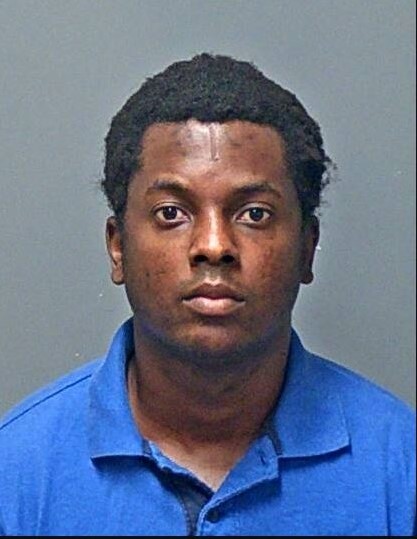
A Jamaican national living in New Hampshire has been charged with illegally voting in three elections, and he’s offering a novel legal defense.

U.S. immigration law, he claims, is unconstitutional.

Naseef Fernando Bryan, 34, was arrested Tuesday and charged with three Class B felony counts of wrongful voting. Each charge carries a potential sentence of 3½ to 7 years in prison. According to the New Hampshire Attorney General’s Office, Bryan voted illegally in the 2023 Manchester municipal election, the January 2024 presidential primary, and the November 2024 general election.

Shortly after his arrest was announced, Bryan took to social media to outline his legal theory.

“The U.S. Constitution did not say establish a uniform Immigration and nationality Act, let’s be honest,” Bryan wrote on Twitter/X.

Despite being a lawful permanent resident for more than 12 years, Bryan is not a U.S. citizen and therefore not eligible to vote in federal or state elections.

Bryan describes himself online as an “AMERICA FIRST Traditionalist.” (Emphasis original) His legal activity reflects a similar defiance of federal authority. Within the past year, he has filed multiple lawsuits against U.S. Citizenship and Immigration Services, claiming the agency unlawfully delayed his naturalization application. In those suits, he sought a declaration of citizenship, a U.S. passport, and a sum of gold coins. None of the cases were successful.

A frequent litigant, Bryan has filed lawsuits in both state and federal courts against a variety of entities, including the Merrimack Police Department, the University of New Hampshire, and the New Hampshire Secretary of State’s Office. His court filings are often unconventional and rarely succeed.

Bryan sued the Merrimack Police over a 2019 arrest in which he was charged with brandishing a firearm during a road rage incident. A Hillsborough County grand jury declined to indict him, and his civil suit was later dismissed because it was filed five years after the incident—well beyond the three-year statute of limitations.

He also filed suit against UNH after the school rejected his transfer application, arguing that New Hampshire’s in-state tuition policy created a constitutional right for him to attend. That case, too, was dismissed.

“Bryan points to no other state policy or law that guarantees him a place at UNH,” wrote U.S. Magistrate Judge Talesha Saint-Marc in her recommendation to dismiss the case.

In yet another suit, Bryan named the New Hampshire Secretary of State’s Office as a defendant, though the court noted his complaint lacked any specific allegations.

“Mr. Bryan’s complaint contains no factual allegations regarding any actions taken against him by the State of New Hampshire or its Secretary of State,” U.S. District Judge Andrea Johnstone wrote. “He asks this court to issue a writ of mandamus to compel the defendants to perform some unnamed actions that would correct a situation where he is ‘unable to perform basic functions that humans need.’”

Bryan was not held in custody following his arrest and is currently free pending further court proceedings.