
inside sources print logo
Get up to date New Hampshire news in your inbox

NH Commuter Rail Scheme Would Leave Property Taxpayers On the Hook
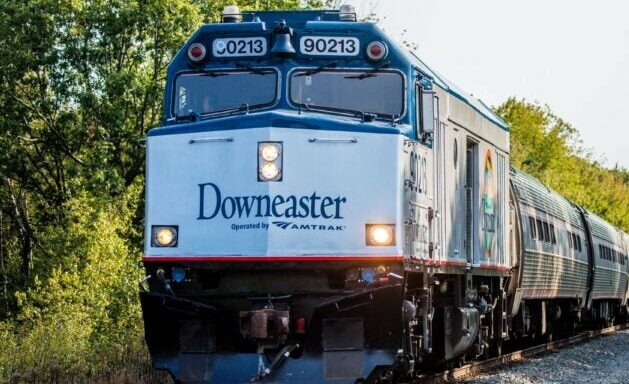
U.S. Rep. Chris Pappas hopes New Hampshire gets a new commuter rail service connecting Nashua and Manchester to Boston. Critics note how few Granite Staters use available rail now and don’t think local property taxpayers want to pick up the estimated $11 million tab to subsidize the trains.

Commuter rail is part of the $1.2 trillion infrastructure spending package pushed by President Joe Biden and supported by all the members of New Hampshire’s congressional delegation. Biden signed the bipartisan infrastructure bill, which includes $66 billion for rail, in November.

“This is a project that continues to bubble from the bottom up here in New Hampshire,” Pappas told Manchester’s InkLink last summer about the Capitol Corridor rail project. “I hear about it everywhere I go, residents who are looking for an opportunity to get to work, businesses that are looking to attract the kind of talent they need, and from local leaders who understand this can be an economic engine for New Hampshire.”

The train service would potentially go from Manchester through to Lowell, Massachusetts, with stops in Nashua and at the Manchester-Boston Regional Airport. 

Greg Moore, with the libertarian American for Prosperity organization, said New Hampshire cannot afford the fare. The service cannot operate without a taxpayer-funded handout, he said.

“Every state study has shown that it would require substantial taxpayer subsidies to benefit a small number of riders,” Moore said.

Moore said there are better ways to solve commuting problems that meet 21st century needs. He suggested private services like Turo or ZipCar, as well as Uber and Lyft.  

“Trying to jam an expensive 19th-century transportation solution onto the hard-working taxpayers of New Hampshire makes no sense,” he said.

A common argument from opponents of expanded rail is Granite Staters rarely use the service that’s currently available. The Amtrak Downeaster, for example, connects the Seacoast towns of Dover, Durham, and Exeter with Maine and Boston. According to Amtrak, New Hampshire riders make up less than 20 percent of the total ridership.

In 2019, before the COVID-19 pandemic hit, fewer than 2,000 trips a week began or ended in the Granite State. During the pandemic when ridership fell, the number of trips originating or ending in New Hampshire fell to 362 per week. Neither of those numbers is enough to sustain rail service without taxpayer subsidies.

In fact, Amtrak — often hailed as a success story — has received annual federal subsidies of $1.5 billion to $2 billion, in addition to the new billions from the bipartisan infrastructure bill. And the only reason service in the Northeast “pays for itself,” as advocates claim, is because of inventive bookkeeping that hides a huge backlog of needed maintenance and the subsidies it receives from state governments.

State Rep. George Sykes, D-Lebanon, a member of the House Transportation Committee, said every form of transportation, from air travel to bus service, is subsidized by taxpayers to some extent.

“There’s no free lunch when it comes to transportation,” Sykes said.

Sykes said rail service would be a net financial positive for the state in the long run when factors like increased development and savings on highway maintenance costs are considered. Paying for the service through taxes or fees just goes the territory, he said.

“My question to (those opposed to rail) would be, name me one aspect of transportation where they don’t have to pay for, one way or another.”

Sykes’ colleague on the Transportation Committee, Aidan Ankarberg, R-Rochester, doesn’t want his voters to have to pay for a service they are not going to be able to use. He recently filed a bill that would keep any state funding from being used for the rail project.

“It is not fiscally responsible or the New Hampshire way to expect my constituents in Rochester to pay for a commuter rail in Manchester that very few people will use,” he said. “My bill protects Rochester and other Granite State taxpayers from this boondoggle before it begins.”

Ankarberg said the most recent Department of Transportation report on the commuter rail, which estimates the state would need to subsidize the service at $11 million, is several years old and out of date. The true cost for the service to taxpayers is likely closer to $16 million, he said. That money would come from increased property taxes, or cuts to education funding, he said.

“While current estimates aren’t available, the DOT previously suggested raising statewide property taxes by $15.7 million or diverting 5 percent of our education funding in order to cover the commuter rail’s operating and management costs,” he said.

That kind of spending isn’t going to catch on in New Hampshire, according to Moore.

“Thankfully, there is little appetite in the state legislature for saddling state taxpayers with this backward approach,” Moore said. “New passenger rail isn’t happening anytime soon.”


Experts: Creative Solutions Are Needed To Combat Opioid Crisis

Another year is gone and New Hampshire is still one of the states hit hardest by the opioid crisis. Now, a new legislature is again trying to figure out how to curb the rampant use of opioids.

Lawmakers might be hesitant to allocate more funds to the effort, since it can appear previous funding has had little effect. But advocacy groups, health experts, and recovering addicts say money is only part of the solution. According to them, the state needs to be more flexible with how the funds are spent and amenable to creative solutions.

That was one of the themes discussed at the State House on Tuesday, where advocates asked the Senate Finance Committee to approve a bill funding the state’s Alcohol Fund.

It’s a unique mechanism created by the legislature in 2000 that takes 5 percent of the gross profits from the sale of alcohol to support alcohol and drug education, abuse prevention, and treatment programs. In the past year, approximately $19 million would have gone to service providers and recovery centers that are dealing with the opioid crisis at a local level.

The Alcohol Fund has only been fully financed one time in its history. In previous biennium budgets, the governor or legislature have transferred the revenue to the general fund and only appropriated a small amount to the Alcohol Fund.

Supporters of the bill say the fund is a creative solution the state should use because it already exists in law and is designed to aid prevention and treatment of issues like the opioid epidemic.

“Two governors have called substance abuse the biggest problem in this state,” Keene Democrat Sen. Jay Kahn said, noting Gov. Chris Sununu called for putting more money into treatment, prevention, and recovery in his inauguration speech.

“I completely agree,” Kahn added. “This legislation provides an innovative solution to the real problems confronting the state.”

A similar proposal was introduced in the Boston City Council, where councilors tried to add a 2 percent tax on alcohol sold in Boston to help fund substance abuse prevention programs. The council eventually voted against the proposal.

New Hampshire’s Alcohol Fund is different. In the “Live Free or Die” state, voters wouldn’t be too happy about a tax on their alcohol (a major reason why Bay Staters cross the border). The Alcohol Fund uses revenue the state is already making from sales.

That’s the reason former state Sen. Ned Gordon, R-Bristol, authored that 2000 law establishing the fund. And while it’s focus back then was mostly on alcohol abuse and prevention, the language was broad enough to evolve over time to include other substance abuse.

“The state adopted a policy that if we are going to aggressively market alcohol, we are going to accept the consequences,” Gordon testified Tuesday. “You can’t be just committed to a treatment program. You have to be committed to a recovery, so we need more resources going to prevention and recovery. Unless you provide the funding to do it, you won’t have the capacity to do it.”

While the Alcohol Fund revenue goes to the Governor’s Commission on Alcohol and Drug Abuse Prevention, Intervention, and Treatment for their determination on what contracts, programs, and centers need the funds most, advocates said more funding could be used for New Hampshire’s Safe Station programs — another unique and creative approach to the opioid crisis.

Safe Station is the brainchild of Chris Hickey of the Manchester Fire Department. The program launched in May 2016, and anyone who is struggling with drug addiction can go to any one of the 10 fire stations in the Queen City any time and connect with recovery resources.

Anyone who visits the fire stations will go to Serenity Place, an outpatient program focusing on recovery work, or a similar center, and no one is turned away if they go through that method. Safe Station doesn’t receive any direct funding from the state, which can place limits on the program. Overall it’s seen as a success for the city, but it may still be too early to tell. Nashua also opened their first Safe Station in November.

From May to December 2016, there were 509 overdoses and 49 deaths — a slight drop from the same time period in 2015.

The American Medical Response group recently announced there was a slight increase in overdoses and deaths from 2015 to 2016 for Manchester and Nashua.

In 2015, Nashua saw 250 overdoses, with 19 fatalities. In 2016, the city’s total overdose number rose to 365 with 40 fatalities. For Manchester, there were 729 overdoses with 88 fatalities in 2015 and then 785 overdoses and 90 fatalities in 2016.

Traci Green, associate professor of emergency medicine at Boston University School of Medicine, is hopeful those numbers will decrease in 2017 as the Safe Station programs expand.

“I hope this is one new entree into an expanded hub for people to enter,” she told NH Journal. “There is great hope in trying to think about how public health and public safety can work together to get people to go to a place where it’s safe and connect with other peers in a time when they’re feeling extremely vulnerable. It seems like a great working relationship.”

Green called for states to be more creative in their thinking on how to address the opioid crisis, and make sure that it fits with the individual needs of their towns and cities. She applauded fire departments, law enforcement, and public health groups taking a role in prevention, treatment, and recovery rather than one entity trying to do everything.

“The entree into treatment and recovery seem to really work in Manchester, and people can have their clear roles and responsibilities,” she said. “I think that’s really important.”

It may be difficult to replicate Safe Station programs throughout New Hampshire, since fire stations must be staffed 24/7 and have access to a treatment center or emergency shelter nearby. It’s a problem the state will wrestle with as they decide how to disburse funding to all communities.

“Manchester has available resources that a place like Concord just certainly wouldn’t have,” James Vara, the state’s “drug czar,” said in September. “So, you have to look at them and temper that with the fact that these approaches may not all work. Safe Station is a great access point for people who are suffering, but they also have available resources like Serenity Place, which many of your districts wouldn’t have.”

It’s possible Sununu could address solutions like funding the Alcohol Fund and Safe Station programs throughout the state in his proposed 2018-2019 biennium budget, scheduled for released Thursday. Sununu said the opioid crisis was the state’s top priority, and funding to fix the crisis is expected to be a significant part of his budget proposal.

Combatting the epidemic is usually a bipartisan issue, though it may depend on how creative lawmakers in the State House can get.


Follow Kyle on Twitter.