‘Viewpoint Discrimination?’ Nashua Says: Yep!
Welcome to Nashua, where you can make any political statement you want — so long as city officials approve. Just as the Founding Fathers intended.
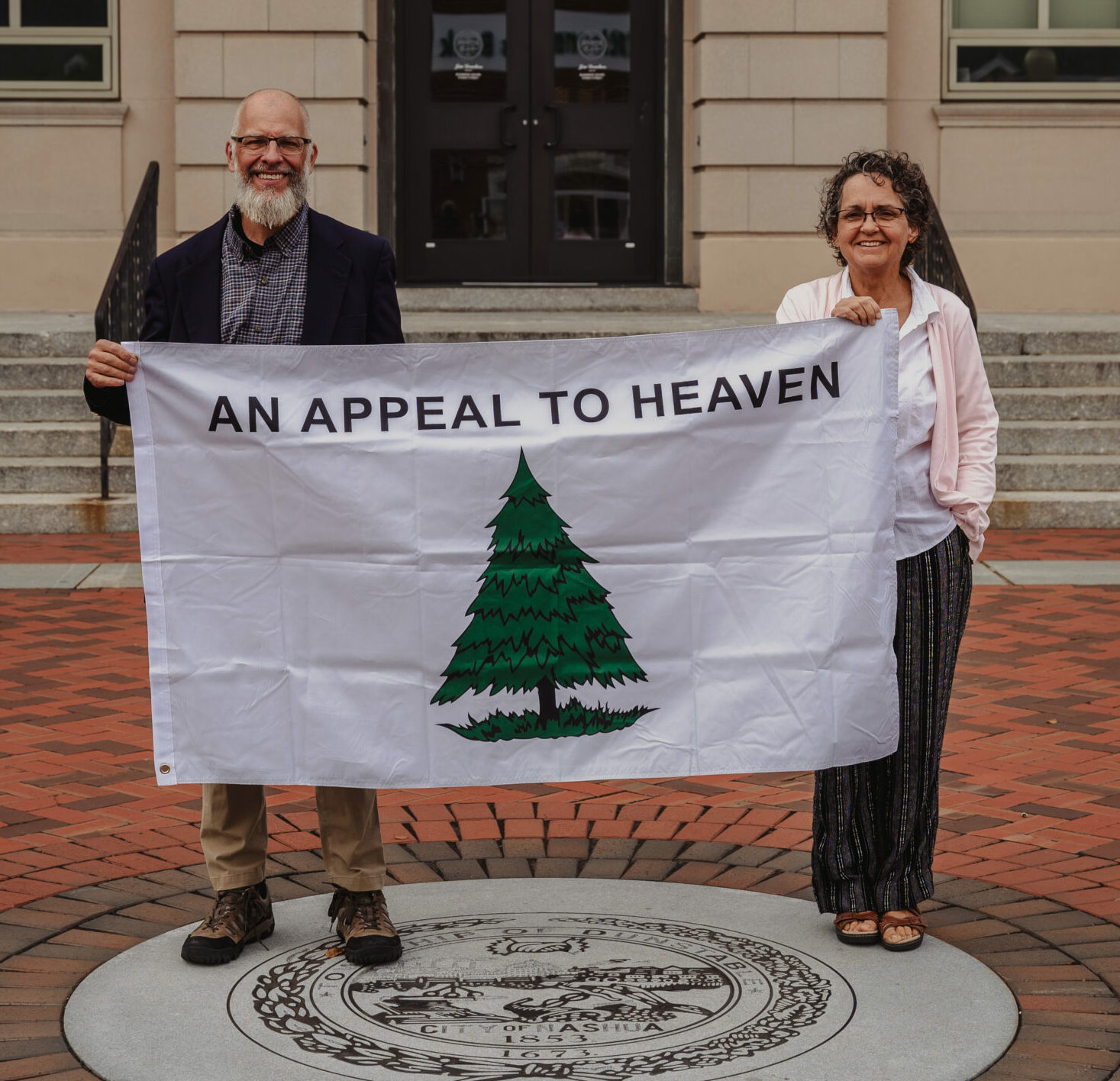
The Gate City’s attorney, Steve Bolton, stood before a three-judge panel of the 1st Circuit Court of Appeals in Boston on Tuesday and acknowledged that the city is discriminating against symbols it doesn’t like. That includes Steve and Beth Scaer’s Pine Tree flag.
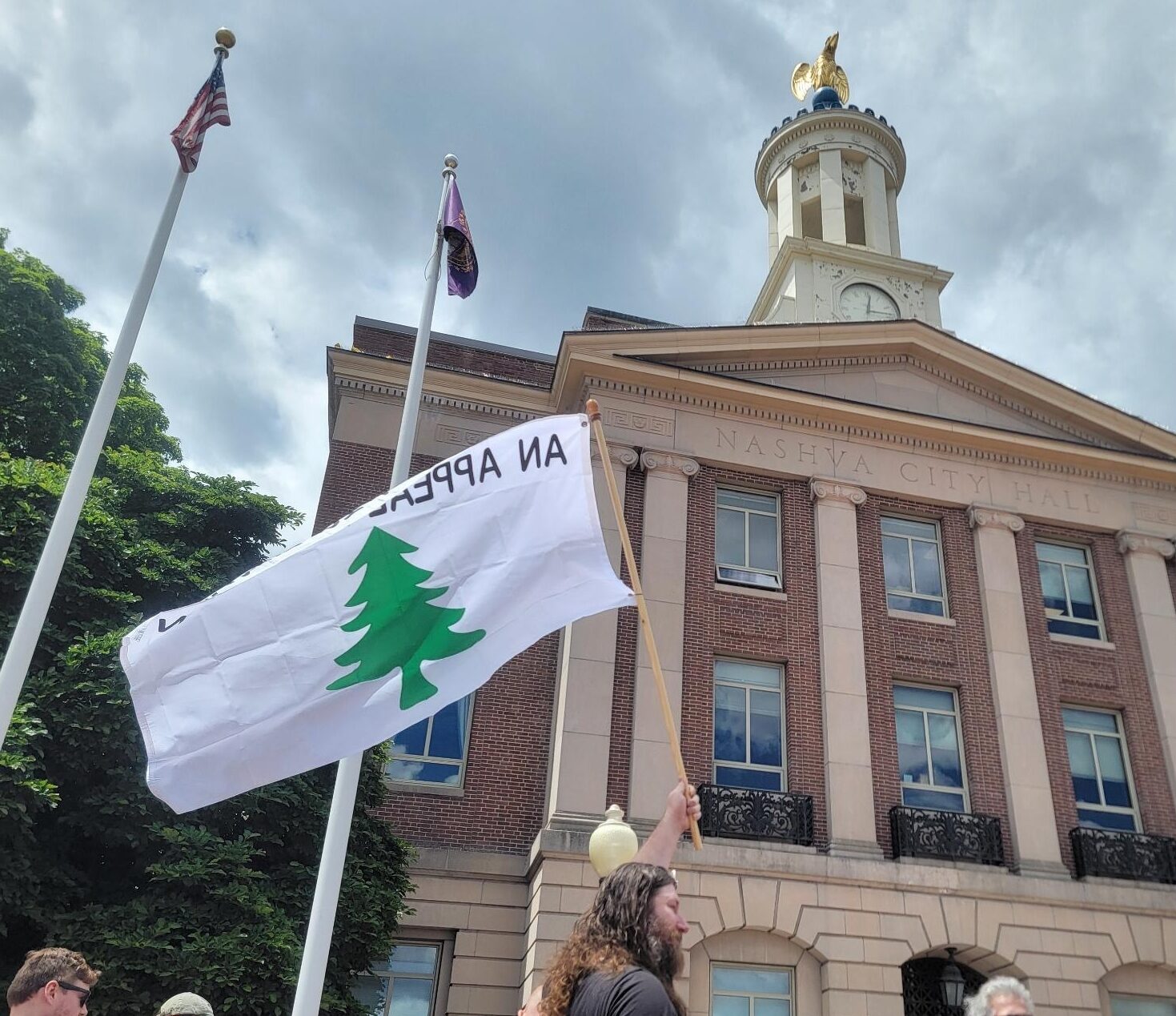
Nashua found itself in federal court this week thanks to its 2024 rejection of the Scaers’ application to fly the Revolutionary War-era flag on the so-called citizens’ flagpole in front of City Hall.
“We agree that there is viewpoint discrimination,” Bolton told the court. “When a flag is raised under the new policy, it’s right in front of City Hall. It’s right on Main Street. Passersby will say, ‘There’s City Hall, look! What kind of a place is Nashua if they’re flying this symbol, or that symbol, or some other symbol that is generally not regarded as savory?”
But Bolton’s argument is precisely the reason Nashua is in court, according to Judge Sandra Lynch, who sat on Tuesday’s panel. Lynch called Nashua’s flag policy the “essence of viewpoint discrimination.”
“Here’s the problem, counselor. Nashua has chosen to fly, on what are known as the citizens’ flagpoles, flags that are brought to it by private speakers who own the flags, who design the flags, and who come up with a message that the flags display. And then the government is using the force of government to choose among those viewpoints, and that is what government cannot do,” Lynch said to Bolton.
The Scaers, well-known conservative activists, wanted to fly the Pine Tree flag in the summer of 2024 to commemorate New Hampshire citizens who fought at the Battle of Bunker Hill. But the city rejected their application on the grounds that the banner — which has been embraced by some far-right activists — “is not in harmony with the message that the City wishes to express and endorse.”
Nashua’s government is under no legal obligation to allow speech it does not approve of on the citizens’ flagpole, Bolton said, since anything displayed at City Hall is considered government speech and not free speech.
“If this is government speech, which we say it is, the government is not required to give air time to opposing views,” Bolton said.
Nathan Ristuccia, the Institute for Free Speech attorney representing the Scaers, told the justices that Nashua is effectively killing a message it dislikes under the guise of government speech.
“A government cannot turn private speech into government speech simply by exercising final approval authority over that speech,” Ristuccia said.
Ristuccia and the Scaers want the 1st Circuit to overturn the March decision by U.S. District Court Judge Landya McCafferty that allowed Nashua to label any displays flown on the citizens’ flagpole as government speech subject to government control. McCafferty’s decision relied on the flagpole policy games Nashua played, Ristuccia argued.
“This demonstrates that Nashua’s attempt was to do exactly what the Supreme Court warned against — attempting to expand government speech in such a way as to cover all limited public forums,” Ristuccia said.
From 2017 through 2022, Nashua allowed residents to fly flags at the City Hall Plaza with no written policy for oversight or content restriction. Nashua created a written policy in 2022 to give officials veto power over the public flagpole in response to a U.S. Supreme Court ruling against the city of Boston for its refusal to fly a Christian flag. Nashua used that policy to reject the Pine Tree flag.
But when the Scaers challenged the rejection with their lawsuit last year, Nashua changed its policy yet again. The new 2024 policy states that flagpoles “shall henceforth be exclusively controlled by city government” and that Nashua “does not seek input from other sources” about what to fly. The 2024 policy still allows people to apply to fly their flags on city property — so long as the government approves of the message.
The 1772 Pine Tree Riot took place in Weare and is considered a preview of the conflict that led to the American Revolution. The flag was flown during the war by members of the Continental Army and has long been associated with patriotic movements and resistance to authoritarianism.