inside sources print logo
Get up to date New Hampshire news in your inbox

Free Speech Win As NH Judge Rules ‘Repent’ Church Sign Wasn’t Threat

Free speech advocates are celebrating a win for religious expression after a judge threw out a criminal threatening case filed against a Somersworth man who posted a sign on a progressive church’s door.

The facts in the case were never in dispute.

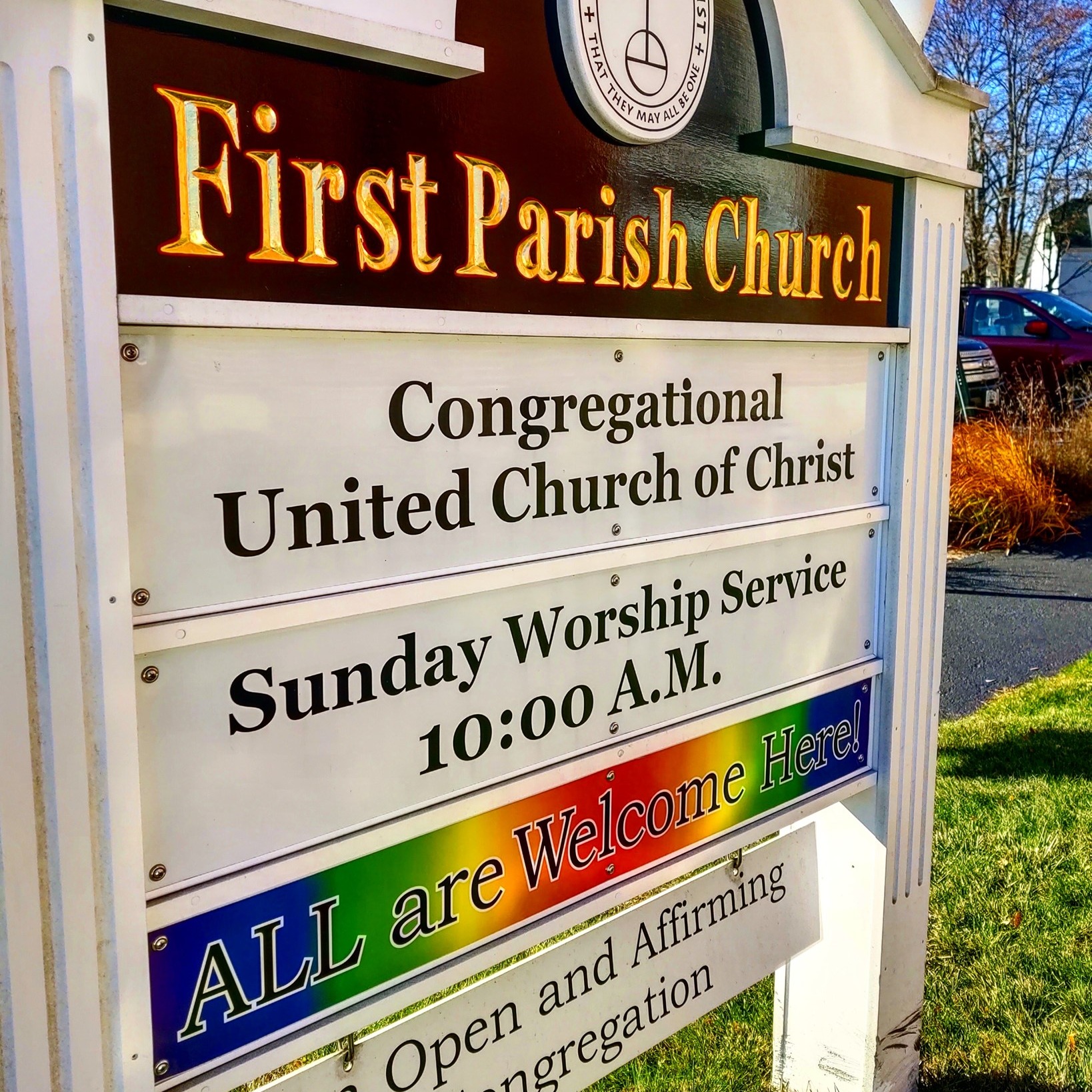
A little before 4 a.m. on June 20 last year, Isaac Santiago, 50, posted a sign on the door of First Parish Church in Dover, a progressive congregation that prominently displays pro-LGBTQ images.

“Jesus is coming soon! The devil deceived you! God will never except [sic] LGBTQ. Be saved today, or you will perish in your sins! Repent and believe!” the sign read. Santiago didn’t attempt to enter the church, damage property, or confront any parishioners.

The dispute arose when prosecutors treated Santiago’s message as a criminal threat and attempted to have him convicted and jailed over what they said was a warning of spiritual consequences for pro-LGBTQ Christians.

On Tuesday, Strafford County Superior Court Judge Andrew Livernois granted a motion to dismiss the charges filed by Santiago’s attorneys.

“Assuming that the state were able to garner a conviction for criminal threatening in this case, it could not sustain a constitutional challenge under either the N.H. or United States Constitutions, because it would violate the defendant’s right to free speech,” Livernois wrote.

First Parish is a Congregational church that prides itself on its pro-LGBTQ community. Its ministers have performed same-sex marriage ceremonies for many years, and the church sign incorporates an LGBTQ rainbow. Santiago is a member of First Fruits Ministries in Manchester, which describes itself as a “first century Judeo-Christian Messianic congregation.”

“[Santiago] told the police that he viewed his actions as being part of his ‘ministry’; that God does not accept LGBTQ people, and that he was trying to spread that message, acknowledging that he may have gone about it in the wrong way,” Livernois wrote. “[Santiago] further told the investigators that he was not acting out of hate for anyone but did it ‘out of love’ and to share his religious convictions.”

While threatening speech can be prosecuted under the Constitution, Livernois ruled that Santiago’s short epistle, posted peacefully and late at night, did not rise to the level of an actual threat.

“The only portion of the sign which could arguably be viewed as threatening is the sentence that reads: ‘Be saved today or you will perish in your sins!’” Livernois wrote. “This could certainly suggest the idea of possible violence. But as [Santiago] points out, that language could also be interpreted as referring to the natural and inevitable death that every person will undergo.

“The ambiguity of the language undercuts the state’s position that the sign constituted a true threat. If it is a threat, it is quite vague and generalized.”

And, Liverois added, “except for certain narrow circumstances, the government cannot normally criminalize expressive conduct.”

Santiago was represented by Cornerstone Policy Research’s Ian Huyett, associate director and head of litigation, and attorney Rick Lehmann.

“It was a good day for free speech,” Lehmann said after the ruling.

Shannon McGinley, executive director of Cornerstone, said Livernois’s ruling protects all Christians who preach about sin and salvation.

“This case illustrates a serious risk: Because Santiago was charged solely for the content of his religious speech — and not for placing a sign on church property — allowing this prosecution to proceed would have left other Christians in New Hampshire vulnerable to criminal charges simply for warning others about hell and the judgment of God, even without any accompanying conduct,” McGinley said.

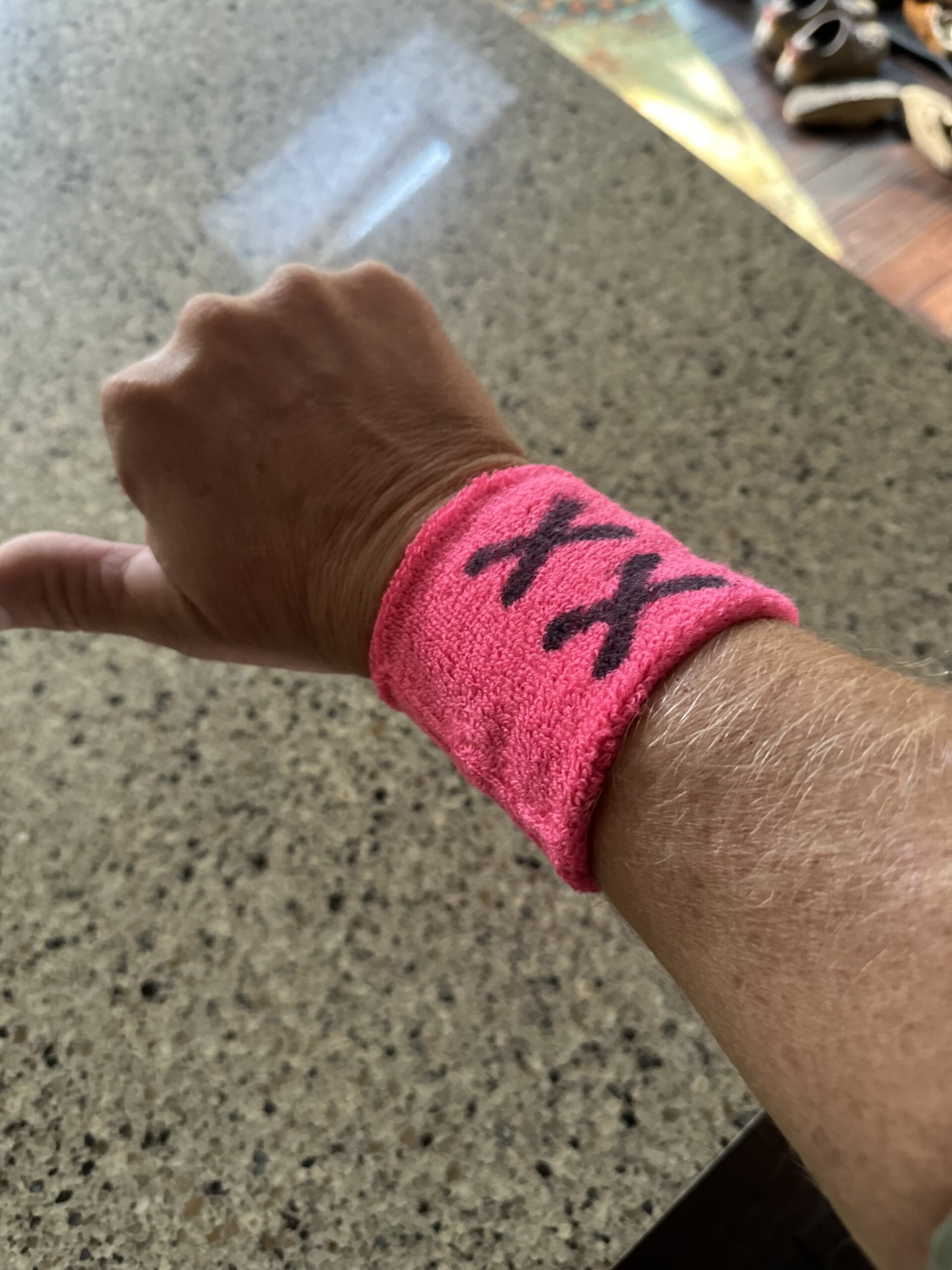
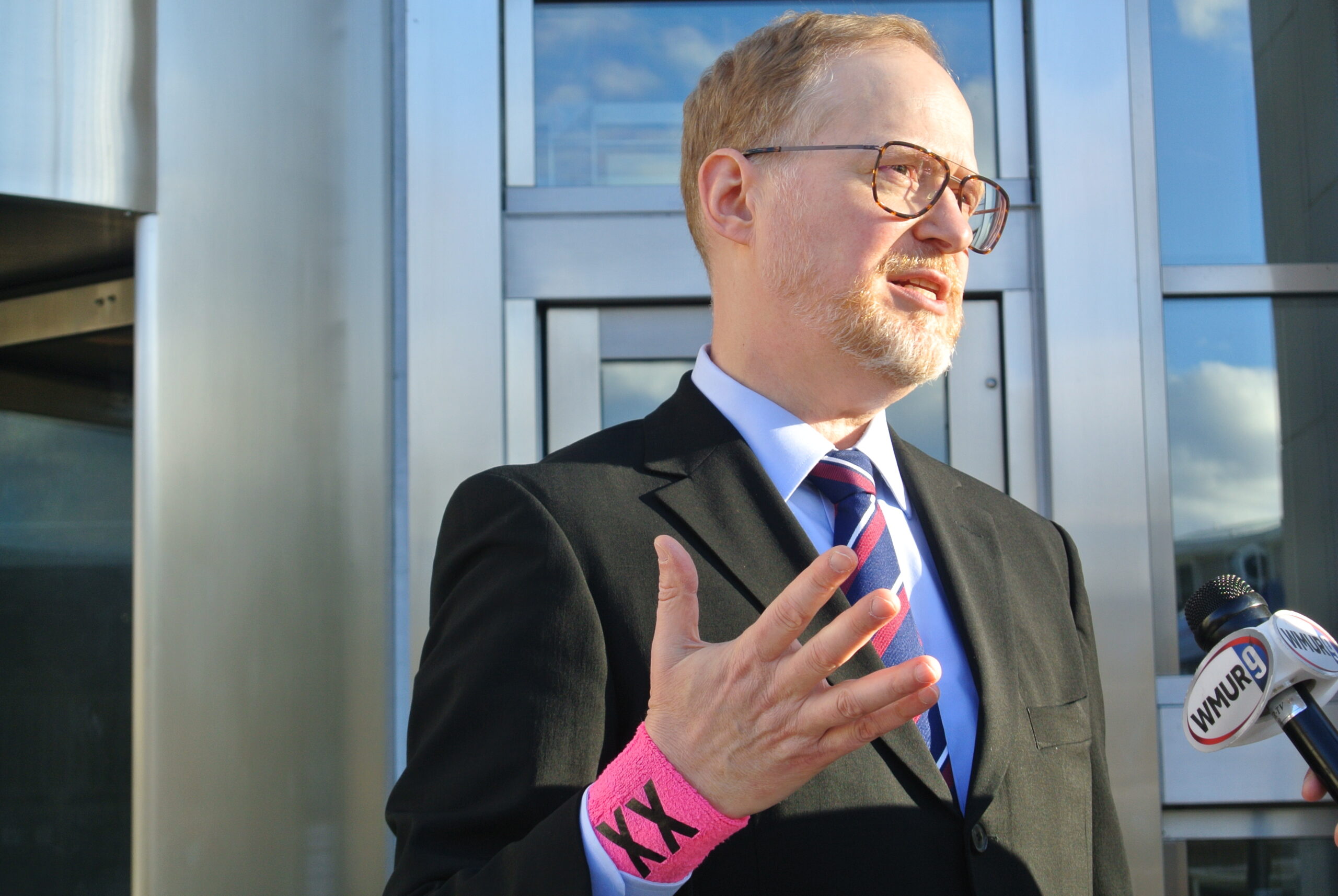
The case echoes the current legal dispute involving the Bow, N.H., school district, which banned parents from wearing pink wristbands with “XX” on them to protest a biological male playing on a high school girls’ soccer team. The district argued that it was the message, not the protest itself, that was “threatening,” and that parents were free to display pro-LGBT messages if they chose. U.S. District Court Judge Stephen McAuliffe affirmed that view in his ruling, which is being appealed.

Appeals court judges appeared dubious of that argument during a hearing in Boston earlier this month.

Andrew Manuse, lead pastor of First Fruits, hopes other Christians will take heart from Santiago’s court victory.

“I support Mr. Santiago’s message to First Parish Church in Dover, which was a loving call for errant leaders and members to turn away from their sins of affirming LGBTQ and repent to live in the righteousness and grace of Jesus Christ. More Christians need to stand firm in their faith as he has done.”

Bow School District Says Protecting Trans Student Trumps Free Speech

The presence of a male player in a girls’ soccer game was all the justification Bow School District officials needed to crack down on protesting parents, according to a legal brief filed last week with the First Circuit Court of Appeals in Boston.

“While Plaintiffs cast their conduct at the Sept. 17 game as a ‘silent protest,’ the District reasonably viewed it as intimidation aimed at [biological male] 15-year-old Parker Tirrell,” wrote Bryan Cullen, attorney for the Bow School District, in the brief filed Friday.

SAU 67 is pushing back on an appeal filed by four Bow parents—Anthony Foote, Kyle Fellers, Nicole Foote, and Eldon Rash—who argue they have a First Amendment right to protest at school events. The group was disciplined last year after engaging in a silent protest against biological males participating in girls’ sports. Anthony Foote and Fellers were temporarily banned from all after-school events.

At the game between Bow High School and Plymouth High School—where Tirrell plays for the girls’ soccer team—the parents wore pink “XX” wristbands to express their opposition.

In April, U.S. District Judge Steven McAuliffe denied the parents’ request for an injunction, ruling that the school had the legal authority to restrict protest activity.

“Because gender identities are characteristics of personal identity that are ‘unalterable or otherwise deeply rooted,’ the demeaning of which ‘strikes a person at the core of his being,’ and because Bow school authorities reasonably interpreted the symbols used by plaintiffs, in context, as conveying a demeaning and harassing message, they properly interceded to protect students from injuries likely to be suffered,” McAuliffe wrote.

McAuliffe’s assertion that gender is “unalterable”—in a case involving a biological male altering his public identity to female—struck some observers as contradictory. Many political analysts believe the ruling could ultimately be overturned by the U.S. Supreme Court, which is set to hear related cases next year.

The Institute for Free Speech, representing the protesting parents, filed an appeal in June, arguing that Bow officials are engaging in viewpoint discrimination by banning their protest while allowing pro-LGBTQ+ displays.

“Bow school officials violate this rule by banning adult spectators from silently protesting against biological males competing in girls’ sports by wearing XX wristbands on the sidelines or displaying signs in a parking lot, while allowing other spectators to display Pride flags or ‘inclusionary’ sociopolitical messages at those same events and in the same places,” wrote Del Kolde, senior attorney at the Institute. “In a limited public forum like a school sporting event, such restrictions amount to textbook viewpoint discrimination.”

Tirrell is central to both Cullen’s argument and McAuliffe’s ruling. The transgender student made headlines before the Sept. 17 game due to a high-profile lawsuit against the state of New Hampshire challenging its law barring biological boys from participating in girls’ sports. With support from GLAD and the ACLU of New Hampshire, Tirrell and fellow transgender student Iris Turmelle won the right to try out and compete on their respective girls’ teams with a favorable court ruling on Sept. 10.

Bow officials anticipated potential disruption at the Sept. 17 game after Foote and Fellers voiced objections to biological boys playing against their daughters. Cullen argued that because Tirrell would be playing, the district had a duty to protect the player from any perceived harassment, including the wristbands.

Cullen went further, asserting that because school officials may not know in advance whether transgender students are attending a given event, they are justified in restricting the free speech rights of Foote, Fellers, and Rash at all future games and after-school activities.

“As the District explained at the preliminary injunction hearing, it is not always known to school officials who may identify as transgender or whether transgender students will or will not be attending a given event,” Cullen wrote. “The District needs the leeway to restrict Plaintiffs’ message from all school events because school officials are unable to know which students will be attending which events.”

He concluded: “Plaintiffs have no constitutional right to ‘silently protest’ school-sponsored events, whether it is the girls’ varsity soccer games or other events throughout the academic year.”

The case has already drawn national attention. U.S. Attorney General Pam Bondi criticized McAuliffe’s ruling earlier this year.

“I have asked my Civil Rights Division to examine this matter,” Biondi posted on Twitter/X. “This DOJ stands with women and their supportive parents.”

NHJournal has not confirmed what, if any, action the Civil Rights Division has taken since McAuliffe’s ruling was issued in April.

Kearsarge School Board Chair Threatens Citizen with Arrest for ‘Misgendering’ Trans Athlete

Why would Kearsarge School Board Chair Alison Mastin threaten to have a member of the public arrested for speaking at a public meeting?

According to the new lawsuit filed in the United States District Court in Concord, because the speaker called a biological male athlete who identifies as female a “tall boy.”

Beth Scaer, a well-known conservative Granite State activist, made her comment during an August meeting as the Kearsarge board was dealing with the state’s new law banning biological males from girls’ sports. Kearsarge is home to champion high school athlete Maelle Jacques, a boy who identifies as a girl and won first place in the girls’ high jump competition last year.

Maelle Jacques is not named in the lawsuit, but referred to as MJ. The Kearsarge School Board voted this summer to ignore the new law in order to allow Jacques to keep playing.

Maelle Jacques

During the August board meeting, “Mastin ruled Scaer out of order, declared the remainder of her three minutes forfeited, and stated that she would be removed by the police if she continued to speak. Mastin was visibly angry at Scaer,” the lawsuit states.

“School boards cannot invent speech rules on the fly to silence citizens expressing views they dislike,” said Institute for Free Speech Attorney Nathan Ristuccia, who is representing Scaer. “This unwritten rule about ‘derogatory’ comments gives the board unchecked power to determine which speech is acceptable and which isn’t—precisely what the First Amendment prohibits.”

Beth Scaer and her husband, Stephen “Sidewalk Steve” Scaer, came out to support the law that they say protects women and girls. They may have been the only ones in the room willing to speak out in favor of it, according to the lawsuit. 

All of the people who wanted to have their say during the public comment period were allotted three minutes, but warned “not [to] speak derogatorily about anyone or anything.” Jacques spoke, as did Stephen Scaer, who went into detail about “experimental gender medicine.”

Beth Scaer was the only speaker that night to get cut off before her three minutes were up. She started her prepared remarks about the potential physical dangers male athletes pose to females, noting that Jacques is much larger than the girls on the Kearsarge soccer team. When she used the phrase “tall boy” to describe Jacques’ physique, the hammer came down.

“Mastin interrupted and disallowed Scaer from saying anything further,” the lawsuit states.

Beth Scaer

Scaer was not told what law she broke or rule she violated during her short time speaking to justify getting threatened with police removal. It was later added to the board meeting minutes that the “tall boy” comment was the social sin. 

New Hampshire’s law banning biological males from girls’ sports has since been struck down by a federal judge using the controversial premise that males who identify as female are “girls” in the same way that biological girls are. That premise is likely to be reviewed by the U.S. Supreme Court.

Scaer says the lawsuit isn’t about her, it’s about protecting free speech.

“Everyone deserves an equal opportunity to address their elected officials without fear of censorship,” Scaer said. “This case is about ensuring that all citizens, regardless of their viewpoint, can participate in public meetings and comment on issues that are important to the community.”

Nashua’s Pine Tree Flag Dispute Is Heading to Appeals Court

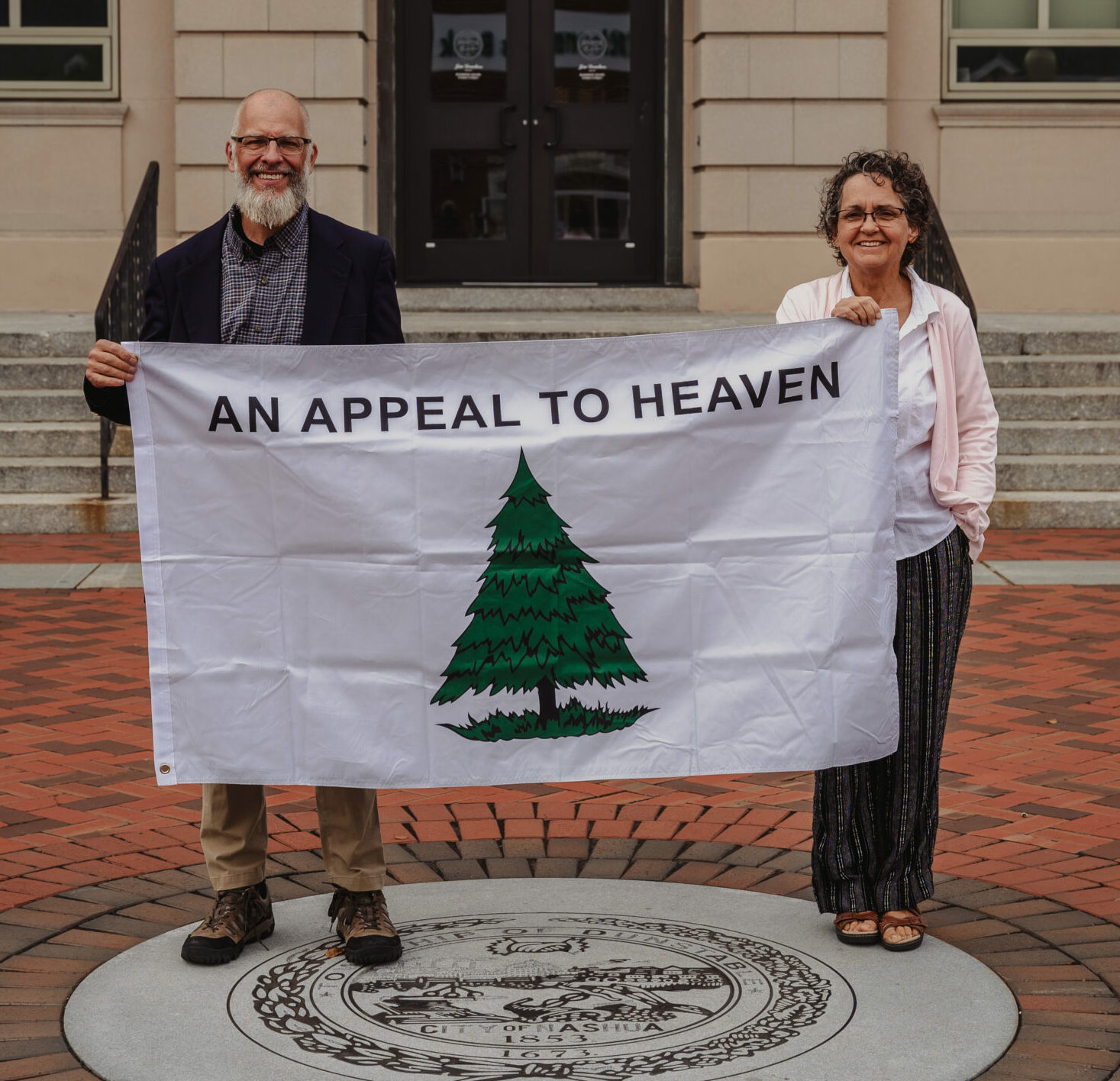
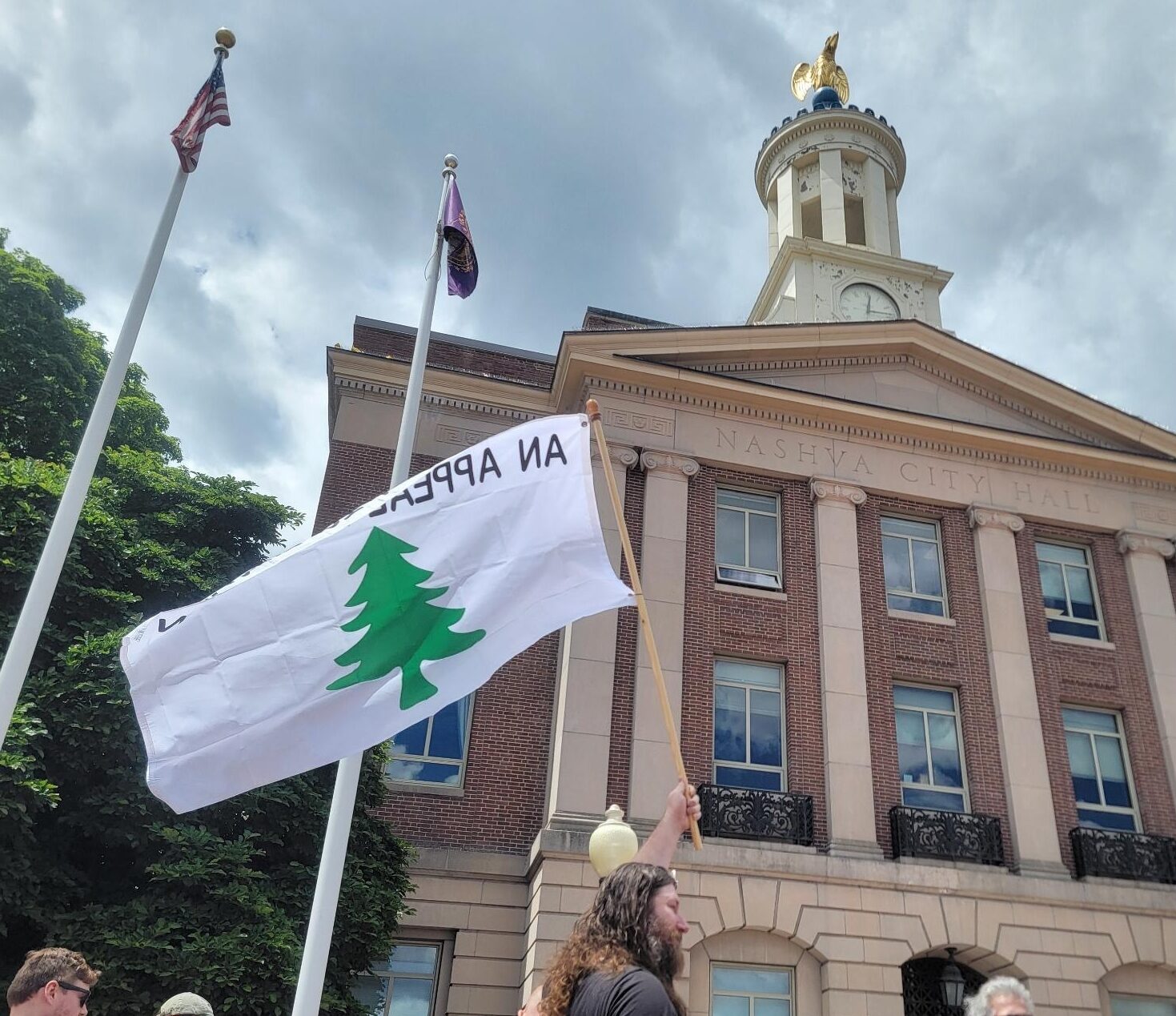
It’s not an Appeal to Heaven, but to the First Circuit Court of Appeals for Nashua residents Beth and Stephen Scaer in their Pine Tree flag fight with the city.

The Scaers filed a lawsuit seeking an injunction against Nashua after they were denied an application to fly the Revolutionary War-era banner, which includes the slogan “An Appeal to Heaven,” by Nashua officials. On Friday, lawyers for the Scaers’ filed notice in the federal court of their intention to go to the appeals court in Boston.

Last Month, United States District Court Judge Landya McCafferty denied their motion for a preliminary injunction, ruling the couple was likely to lose their case on the merits. McCafferty relied on Magistrate Judge Talesha Saint-Marc’s review and report of the case in her ruling. 

According to McCafferty and Saint-Marc, the city did not violate the Scaers’ free speech rights when it denied their flag application. They argue the city’s application process for requests to fly flags on the city’s Citizen’s Flag Pole is an example of an allowable government speech restriction that does not infringe on the First Amendment.

Nathan Ristuccia, an attorney with the legal nonprofit The Institute for Free Speech, insists the court is wrong and that the treatment of the Scaers, who are outspoken political conservatives, is viewpoint discrimination.

“The City of Nashua cannot manipulate government speech doctrine into a ruse for subsidizing viewpoints they like and discriminating against those they disfavor,” Ristuccia wrote in a motion arguing against Saint-Marc’s report. “The City has sought to maintain the Citizen Flag Pole as a forum for favored constituents while using its written policy to create a superficial appearance of compliance with (prior free speech ruling) Shurtleff v. City of Boston.”

In the past, the Nashua city government has allowed flags celebrating Pride Month, transgender rights, as well as ethnic heritage with the national flags of Greece and the Dominican Republic. However, the city has also rejected previous requests to fly symbols advocating pro-life politics, libertarianism, and protecting women’s sports from biological males. 

The city adopted a flag pole policy in 2022, after several rejected applications, that states in part, “[the] flag pole is not intended to serve as a forum for free expression by the public.”

Ristuccia calls the policy an attempt at invoking “magic words” to get around the First Amendment claims of people whose applications were rejected. The Scaers had their Pine Tree Riot flag rejected in 2024 when the city informed them the Revolutionary War banner is not “in harmony with city policies and messages that the city wishes to express and endorse.”

The city’s rejection of the Pine Tree Riot flags is not about Nashua officials harboring royalist sentiment. Instead, officials are being swayed by current political prejudices seemingly shared by Saint-Marc. In her report, Saint-Marc determined the flag the Scaers wanted to fly is a symbol that’s been coopted by the “far right.”

“The record also indicates that the flag was used during the Jan. 6, 2021 attack on the United States Capitol Building in Washington, D.C.,” Saint-Marc wrote.

City Attorney Jonathan Barnes likened the Scaer’s request to fly the Pine Tree Riot flag at city hall to flying a Nazi flag during his arguments in front of Saint-Marc.

“I mean, [Ristuccia] would have you believe that we can raise the Nazi flag to commemorate Hitler’s birthday. I think that’s totally unreasonable, and it certainly wouldn’t be in the city’s best interests to do that,” Barnes said in court.

The 1772 Pine Tree Riot took place in Weare and is considered a pivotal event that led to the American Revolution. The flag has long been associated with patriotic movements. The Scaers wanted to fly the flag on the anniversary of the Battle of Bunker Hill to honor New Hampshire Minutemen.

Judge Rules Nashua Had Right to Ban Pine Tree Flag; Plaintiffs to Appeal

A federal judge ruled Friday the City of Nashua did not violate resident Beth Scaer’s First Amendment rights when it denied her permission to fly the “Appeal to Heaven” Pine Tree flag on the citizen’s flag pole.

“The Magistrate Judge correctly found that the undisputed facts indicate that the flags displayed on the Citizen Flag Pole pursuant to Nashua’s 2022 Flagpole Policy constituted government speech not regulated by the First Amendment,” ruled United States District Court Judge Landya McCafferty.

For years, the City of Nashua had a policy of making a flagpole at City Hall available, upon request, to citizens who wanted to celebrate or demonstrate on behalf of an idea or group. In the past, that included the flags of Ireland, India, and Ukraine, along with the “Suffrage” flag, the “Children of the American Revolution” flag, and the Lion’s Club flag. Recently, city officials took down the New Hampshire state flag to make room for a “Progress Pride” banner.

What the city would not allow was the flying of a flag promoting women’s rights/girls-only sports or the historic “Appeal to Heaven” Pine Tree Flag. Nashua resident Beth Scaer told the city she wanted to fly the flag to commemorate the anniversary of the Bunker Hill battle, in which several New Hampshire residents took part.

The city refused.

“The flag is not in harmony with the message that the city wishes to express and endorse. Therefore, we must deny your request,” wrote Jennifer L. Deshaies, whose job title in city government is “risk manager.”

Scaer sued, and her cause was taken up by the Institute for Free Speech (IFS). The case went before Magistrate Judge Talesha Saint-Marc last year.

During testimony before Saint-Marc, City Attorney Jonathan Barnes compared flying the Pine Tree flag at City Hall to flying a Nazi flag.

“(The plaintiffs) would have you believe that we can raise the Nazi flag to commemorate Hitler’s birthday. I think that’s totally unreasonable, and it certainly wouldn’t be in the city’s best interests to do that,” Barnes said.

In her report rejecting Scaer’s complaints, Saint-Marc called the flag a “far-right” symbol and noted it was flown by some participants in the Jan. 6, 2021 U.S. Capitol riot.

In fact, the pine tree was a common symbol of New England during the Revolutionary War era. The Pine Tree Flag was adopted as Massachusetts’ state flag for a brief period.

The symbol is also tied to the historic Pine Tree Riot in Weare, N.H., one of the first acts of rebellion leading up to the American Revolution.

As for Jan. 6, free speech advocates note the most commonly flown flag by the rioters was the U.S. flag, which currently flies in front of Nashua City Hall.

McCafferty was unmoved.

The legal issue in dispute is the city’s claim that the so-called Citizen’s Flagpole was never, in fact, a free speech forum, despite the many flags flown by many residents to promote various causes. The city insists every flag was a form of “government speech not regulated by the First Amendment,” as McCafferty ruled.

The Greek national flag flies outside Nashua City Hall on the city flagpole usually reserved for the POW-MIA flag.
(CREDIT: Beth Scaer)

The IFS points out that Nashua Mayor Jim Donchess suddenly (and quietly) ended the city’s flagpole policy soon after the lawsuit was filed. ‘The flagpoles on city hall grounds shall henceforth be exclusively controlled by city government,” Donchess declared.

“The abrupt repeal of Nashua’s flag policy is a tacit admission that the old policy was unconstitutional,” IFS attorney Nathan Ristuccia told NHJournal at the time.

On Monday, Ristuccia told NHJournal there will be an appeal.

“We fully intend to appeal this decision to the First Circuit, where we’ll continue arguing that Nashua’s vague and subjective flag policy created exactly the kind of viewpoint discrimination the Supreme Court has repeatedly found unconstitutional.”

Meanwhile, the city’s flag policy continues to raise questions. Just days before McCafferty’s ruling, the city pulled down the POW-MIA flag that traditionally flies outside City Hall and replaced it with the national flag of Greece. It was, according to a statement from the city, to commemorate Greek Independence Day on March 25.

“I don’t know why they ditched the POW-MIA flag, but I think it is disrespectful,” Scaer told NHJournal.

Bow Soccer Ref Apologizes to Dad in XX Pink Wristband Lawsuit

The high school soccer referee who reportedly threatened to cancel a Bow girl’s soccer game because parents wore pink “XX” wristbands issued an apology as part of a settlement agreement in the ongoing federal lawsuit.

Soccer dads Kyle Fellers and Anthony Foote, as well as Nicole Foote and Eldon Rash, filed the lawsuit against the Bow School District after they were ordered to remove their pro-girls sports wristbands at a Sept. 17 Bow game against another girl’s team that includes a transgender player. 

Fellers and Anthony Foote were later slapped with no trespass orders by the Bow School District.

Referee Steve Rossetti, who officiated the game, was named in the lawsuit for reportedly threatening to cancel the game if the parents did not remove the wristbands. But Rossetti was dismissed as a defendant this week. As part of an agreement reached with the parents, Rossetti wrote Fellers a letter of apology for swearing at him during a heated exchange.

“I did not choose my words very carefully during our exchange, and I regret any offense I may have caused you,” Rossetti wrote to Fellers. 

According to the original complaint filed in the United States District Court in Concord, Rossetti walked up to Fellers in the school parking lot after the game and let loose on the soccer dad.

“As the spectators and teams left to go to their vehicles, some expressed support for Fellers’ message while others criticized him. Rossetti, the referee who had threatened to cancel the game and make Bow forfeit, called Fellers a ‘f***ing a**hole’ and told him that his daughter would hate him,” the complaint states.

Rossetti works for the New Hampshire Interscholastic Athletic Association as a referee. He is not a school district employee. The lawsuit against SAU 67 and Superintendent Marcy Kelley, is still active, said Del Kolde, a senior attorney for the Institute for Free Speech which is representing Fellers and the other parents. 

“The case is proceeding against Bow School District and the named officials. We are still waiting for the district court to rule on our motion for preliminary injunction,” Kolde told NHJournal.

United States District Court Judge Steven McAuliffe has already overturned Bow’s no trespassing order that prevented Fellers and Foote from going to games and other after school events. But the parents want an injunction to allow them to be able to wear the wristbands and engage in silent protests at future games and school events.

Kelley testified in November that she deems the XX wristbands a problem because they represent an “exclusionary” anti-transgender view that only biological girls should be allowed to play in girl’s sports. Asked if she would ban rainbow wristbands to support LGBTQ+ players, Kelley said she would not.

“It’s inclusionary, it’s not targeting or harassing anyone,” she testified.

Bow’s Sept. 17 game was against the Plymouth High School girl’s team, which includes openly transgender player Parker Tirrell. The week before the Bow game, Tirrell won the right to play on the girl’s team in a lawsuit against New Hampshire’s law banning biological boys from girl’s spots, HB 1205. 

Tirrell played nearly the whole game against Bow on Sept. 17, and there are no reports of Fellers, Foote, or any other parents specifically targeting Tirrell during their wristband wearing, or making any harassing comments directed at Tirrell. 

NH Judge Sides With Nashua on Banning Pine Tree Flag

The City of Nashua did not violate the First Amendment when it rejected resident Beth Scaer’s application to fly the Pine Tree “Appeal to Heaven” flag at city hall, a federal judge ruled this week. But a free speech organization representing Scaer says the fight is far from over.

Magistrate Judge Talesha Saint-Marc issued a report on Monday to Chief District Judge Landya McCafferty recommending the court deny Scaer’s request for an injunction against the city. Scaer was seeking the preliminary injunction to prevent Nashua officials from denying their flag permit applications, or closing down the public flag program.

After being slapped with a lawsuit over free speech violations for refusing to allow Scaer to fly the historic Pine Tree Flag, Nashua Mayor Jim Donchess quietly pulled down the city’s flagpole policy entirely.

Nathan Ristuccia, an attorney with the Free Speech Institute representing Scaer, called Saint-Marc’s report disappointing, but added it’s not the final word in the case. He plans to file objections to Saint-Marc’s report in the coming days.

“Although we are disappointed with the magistrate judge’s recommendation against the preliminary injunction, this is just one early step in the legal process for defending our client’s First Amendment rights,” Ristuccia said. 

Saint-Marc found that since Nashua’s original flag display policy explicitly states the venue is not a place for absolute free expression, city officials are not violating anyone’s rights when they choose to reject some flags. 

“During the time period relevant to the Scaers’ claims, Nashua maintained a written flagpole policy with identifiable guidelines of what it wished to communicate through the flags displayed on the Citizen Flag Pole,” Saint-Marc wrote. “The 2022 Flagpole Policy stated that the ‘potential use of a City flag pole is not intended to serve as a forum for free expression by the public.’”

Scaer’s attorneys argue having a policy doesn’t free the city from illegally practicing viewpoint discrimination.

Scaer filed her lawsuit against Nashua in September, claiming she was denied the ability to fly the historic Pine Tree flag at City Hall’s “Citizen’s Flag Pole.” According to Scaer’s lawsuit, the city used its vague policy to deny her request. The flag’s origins are linked to events in 1772 in the town of Weare, N.H. Colonists staged a pre-Revolution act of defiance against British rule. Scaer planned to fly the flag to commemorate the anniversary of the Battle of Bunker Hill.

But Saint-Marc again sided with Nashua when she noted that different symbols, like the Pine Tree flag, can have multiple meanings. In this case, the Pine Tree flag could be considered a symbol of the far right as much as a symbol of the Revolutionary War, she wrote.

“The record also indicates that the flag was used during the Jan. 6, 2020 attack on the United States Capitol Building in Washington, D.C.”

Scaer’s supporters are quick to note that far more U.S. flags were flown by rioters that day, and the American flag currently flies outside Nashua City Hall.

Representing the City of Nashua before Saint-Marc last month, attorney Jonathan Barnes compared flying the Pine Tree flag to displaying a Nazi symbol on Hitler’s birthday.

“I mean, [Ristuccia] would have you believe that we can raise the Nazi flag to commemorate Hitler’s birthday. I think that’s totally unreasonable, and it certainly wouldn’t be in the city’s best interests to do that,” Barnes said.

According to the transcript from the Nov. 5 hearing, Ristuccia did not advocate for the display of Nazi symbols.

Barnes also admitted to Saint-Marc that, under its policy, Nashua would ban the national flag of Israel at City Hall as well. The City has previously banned the Palestinian flag, a pro-life flag, and flags supporting people who detransition after sex change procedures.

Saint-Marc’s report will now go to McCafferty for a final decision on the injunction. Even if McCafferty agrees with Saint-Marc on the injunction, the case is far from over.

“The final decision about the preliminary injunction rests with the district judge, who may accept, reject, or modify the magistrate’s recommendation. As the case proceeds, we will continue fighting to protect the rights of every citizen to express their views freely, without government censorship,” Ristuccia said.

Nashua City Attorney: Israeli Flag Too Controversial to Fly at City Hall

The Israeli flag, the white and blue banner with the Star of David, is the official symbol of the state of Israel, one of America’s closest allies. And yet the City of Nashua told a federal judge Israel’s flag is too controversial to fly at City Hall Plaza.

The Pride flag, on the other hand, is more than welcome on Nashua city property, despite being an entirely political symbol of the LGBT movement.

Nashua’s Assistant Corporation Counsel Jonathan Barnes said flying Israel’s flag would spark a flood of angry phone calls and threats, while “reasonable citizens” wouldn’t be bothered by the Pride flag.

Those revelations came last month in federal court as part of the city’s legal defense against a lawsuit filed by resident Beth Scaer. The city rejected her requests to fly the Pine Tree Riot flag and a banner promoting girls-only sports on Nashua’s public flagpole. Scaer claims she’s the victim of viewpoint discrimination by the Democrat-controlled city. She is represented by the Institute for Free Speech and local counsel Roy McCandless.

In the wake of the lawsuit, Nashua Mayor Jim Donchess quietly ended the city’s community flag pole tradition.

During the Nov. 5 hearing before Judge Talesha Saint-Marc, Nashua’s Assistant Corporation Counsel Jonathan Barnes compared the Pine Tree Riot flag to a Nazi flag and a flag for the Soviet Union.

Barnes also brought up the city’s decision to reject a request by Nashua resident Nick Scalera to fly the Palestinian flag on a day set to remember the anti-apartheid movement in South Africa. He says that proves the city was not discriminating based on a particular viewpoint.

And, Barnes added, “If someone applied to fly the Israel flag, I would say you would probably reject that, too, because it’s just — you don’t want to wade into those waters. You want to be able to conduct your city business without getting inundated with angry phones, e-mails, and people threatening you on Twitter, or X, whatever it’s called now.”

Saint-Marc noted that “at one point the city accepted the Pride flag. That’s still a controversial position.”

Barnes responded by invoking American Freedom Defense Initiative v. King County (2016) In that case, ads featuring the images of Islamist terrorists were rejected by the transit system, which argued they weren’t suitable. AFDI sued, lost in the lower courts and the U.S. Supreme Court declined to take up the case. The district court ruled the space was a “limited public forum” and that the system’s restrictions were “reasonable and viewpoint neutral.” 

“In American Freedom Defense Initiative the ban on less controversial advertising was upheld. It wasn’t all controversial advertising,” Barnes argued.

“So, in the grand scheme of things, you know, there are Pride flags flown all over the country. The White House lights up with the colors in June. There are parades all over the country. There might be some people that are upset by that, but there are some people that are upset by the American flag. They would sooner (fly) the Soviet flag fly. Most reasonable citizens don’t find that subject matter to be controversial,” Barnes said.

“The Pride flag?” the judge asked.

“Correct,” Barnes replied.

“I think some reasonable citizens may disagree,” Saint-Marc said, to which Barnes replied, “Some might, but it’s less controversial than, say, a swastika.”

The city’s argument that the official flag of the nation of Israel is too controversial to fly, and suggesting that “reasonable citizens” would object, raised eyebrows.

“The City of Nashua’s terrifying argument demonstrates why free speech is so important,” said Institute for Free Speech attorney Nathan Ristuccia. “We cannot trust the government to decide whose views are too controversial to be permitted.”

Steve Bolton, Nashua’s long-time lead corporation counsel, tried to clean up the city’s position. He told NHJournal Barnes’ comments about Israel were part of a speculative argument that does not reflect the views of Mayor Jim Donchess or the Board of Aldermen.

“It was hypothetical, but that’s certainly not the position of the City of Nashua,” Bolton said.

Barnes was not in the office Wednesday and did not respond to requests for comment.

Israel is a United States ally and the only democracy in the Middle East. It’s also fighting a war against antisemitic terrorist organizations backed by Iran following the brutal Oct. 7, 2023, Hamas attack in which 1,300 people were murdered. 

For his part, Scalera does not understand how Nashua is deciding which flag to fly. He said he was told the city would not fly the Palestinian flag due to the ongoing war.

“The City of Nashua has not shied away from flying the flags of foreign nations, especially foreign nations involved in active conflict. For example, in the wake of Russia’s illegal and brutal invasion of Ukraine, the City proudly raised the Ukrainian flag in solidarity with the people of Ukraine, as well as the Ukrainian population here in Nashua,” Scalera told NHJournal.

Scalera was also told by members of the Board of Alderman that Nashua would not allow a flag from a territory, like Palestine, that is not officially recognized as a nation.

“However, Nashua has also raised the flag of Kurdistan, which is at this point in time an autonomous region, and hopefully one day a nation-state, but nevertheless was not one at the time of the flag raising,” Scalera said.

Documents filed in the case show the city recently approved a day celebrating the Dominican Republic, which is currently accused of ethnic cleansing for its handling of Haitian refugees. The city also flew a Pride flag last year on orders from Donchess. However, a request for a pro-life flag to celebrate the overturning of the Roe vs. Wade decision was rejected.  

“Censorship,” said state Sen. Kevin Avard (R-Nashua) when asked about the case.

“It all boils down to whom the mayor and alderman of Nashua are comfortable offending and who they would rather not. The Pine Tree ‘Appeal to Heaven’ folks, or the Rainbow Flag-LBTQ community. It doesn’t sound like they want to hear from people of faith.”

And Rep. Judy Aron (R-Acworth), a Jewish member of the New Hampshire House and an outspoken defender of Israel, called the city’s actions “sad.”

“If the leaders of the City of Nashua can’t handle free speech, then perhaps the decision to end the traditional program is sad and disappointing but probably a good decision.”

Aron offered her own solution. “They should just fly a white flag of surrender.”

Hail Santa and Merry Satan — Satanic Temple Post Display at State House

You better watch out, you better not cry, you better look out, I’m telling you why: Satan is coming to town.

Or, at least, The Satanic Temple of New Hampshire and Vermont (TST) is bringing its Satanic Representation campaign to the capital. 

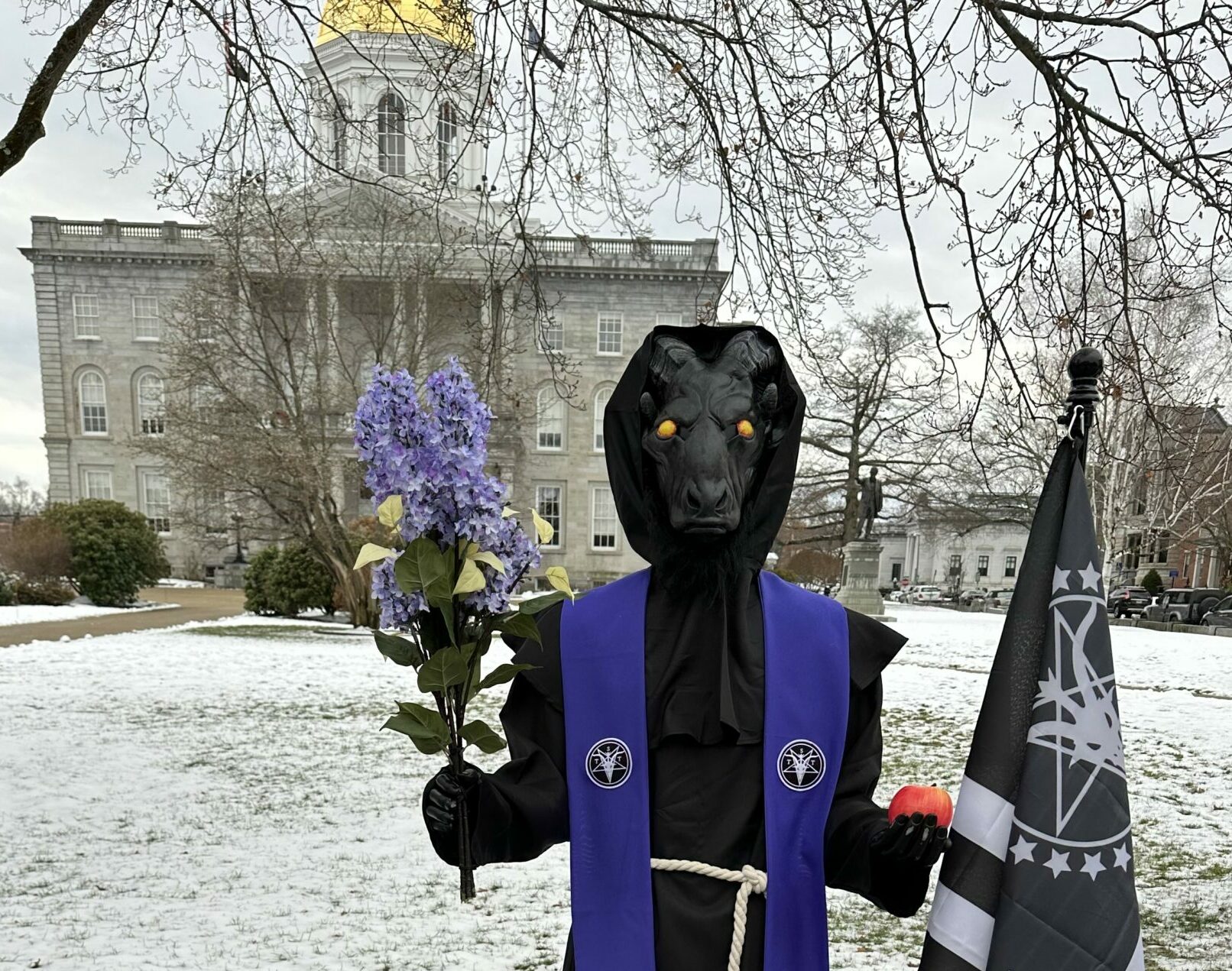
The faux devil-worshipping group unveiled its holiday display at the Concord City Hall Plaza in front of the State House over the weekend, just a few yards from the traditional creche displaying the nativity of Christ.

Now, visitors stopping to get a glimpse of the baby Jesus can get in the holiday spirit by also viewing a statue of the goat-headed demon, Baphomet, holding a lilac and an apple. There is also a marble slab displaying the TST’s seven tenets.

“A lot of people run from the word ‘satanic,’ but we embrace it,” TST Minister Vivian Kelly said at Saturday night’s unveiling.

State Rep. Ellen Read (D-Newmarket) helped the TST get the necessary permits for the display and told NHJournal the group has every right to have its display alongside the traditional Christmas imagery.

“Everything has the potential to offend, even the nearby nativity scene. Not only is over a third of the state not religious, never mind Christian, but I can imagine those who have been judged, harmed, or abused by the Christian church feeling offended by the nativity scene displayed on public grounds. And yet the nativity scene has stood perennially, unmolested, for years,” Read said in a statement provided to NHJournal.

The TST, not to be confused with Anton Lavey’s Church of Satan, is an atheist, liberal activist organization that supports abortion access, the rights of transgender people, and the separation of church and state. As Kelly said Saturday, the group supports people choosing their own path.

“People can live their best lives as they want as their true authentic selves,” Kelly said. “Just because we’re not large in numbers doesn’t mean our beliefs are less important than any of the other religions represented here.”

Critics of the Satanist display say it’s not an attempt to share their beliefs but rather an attempt at attention seeking from a fringe group that hopes to disrupt the Christmas traditions so many Granite Staters, regardless of their personal faith, enjoy during the holiday season.

“Christians should either ridicule these displays as cartoonish or else deny ‘The Satanic Temple’ the attention they use to generate media exposure and funds,” Shanon McGinley, executive director with Cornerstone, said in a statement

McGinley says the group is atheist in principle and holds no actual religious beliefs, but instead uses the guise of a Satanic church to push a feminist agenda.

“They are normal, atheist feminists who use Satanic imagery as a legal tactic, to fundraise through media exposure, and because offending Christian grandmothers brings a sense of meaning to their sad lives,” McGinley’s statement reads.

The Satanic Temple’s website acknowledges its atheism and that it embraces Satan as an anti-authority figure and uses Baphomet essentially as a mascot. Baphomet is a fictional creation of the Middle Ages that was later taken up by occultists like Aleister Crowley, who pioneered 20th-century devil worship and the practice of magic. 

Real or not, Baphomet drew onlookers Sunday, curious about the goat-headed demon.

I like the Satanism display better than the Nativity,” said a woman from Manchester who declined to give her name. “I don’t believe Jesus was real. I’m not religious in any sense.” 

She and a group of friends had come to Concord specifically to see the paganism display.

“It’s the sole reason we’re here, to be honest,” she said.

A local Concord man, who also was unwilling to give his name, echoed those sentiments. 

“I think it’s so cool. It’s really I think it’s awesome, dude,” he said.

The man argued that if the Nativity display can be on the State House sidewalk, why not the Church of Satan display? 

“I think it’s funny that people get so bent out of shape about it,” he said.

Asked if he sees any moral differentiation between Christianity and Satan worship, he said ,“No.”

On the other hand, a passerby who didn’t stop to talk commented, “I hope someone tears it down.”

Read said someone did try to tear it down Saturday night, about two hours after it was unveiled. Though the incident was not reported to the police, Read said Baphomet was knocked down ,and a crack was put into the marble slab.

“If we presume that those that have vandalized the display of Baphomet are doing so in the name of Christianity, then does that speak for a family-friendly holiday celebrating love, peace, and goodwill towards all?” Read said.

McGinley’s statement did not call for any violent response to the display, but it encouraged those who want to counter TST’s Baphomet to do so in a Christian manner. Christmas displays on private property, orthodox and joyful street preaching, and more displays on any public space possible are the best response, she said.

“We encourage Christians to place larger, more aggressive, and more frequent Christmas and other Christian displays in every public venue available,” McKinley’s statement read. 

Partial Win for Bow Parents in ‘Pink Armbands’ Free Speech Lawsuit

United States District Court Judge Steven McAuliffe gave a partial win Tuesday to parents suing the Bow School District after being punished over holding a silent demonstration in support of protecting girl’s sports.

Bow High School parent Kyle Fellers can now go to his daughter’s soccer games, but he can’t wear the pink “XX” wrist band that got him and three other parents in trouble last month. Fellers and Anthony “Andy” Foote were slapped with no trespassing orders by Bow school officials for engaging in a silent protest at the Sept. 17 game.

McAuliffe said while there are complex nuances to the case that need to be sorted out, it’s clear the school was violating the First Amendment rights of the four adults at the game.

“You can’t suppress free speech based on whether you think it’s appropriate,” McAuliffe said.

Fellers, Andy Foote, Nicole Foote, and Eldon Rush are seeking the right to keep wearing pink “XX” armbands to games, but McAuliffe said both Bow’s attorney, Brian Cullen, and attorneys for the parents need to show more evidence and legal arguments to make the case. An evidentiary hearing will be set for November.

Cullen and the district argue the school can set limits on free speech in order to protect students from harassment and other harms. But given the facts before him, McAuliffe wasn’t sold that the school showed it was protecting anyone from any real harassment.

“How is wearing a pink wristband harassment?” McAuliffe asked.

Attorney for the parents Endel Kolde, with the nonprofit Institute for Free Speech, said school officials are punishing people who hold unpopular views.

“Everyone knows if they wore rainbow wristbands in support of trans students, or if they wore blue and gold wristbands in support of the war in Ukraine, nothing would have happened,” Kolde said.

The district was on high alert heading into the Sept. 17 game as Bow was set to host Plymouth High School where transgender student Parker Tirrell plays on the girl’s soccer team. Tirrell won an injunction on Sept. 10 against the state law that bans biological males from playing on girl’s teams.

Cullen said Bow had an obligation to keep Tirrell from being harassed by rowdy, crude protests or heckling. But according to Kodel, few people, including Tirrell, knew about the wristbands until school officials confronted the parents and ordered them to remove the offending accessories. The protest coincided with the Plymouth game, but it was in no way directed at Tirrell, Kodel said.

McAuliffe said while there is not enough evidence on the record to determine what, if any, harm was done by the protests, the pink wristbands on their own symbolize a non-bigoted viewpoint that is still open for debate, that girl’s sports is a space for biological girls. 

Even if Tirrell was aware of the wristbands during the Sept. 17 game, it does not automatically rise to the level of an offense that requires the school to step in and curb the constitutional rights of adults.

“Surely, it’s not harmful for a trans student playing on a girl’s team to know there are people who don’t think they should be playing on the girl’s team,” McAuliffe said