inside sources print logo
Get up to date New Hampshire news in your inbox

Trump Hating Sign Stomper Loses Right to Vote

The state of New Hampshire has stripped an anti-Trump Northfield man of his right to vote after he pleaded guilty to kicking Trump campaign signs. Now, some are asking if the punishment exceeds the crime.

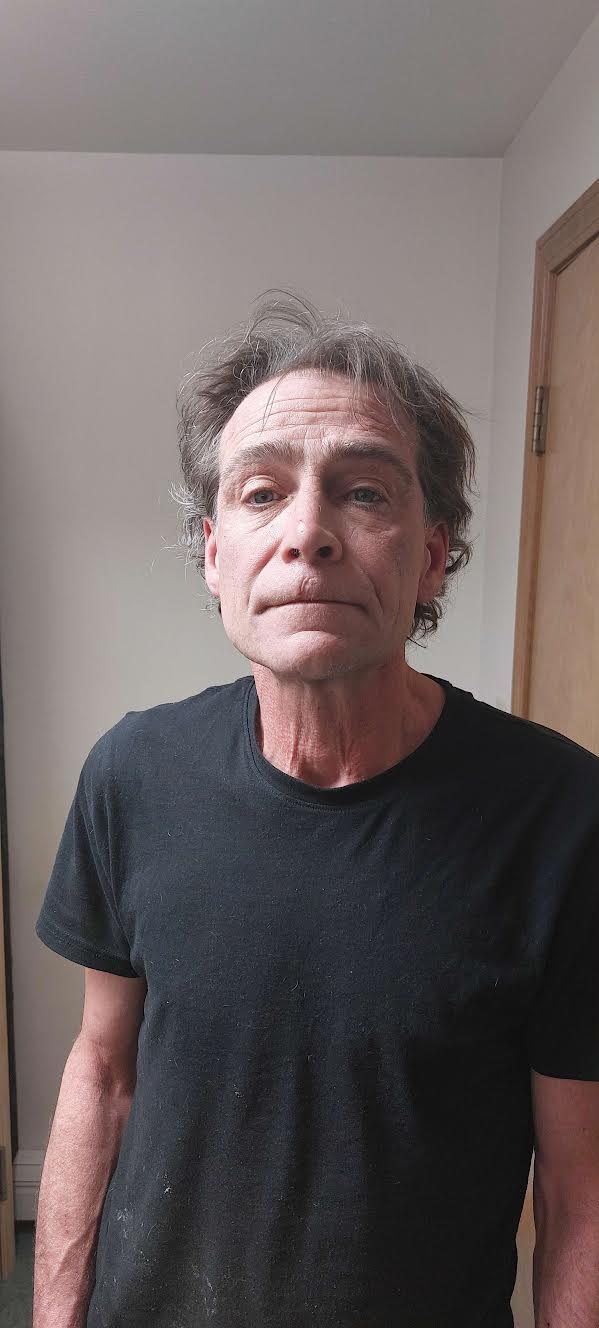
Nick Coots-Moorehead, 55, pleaded guilty this week to one Class B misdemeanor count of unlawfully removing political signs during the 2024 election cycle. He could not be reached for comment; his publicly listed phone number is disconnected.

Coots-Moorehead walked into the yard of a Northfield couple three times last year to kick their Trump sign and yank it out of the ground, according to court records. The couple managed to catch Coots-Moorehead’s actions on video, which they shared with Northfield police and investigators with the New Hampshire Attorney General’s Election Law Unit.

In the video of the final incident, Coots-Moorehead is seen kicking the sign down and then giving the homeowner the middle finger after she yelled at him, according to the police report. Coots-Moorehead initially claimed the signs were on the public sidewalk and in his way as he walked past the house. But the videos told a different story.

Coots-Moorehead won’t spend any time in jail, but he will pay $310 in fines and court fees, along with the revocation of his right to vote. Losing voting rights for a misdemeanor may seem extreme, but it is not an unusual consequence in New Hampshire for anyone who breaks election-related laws.

Article 11 of the New Hampshire Constitution states that the right to vote will be removed if a person is “convicted of treason, bribery, or any willful violation of the election laws of this state or of the United States.” Coots-Moorehead was prosecuted under election laws meant to protect political speech.

Last year, former Republican state Rep. Troy Merner had his right to vote taken away for two wrongful voting convictions. The Lancaster state representative moved to nearby Carroll before the 2022 election but stayed on the ballot and was reelected to represent Lancaster. Despite an investigation by the Attorney General’s Office into his living situation, Merner claimed he was still legally domiciled in Lancaster when he voted in the 2023 Lancaster municipal election.

Stripping voting rights from convicted criminals, regardless of the crime, has become a contentious issue in American politics. About half the states allow convicted criminals to vote as soon as they leave prison. Others require felons to complete their entire sentence, including probation. Progressive organizations want more states to automatically “re-enfranchise” felons after they’ve served their time.

Two states, Maine and Vermont, never take away a convicted criminal’s right to vote, allowing them to participate in elections while incarcerated.

The good news for Coots-Moorehead and Merner is that the state constitution allows people whose voting rights have been revoked to seek restoration from the state Supreme Court. The bad news is that the one justice who might understand their plight, Associate Justice Anna Barbara Hantz-Marconi, is recusing herself from criminal cases.

Hantz-Marconi pleaded no contest this month to a Class B misdemeanor charge alleging that she tried to get Gov. Chris Sununu to look at a pending criminal investigation into her husband, former Ports Director Geno Marconi. Hantz-Marconi paid a $1,200 fine as a result of the conviction, but had her law license restored and returned to the court a week later.

Dem Liot Hill, Still Under Investigation, to Skip AG Confirmation Vote

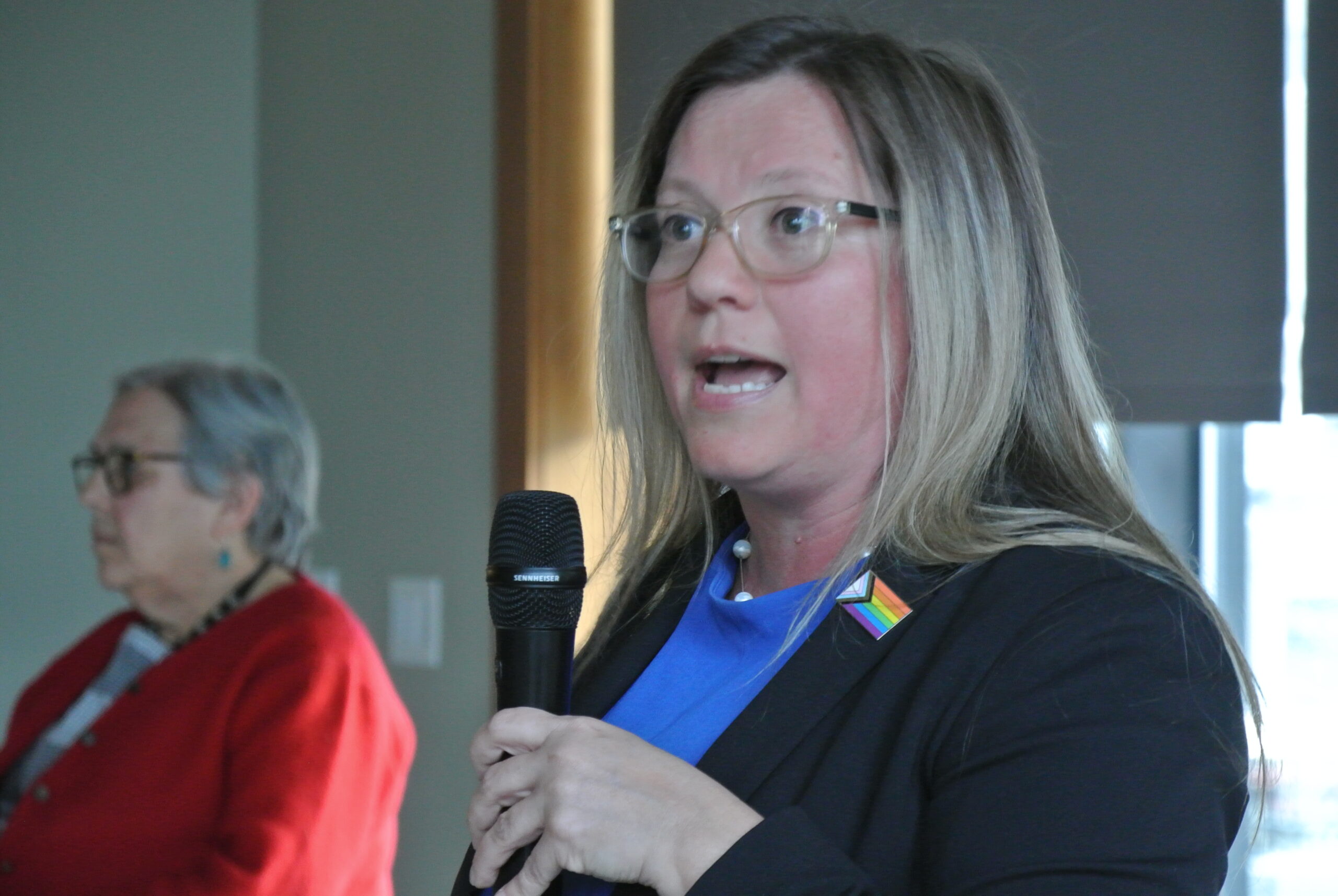
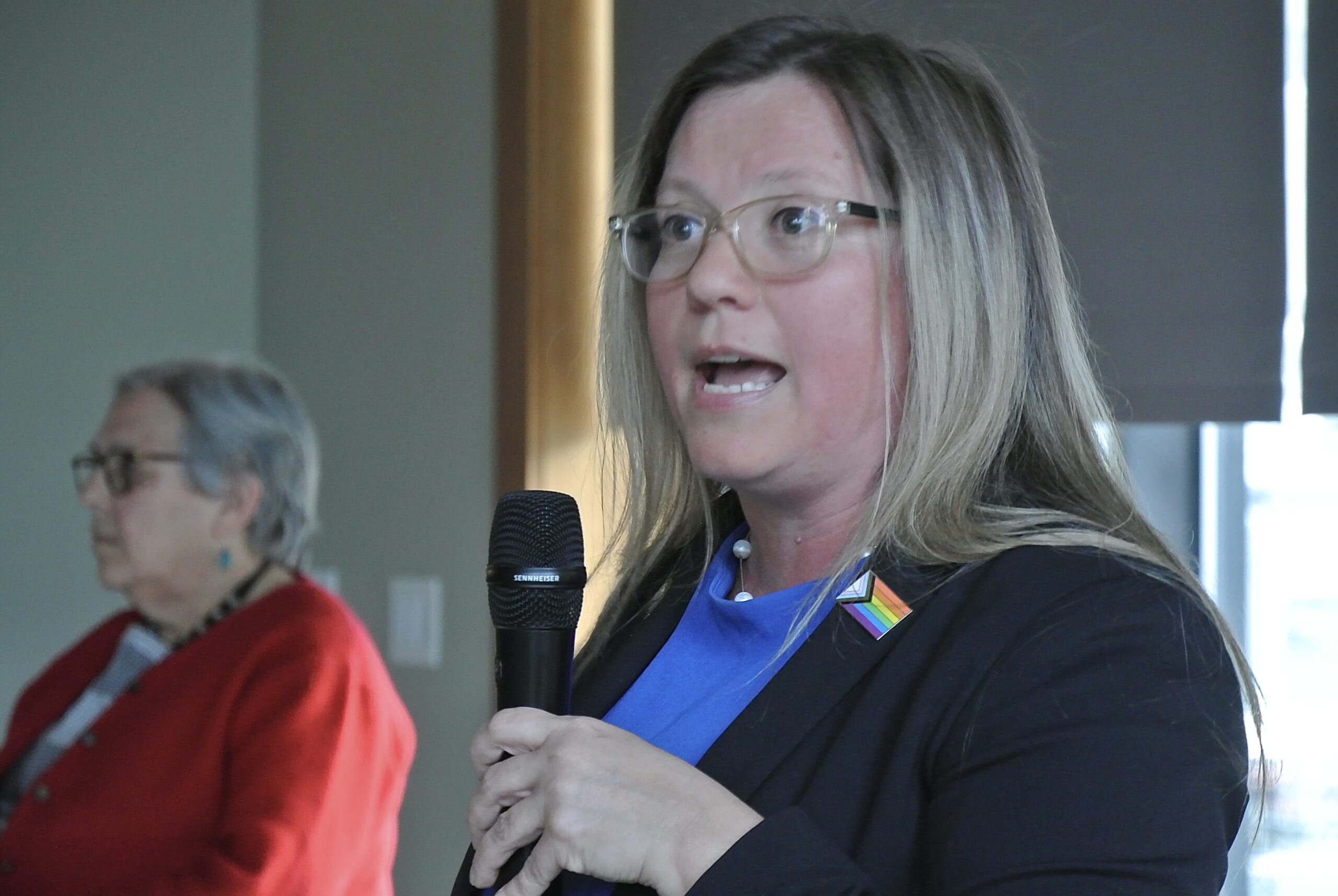
New Hampshire’s self-styled “Top Democrat,” Executive Councilor Karen Liot Hill (D-Lebanon), says her decision to recuse herself from the upcoming vote on Attorney General John Formella’s reappointment is the result of partisan politics.

Critics say the real issue is much simpler: How can Liot Hill vote on an attorney general whose office is currently investigating her on charges of campaign finance violations?

Approving the attorney general and other key state government nominees is a central part of an Executive Councilor’s duties. In a statement to the left-leaning news outlet InDepthNH, Liot Hill blamed her recusal on the GOP.

“Since the Republicans are continuously calling for AG investigations of my work, most recently emails I sent from my official email address advocating for my constituents’ right to vote, I will be recusing myself from the Attorney General’s confirmation vote to prevent even the perception of a conflict of interest,” Liot Hill said.

She did not mention the fact that the Attorney General’s Election Law Unit is conducting an ongoing campaign finance investigation of Liot Hill, one that has been underway for nearly a year.

“Frankly, I don’t understand why this is taking so long,” said Executive Council Chair Dave Wheeler (R-Milford).

The scheduled Sept. 17 vote on Formella’s reappointment is likely a foregone conclusion. Formella is a GOP holdover from Gov. Chris Sununu’s administration who is unlikely to be rejected by the council’s 4-1 Republican majority.

Wheeler suspects Liot Hill’s recusal statement is more about managing the optics of her vote against Formella than the vote itself.

It’s hardly a surprise that a progressive Democrat like Liot Hill would oppose Formella’s nomination. Her predecessor, and fellow progressive, Councilor Cinde Warmington, voted against Formella when he was first nominated in 2021.

Still, Wheeler says, the current circumstances are problematic for Liot Hill. Casting a vote against Formella with the open investigation pending would look bad, he said.

“My guess is she would be inclined not to vote for a conservative, and it would then look like she voted that way for being investigated,” Wheeler said.

It’s not unheard of for councilors to recuse themselves from voting on appointments when there’s a conflict of interest, such as when the nominee happens to be related to a councilor. But Wheeler, who has been a councilor off and on since 2001, can’t recall a councilor ever recusing themself due to a pending investigation.

“Not that I can think of,” Wheeler said.

Liot Hill stopped responding to questions from NHJournal after it began reporting on her campaign finance filings, as well as her efforts to help a Democratic law firm sue the Granite State. NHJournal reached out to her again on Wednesday seeking comment, to no avail.

The investigation into Liot Hill’s campaign finances was opened in October, soon after NHJournal found that the Lebanon Democrat spent thousands in campaign cash on meals, clothes, and visits to salons during the 2024 race. Her campaign expenditures included a $190 ferry ride to the Hamptons and $181 to register her car, as well as repairs around her home. The New Hampshire Attorney General’s Office confirmed to NHJournal on Aug. 14 that the campaign finance probe is still ongoing.

Last week, Liot Hill told InDepthNH that as a result of the investigation, she has already repaid her campaign $2,000 “mostly for clothes and other expenses,” and amended her campaign finance reports. But those reports were amended in November of last year.

NHJournal uncovered emails Liot Hill sent from her government email account last month on behalf of the Elias Law Group seeking to help recruit plaintiffs for a voting rights lawsuit against the state over SB 287. Liot Hill refused to answer when NHJournal asked if she was getting paid by Elias to help find plaintiffs.

Elias Law Group, founded by Marc Elias, is a prominent — and notoriously partisan — D.C. law firm connected to the 2016 Russia hoax scandal. Liot Hill later claimed she was merely helping constituents by finding potential plaintiffs for Elias.

“My job as an elected official is to advocate for my constituents, which is exactly what I do every day,” she told InDepthNH.

That kind of advocacy can get pricey, however. According to recent campaign finance reports, Liot Hill drove more than 9,700 miles for her upcoming 2026 campaign and paid herself $6,771.70 in mileage reimbursement out of those donor funds. The campaign paid her another $2,518 for candidate travel, of which $2,462 was spent at Gills Point S Tire and Auto Service in West Lebanon. Taxpayers also chipped in $11,970 for her annual Executive Councilor mileage/expense stipend.

After her Elias-related constituent services were revealed, House Deputy Majority Leader Joe Sweeney (R-Salem) called for Liot Hill to resign or face impeachment.

“That’s not public service; that’s political lawfare run out of a taxpayer-funded inbox,” Sweeney wrote in a statement.

New Hampshire Republican Party Chairman Jim MacEachern sent a letter to the Attorney General’s Office asking for an investigation into Liot Hill’s emails on behalf of Elias.

“Granite Staters expect their elected officials to use their positions to serve the people, not to further their political interests. Liot Hill’s decision to use her official capacity to communicate on behalf of a political law firm adds to the ethical concerns that have already been generated by her previous scandals,” MacEachern wrote.

The Attorney General’s Office never confirms or denies the existence of any pending investigation. After MacEachern’s letter was sent, Department of Justice spokesman Michael Garrity said the letter would be taken under advisement.

“We will assess the information provided and determine the appropriate course of action based on the facts and applicable law.”

Lax NH Voter Law Allowed Non-Citizen to Vote Three Times, Records Show

When news broke that a Jamaican citizen had been arrested for illegally voting in New Hampshire — in three different elections — the first question many Granite Staters had was “How is that possible?”

And the answer, say voting law experts, is that New Hampshire’s law at the time made it possible. But not anymore.

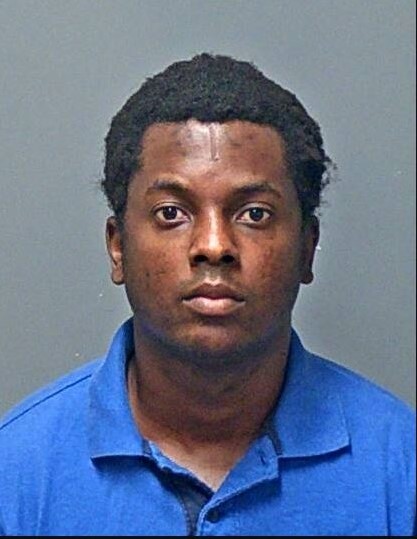
Naseef Bryan, 34, was arrested and charged this week on three felony counts of wrongful voting. At the time he started voting in Manchester, Bryan was engaged in multiple lawsuits with the federal government in an attempt to force his way into becoming a citizen.

The lawsuits indicate that Bryan knew he was not a citizen when he registered to vote in the November 2023 municipal election and could therefore not legally vote. But if he knew he wasn’t a citizen, why didn’t the New Hampshire election authorities know it, too?

According to a representative for the city clerk’s office, Manchester election officials followed the law when Bryan registered. He was asked to prove his identity, his current address or domicile, and his status as a U.S. citizen.

For the first two, Bryan presented a New Hampshire driver’s license as photo ID and his car registration to prove he lived in the city. As for his citizenship, New Hampshire law allowed voters to sign an affidavit in front of a poll worker attesting that he or she is an American citizen.

Unless the affidavit is challenged, the citizenship claim is neither questioned nor confirmed, and the vote is counted. Or at least it was.

Bryan could not register to vote today, thanks to the law signed by Gov. Chris Sununu last year. HB1569 requires people registering to vote for the first time to prove their citizenship status. Democrats and liberal groups attacked the law, calling it “unconstitutional” and “a clear attack on one of our most fundamental rights.”

Democrats in the state House and Senate overwhelmingly voted against the proof-of-citizenship requirement.

“Make no mistake: this law will disenfranchise eligible voters with no evidence or data to back up any reason as to why,” Devon Chaffee, executive director of the ACLU-NH, said at the time.

Then came the Bryan case.

“For years, Democrats told us that a signature on a piece of paper was all that was needed for proof of citizenship for voting, and for years, we told them the system was wide open for abuse,” said Rep. Ross Berry (R-Weare), chair of the House Election Law Committee. “Turns out we were right, and thankfully, we have already closed that loophole over their objections.”

The new Granite State requirements are similar to those in the federal SAVE Act, a law Democrats like U.S. Rep. Maggie Goodlander claimed — falsely — would disenfranchise married women. 

“These women would not be able to use their birth certificates to prove their citizenship under the SAVE Act. And, if they do not have a passport, which roughly 44.5 percent of Granite Staters do not, they would not be able to register to vote at all under the SAVE Act,” Goodlander said in a statement.

However, the New Hampshire law only affects new voter registrations, and married women who are already registered to vote won’t be turned away from the polls if they have taken their husband’s last name. 

Affidavit ballots have also been used for same-day registration when would-be voters show up without either proof of identity, address, or both. Under the old rules, they could fill out an affidavit and cast their vote. They then had one week to provide proof of identity, thus allowing their vote to be added to the total count.

In 2024, 27 voters who registered at the polls without an identification earlier this month were provided with affidavit ballots, the largest number ever in a single election. Of those 27, only three sent in their proof of identity, according to the New Hampshire Secretary of State’s Office.

It’s not yet clear from the available records how Bryan was caught. Speculation surrounds the fact that he’s a litigious and outspoken gadfly in the New Hampshire legal system, seeking the sort of attention that could catch the eye of election law enforcement.

It would only take a quick internet search to find his many lawsuits against various government agencies, including his legal battles with the United States Citizenship and Immigration Services.

‘Death to Ballot Integrity!’? Illegal Voter Says U.S. Immigration Law Doesn’t Count

A Jamaican national living in New Hampshire has been charged with illegally voting in three elections, and he’s offering a novel legal defense.

U.S. immigration law, he claims, is unconstitutional.

Naseef Fernando Bryan, 34, was arrested Tuesday and charged with three Class B felony counts of wrongful voting. Each charge carries a potential sentence of 3½ to 7 years in prison. According to the New Hampshire Attorney General’s Office, Bryan voted illegally in the 2023 Manchester municipal election, the January 2024 presidential primary, and the November 2024 general election.

Shortly after his arrest was announced, Bryan took to social media to outline his legal theory.

“The U.S. Constitution did not say establish a uniform Immigration and nationality Act, let’s be honest,” Bryan wrote on Twitter/X.

Despite being a lawful permanent resident for more than 12 years, Bryan is not a U.S. citizen and therefore not eligible to vote in federal or state elections.

Bryan describes himself online as an “AMERICA FIRST Traditionalist.” (Emphasis original) His legal activity reflects a similar defiance of federal authority. Within the past year, he has filed multiple lawsuits against U.S. Citizenship and Immigration Services, claiming the agency unlawfully delayed his naturalization application. In those suits, he sought a declaration of citizenship, a U.S. passport, and a sum of gold coins. None of the cases were successful.

A frequent litigant, Bryan has filed lawsuits in both state and federal courts against a variety of entities, including the Merrimack Police Department, the University of New Hampshire, and the New Hampshire Secretary of State’s Office. His court filings are often unconventional and rarely succeed.

Bryan sued the Merrimack Police over a 2019 arrest in which he was charged with brandishing a firearm during a road rage incident. A Hillsborough County grand jury declined to indict him, and his civil suit was later dismissed because it was filed five years after the incident—well beyond the three-year statute of limitations.

He also filed suit against UNH after the school rejected his transfer application, arguing that New Hampshire’s in-state tuition policy created a constitutional right for him to attend. That case, too, was dismissed.

“Bryan points to no other state policy or law that guarantees him a place at UNH,” wrote U.S. Magistrate Judge Talesha Saint-Marc in her recommendation to dismiss the case.

In yet another suit, Bryan named the New Hampshire Secretary of State’s Office as a defendant, though the court noted his complaint lacked any specific allegations.

“Mr. Bryan’s complaint contains no factual allegations regarding any actions taken against him by the State of New Hampshire or its Secretary of State,” U.S. District Judge Andrea Johnstone wrote. “He asks this court to issue a writ of mandamus to compel the defendants to perform some unnamed actions that would correct a situation where he is ‘unable to perform basic functions that humans need.’”

Bryan was not held in custody following his arrest and is currently free pending further court proceedings.

Another Fiscal Fiasco for Dem Liot Hill as Court Declares Her in Default

Executive Councilor Karen Liot Hill calls herself “the top Democrat in state government.”

But a New Hampshire court just called her a deadbeat.

A court declared Liot Hill in default over her failure to repay $4,234 in outstanding credit card debt. It’s the latest in a series of financial faux pas by a state official whose job is to prevent fraud and overspending in state contracts. 

Liot Hill is already under investigation by the New Hampshire Attorney General’s Office Election Law Unit over questions about her campaign spending in her race for executive council. The longtime Lebanon city councilor and four-term Grafton County treasurer spent thousands of campaign dollars on personal items like $190 for a ferry ride to the Hamptons, $181 to register her car, and $250 for a haircut at Rio Blanco Salon. There were also two unexplained checks totaling $1,350 corresponding to two court cases against Liot Hill; one a violation for driving with a suspended license, and another involving a debt collection on a car loan.

In the current credit card debt case, Liot Hill stopped making payments about the same time she started running for executive council.

According to court records, Liot Hill never responded to the complaint filed in February in Lebanon District Court.

Liot Hill did not respond to requests for comment from NHJournal on Monday, either.

In an interview with the Valley News that was published this weekend, Liot Hill touted her important place in the Democratic Party.

“I am an executive councilor, but I’m actually the top Democrat in state government,” Liot Hill said in the interview. “I feel a responsibility to try and communicate with my constituents and also to be a presence and to be a voice for Democratic values across the state.” And her answer to a question about running for governor or Congress was “never say never.”

Republicans say Liot Hill lacks the values — or the record of responsibility — for the job she has now.

“When I applied to be dean at the University of New Hampshire, they ran a full background check, including my credit score, because I was going to be put in charge of a budget of $30 million or so,” said state Sen. Dan Innis (R-Bradford). “It would seem to me that someone who has trouble with her personal finances shouldn’t be trusted with an entire state‘s finances.”

Liot Hill’s campaign finances have been the subject of multiple media reports. Soon after NHJournal published its first story about her extravagant campaign spending, she filed and amended spending reports to remove some items and clarify others. Two mystery checks were switched to reimbursements the campaign made to her for the purchase of software and other more legitimate expenses.

Also noteworthy: Liot Hill’s first campaign filing was signed by her campaign treasurer, Corrinne Morse. When Liot Hill filed the amended version changing the descriptions of her spending to less problematic expenditures, Morse had been replaced as treasurer. Instead, Liot Hill listed herself as treasurer and signed her own amended filing.

Asked by NHJournal if she had actually signed the original filings, Morse declined to answer.

Morse declined to respond to a request for comment on Monday as well. Perhaps with good reason.

Liot Hill has already filed paperwork indicating she plans to seek reelection in 2026. Her amended campaign committee registration form lists Morse as the treasurer for her upcoming campaign.

Liot Hill’s Legal Troubles Continue as AG Looks into Campaign Finances

Controversial Executive Councilor Karen Liot Hill’s 2024 campaign spending made headlines, and now it may be getting attention from the Attorney General’s Office as well. It confirms it is investigating the Lebanon Democrat’s campaign finances.

Questions about Liot Hill’s campaign finances began with NHJournal’s coverage of her lavish spending during the Democratic primary for Executive Council. Her allegedly campaign-related expenditures included charges for house cleaning, home heating oil, clothes, haircuts, groceries, gifts, payments to relatives, out-of-state trips, and more than $15,000 in gas and meal expenses.

Now, the New Hampshire Attorney General’s Office confirms to NHJournal that its Election Law Unit is investigating a complaint filed against Executive Councilor Karen Liot Hill (D-Lebanon).

“The New Hampshire Department of Justice Election Law Unit can confirm that there is an open campaign finance matter involving Executive Counselor Liot Hill,” Election Law Unit Chief Assistant Attorney General Brendan O’Donnell told NHJournal.

Liot Hill, an Upper Valley Democrat who previously served on the Lebanon City Council, refused to answer when NHJournal asked her about the investigation. Liot Hill simply shook her head in response to NHJournal’s questions.

The New Hampshire Attorney General’s Office declined to give details about the investigation, and the original complaint is not being made public at this time. NHJournal’s review of Liot Hill’s campaign finance reports, and her subsequent moves to correct the reports, uncovered curious details.

For example, nestled among her campaign receipts were two mystery checks that corresponded to court dates in two separate legal matters facing Liot Hill.

After NHJournal reported on her spending, Liot Hill filed amended reports with the New Hampshire Secretary of State’s Office that removed some of the spending line items, and attempted to explain the two mystery checks.

Liot Hill’s original reports listed two unexplained checks from December 2023 and January 2024 totaling $1,350. The checks did not include any information on who received the money, or the purpose of the expenses.

NHJournal found the timing of the two checks corresponded with two court cases involving Liot Hill. One was a violation for driving with a suspended license, the other involved a debt collection. The amended reports list those checks as reimbursements to Liot Hill for various software subscriptions, as well as cell phone and internet services.

These aren’t Liot Hill’s first legal troubles. The Democrat has been arrested twice for DUI, once in 2010 and again in 2018.

One interesting element about Liot Hill’s campaign disclosures for investigators to review: the sudden change in the status of her campaign treasurer.

The original reports listed former state Rep. Corrine Morse as the campaign treasurer, and appear to bear her signature. But the amended reports, which are significantly different from the first ones, are signed by Liot Hill, who declared herself her campaign’s treasurer.

Filing campaign documents that make false representations, such as who signed them, is a serious violation of state campaign finance laws.

NHJournal contacted Morse in November about her role in the campaign and asked if she had in fact signed the original reports for Liot Hill.

“I can’t comment on that,” Morse told NHJournal at the time.

Morse has not responded since to NHJournal’s multiple calls or emails about the campaign or the investigation.

It’s past time for the public to get the truth about Liot Hill’s finances, says New Hampshire Republican Party Chairman Jim MacEachern, particularly given the financial duties of her position as an Executive Councilor.

“Councilor Hill, who has a history of breaking the law, is now accused of misusing campaign dollars and fraudulent filings,” MacEachern told NHJournal. “It’s alarming that someone like that is empowered to review state contracts and even pardons. I’m happy to hear this is being investigated and trust that justice will be served,” MacEachern said.

Liot Hill’s GOP colleague, Executive Councilor Joe Kenny (R-District 1), learned about the investigation from NHJournal. He declined to comment on Liot Hill’s campaign spending, but he added,  “I hope it’s cleared up very quickly. We have a lot of work to do.”

Executive Councilor John Stephen (R-District 4) echoed that view.

“At the end of the day, we’re going to serve the people of this state who elected us,” Stephen said.

Amid a flurry of proposed budget cuts coming out of the legislature, the council is also navigating the sudden loss of $80 million in federal funding from the Centers for Disease Control. Stephen would not say if he thought Liot Hill being investigated could tarnish the image of the council as the public watches their decisions.

“I’m going to continue my role representing the people of District 4 in the most accountable way possible, with transparency and integrity in everything I do,” Stephen said.

Republican Kim Strathdee, who unsuccessfully ran against Liot Hill for the Executive Council, filed the complaint now under investigation. Strathdee did not respond to a text message seeking comment, and the phone number listed for her is not in service. Strathdee filed her complaint Oct. 7, days after NHJournal broke the story about Liot Hill’s campaign spending habits.

As for Strathdee’s campaign finances, she has a perfect record. While Liot Hill spent close to $120,000 on the contested primary and general election, Strathdee raised no money and spent no money throughout her entire campaign, according to her reports.