
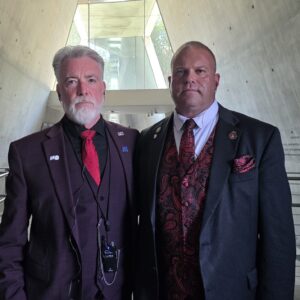
In late October, state Rep. Brian Cole and I joined the American Friends of Judea and Samaria Leadership Mission to Israel. Over six days, we walked the same soil where prophets once stood and soldiers now stand guard. What we saw, heard, and felt cannot be captured in a single report (though our full written account will soon be linked for public reading), but I offer these reflections to share what it means when faith, history, and security converge in a single land.
From the moment we arrived in Jerusalem, the gravity of Israel’s struggle was unmistakable. This is not a country living in fear; it is a nation living with vigilance. In Samaria, we stood at the State’s Balcony overlooking the Mediterranean and were reminded that the distance from those hills to Tel Aviv is short enough for rockets to travel in seconds. Yet amid that tension, we saw olive groves, vineyards, and families building homes, determined to preserve what their ancestors built long before modern borders were drawn.
Our meetings with local leaders, including Yossi Dagan of the Samaria Regional Council and David Elhayani of the Jordan Valley, offered a firsthand understanding of the courage that sustains Israel’s frontier communities. These men and women do not speak in abstractions about security. They speak of defending their children’s schools and harvesting their crops under the shadow of enemy fire. It is impossible to stand there and not grasp the moral clarity of their cause.
Jerusalem itself was a spiritual homecoming. At the Temple Mount and the City of David, we saw the foundations of faith beneath our feet. At Yad Vashem, the Holocaust memorial, we confronted the price of forgetting history. The silence in those halls speaks louder than any speech I have ever heard. Later that day, Speaker Amir Ohana invited us to sit on the floor of the Knesset as he presided over a live debate, pausing the proceedings to recognize our delegation. It was a powerful reminder that Israel’s democracy (like our own) is noisy, imperfect, and absolutely essential.
But it was in the Gaza Envelope that the reality of Israel’s daily struggle became truly personal. We visited Kfar Aza, where Hamas terrorists murdered families in their homes. We stood beside the bullet-riddled house of Commander Sivani and spoke with soldiers who had fought to save their neighbors. At the Nova Festival site, we listened to a young woman describe her survival as gunfire tore through the air and she played dead among the bodies of her friends, her head bleeding from the impact of a rifle butt. Her words were not those of vengeance but of endurance. I will never forget them.
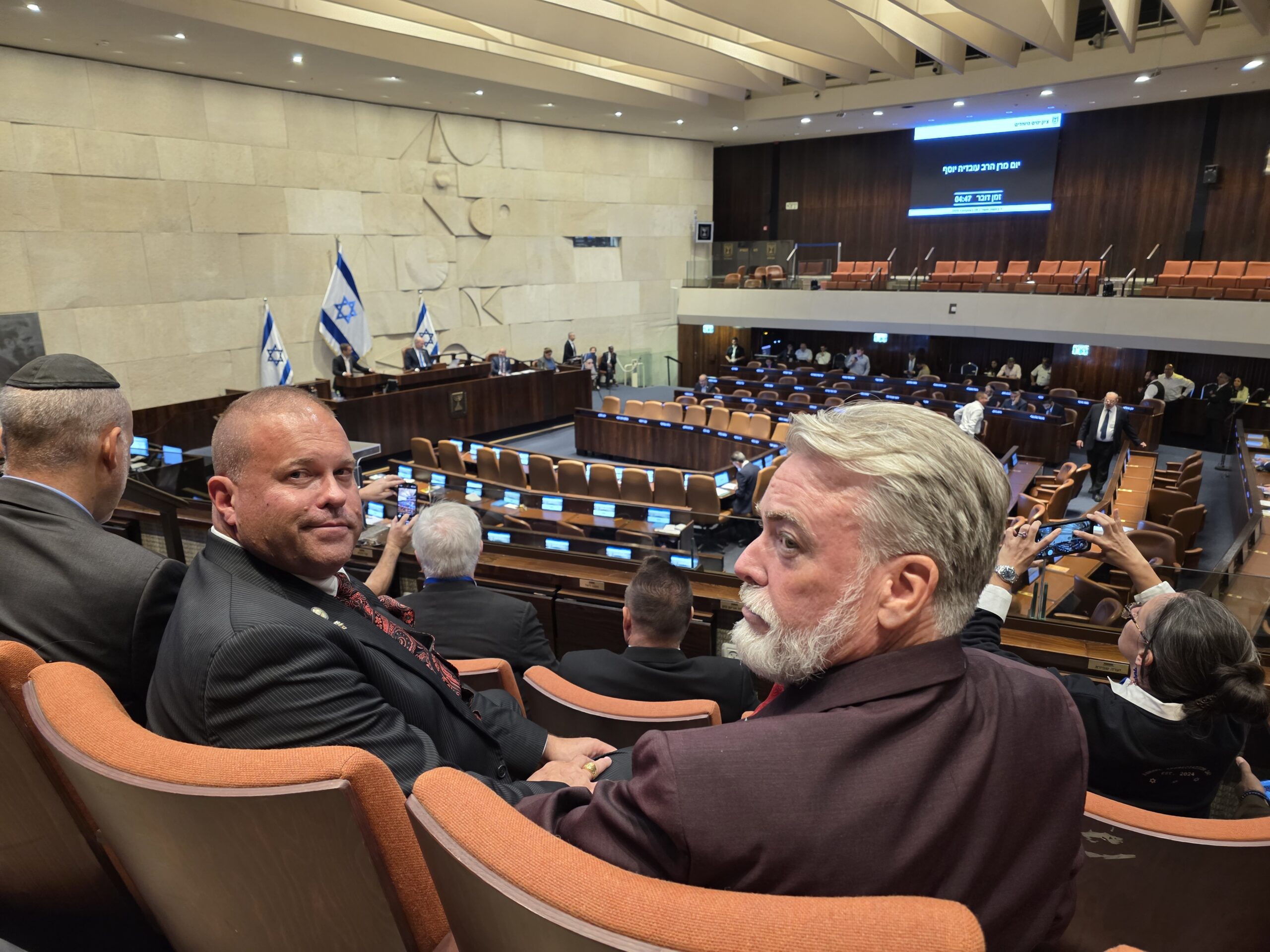
N.H. Reps. Brian Cole and James Spillane at the Knesset in Jerusalem.
Throughout our journey, Rep. Cole and I came to understand that Israel’s right to exist is inseparable from its right to defend its ancestral lands. Much of the world may call it the “West Bank,” but that term denies both history and truth. The land is Judea and Samaria — the same hills where prophets walked and where the modern State of Israel continues its ancient covenant of survival. To speak otherwise is to surrender language itself to political distortion.
America’s alliance with Israel is not merely strategic. It is moral. We are bound by the shared belief that freedom must be defended, that truth must be spoken, and that sovereignty is not granted by those who oppose it — it is upheld by those willing to sacrifice for it.
When Brian and I planted an olive tree in Gush Etzion, it symbolized more than friendship. It represented continuity, faith, and the hope that truth can still take root in rocky soil. Our time in Israel reaffirmed that peace will not come through illusion or concession but through strength, understanding, and the courage to call history by its rightful name.
For those who wish to read our full delegation report, we will find a way to make it available. I encourage every American who values liberty to read it, reflect on it, and remember that our support for Israel is not just foreign policy — it is a statement of who we are.