


Put lower energy costs ahead of green politics. That’s the message Granite State voters are delivering in the latest NHJournal poll.
High utility costs have emerged as a hot political issue in the 2026 cycle, and New Hampshire residents pay among the highest electricity prices in the country, twice the national average. For years, Democratic candidates have campaigned on green energy platforms, such as carbon cap-and-trade taxes and net-zero emissions mandates. Republicans have advocated a “all of the above” approach that prioritized lower costs over climate concerns.
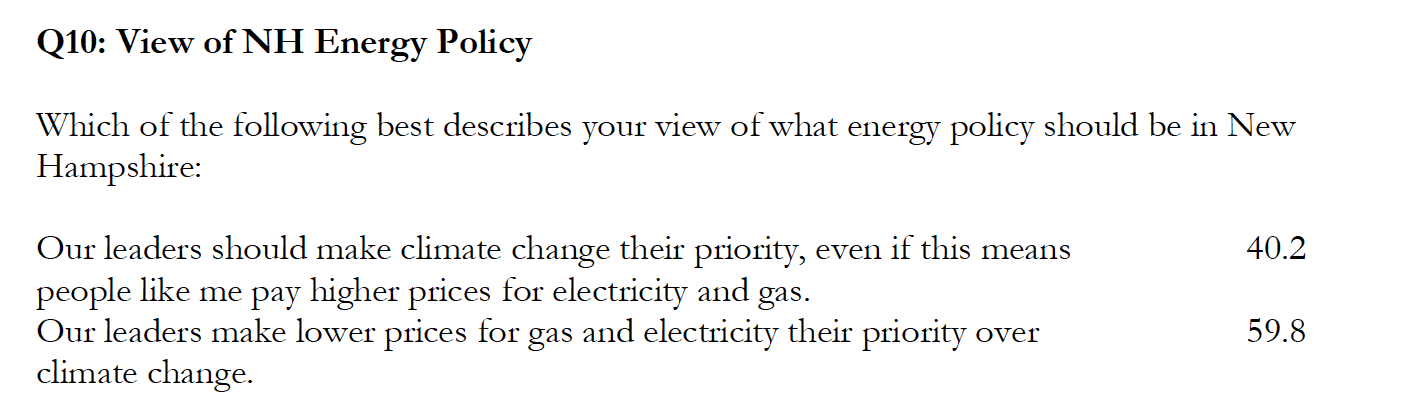
In a NHJournal/Praecones Analytica poll taken the last week of December, 60 percent of registered voters said they wanted the state’s leaders to “make lower prices for gas and electricity their priority over climate change.”
Just 40 percent said they wanted climate change “to be the priority, even if this means people like me pay higher prices for electricity and gas.”
Republicans are signaling they plan to make high energy costs a topic of the midterm campaign. On Monday, the Republican National Committee sent out a press release touting the drop in Granite State gas prices since President Trump took office.
“Lower gas prices are the direct result of Pres. Trump and Republicans unleashing American energy production after ending Biden’s war on domestic energy production,” the RNC wrote. “Democrats like Chris Pappas fought this relief every step of the way. He voted for Biden’s energy policies that exploded prices, and voted against opening up American energy production.”
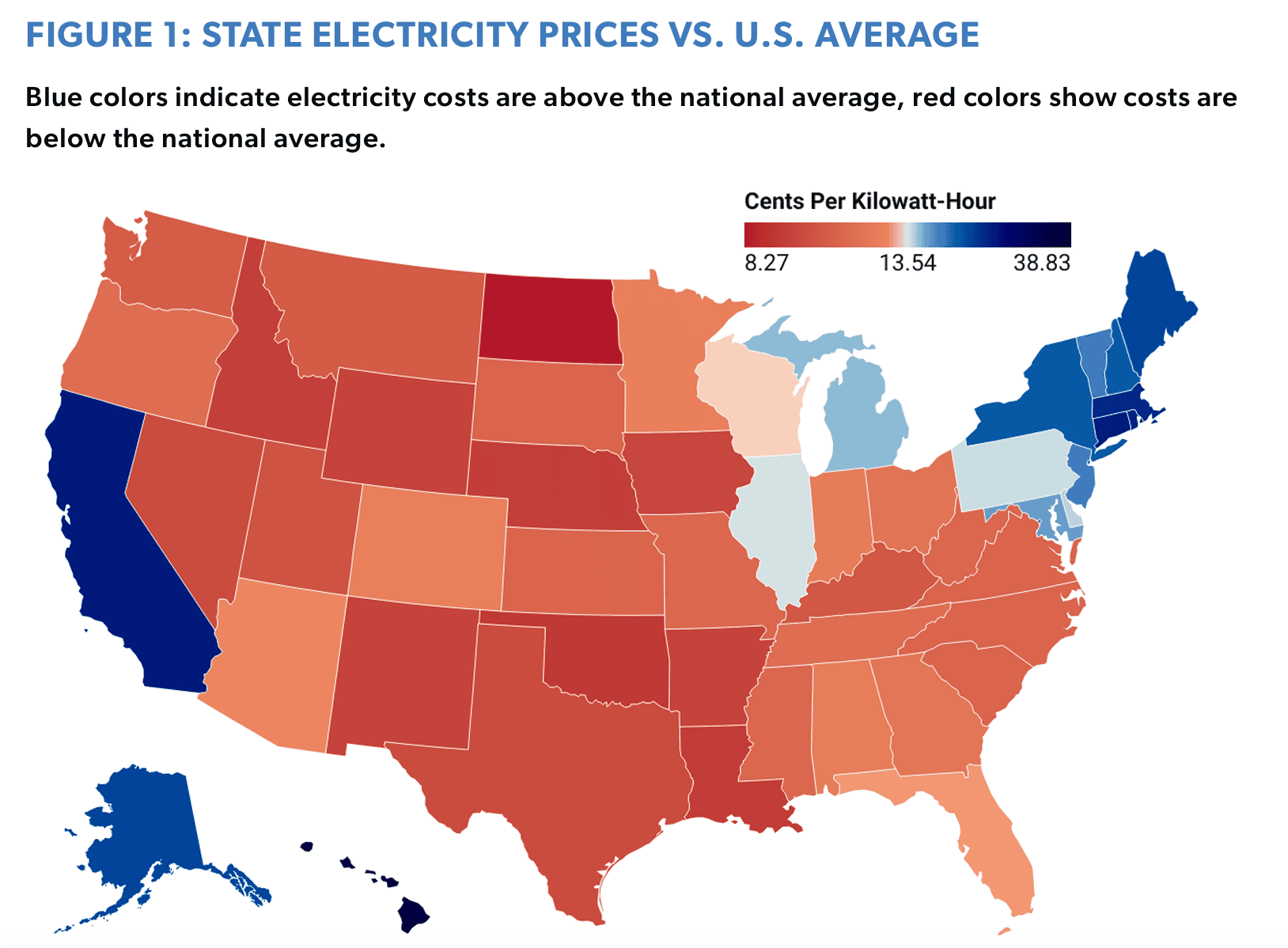
Republicans have repeatedly linked New England’s high utility costs to green policies that block natural gas pipelines and mandate more expensive forms of electricity generation.
On Tuesday, a group of free market organizations from across the region, including Americans For Prosperty and the Josiah Bartlett Center, is hosting a discussion of a new study, “Alternatives to New England’s Energy Suicide.”
According to a statement from the organizers, the study “reveals that New England’s current decarbonization plans could cost $815 billion more than reliable alternatives.”
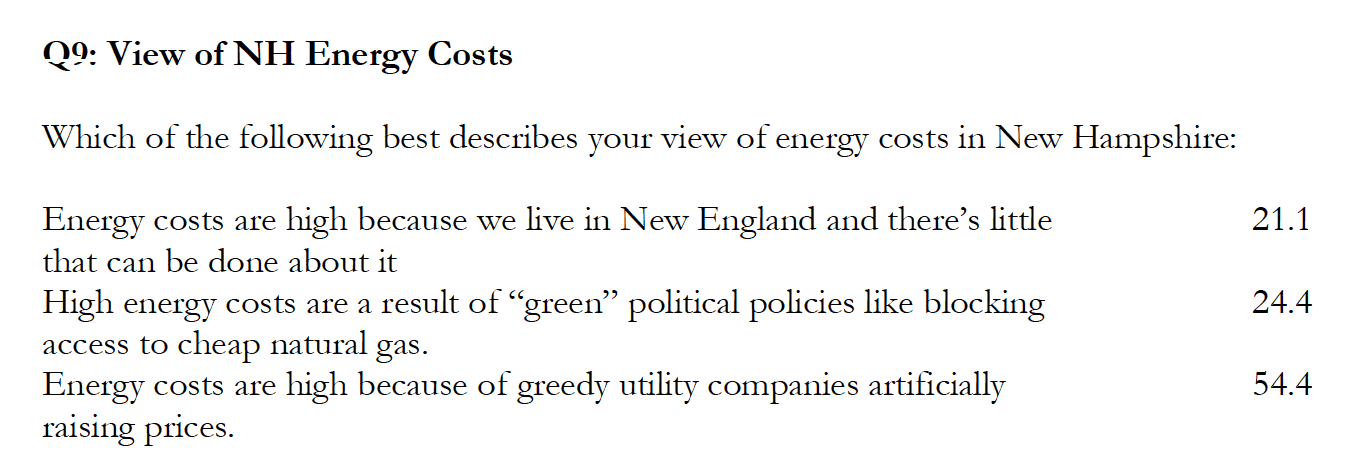
But according to the NHJournal poll, getting voters to hold progressive politicians responsible for their utility bills may be a challenge. Just 24 percent of respondents said green policies, such as blocking access to cheap natural gas, are responsible for high energy costs, while another 21 percent said they are just part of life in New England.
A solid majority (54 percent) blamed “greedy utility companies artificially raising prices.”
Demanding utility companies lower prices is the approach Democrats intend to take. In their policy rollout for 2026 last month, New Hampshire Senate Democrats announced their energy policy, the “Lower Your Energy Costs” Act.
“The bill works to stabilize rates by restricting increases to a 4 percent inflation-adjusted level relative to the previous year’s rates,” Sen. Sue Prentiss (D-Lebanon) said. However, Democrats also want utility companies to update their infrastructure and spend more on the grid.
“We can’t just support the same aging, inefficient and antiquated infrastructure,” Prentiss said.
Where will utility companies get the money to invest in new and expensive infrastructure while capping rate increases? Prentiss didn’t say.
Utility rates are already controlled by the state’s Public Utilities Commission, and the utility companies purchase power directly through the same competitive auctions managed by ISO-NE. Competing over the same supply, and the impacts of green mandates in other states, drive up the costs New Hampshire residents pay.
Republicans say the solution is to increase the supply of electricity available to the New England grid.
“President Trump and Republicans are delivering lower energy prices for Granite Staters,” said RNC Spokesperson Kristen Cianci. “Republicans are committed to bringing down costs and making life more affordable, while Democrats have voted against lower energy costs every step of the way.”