
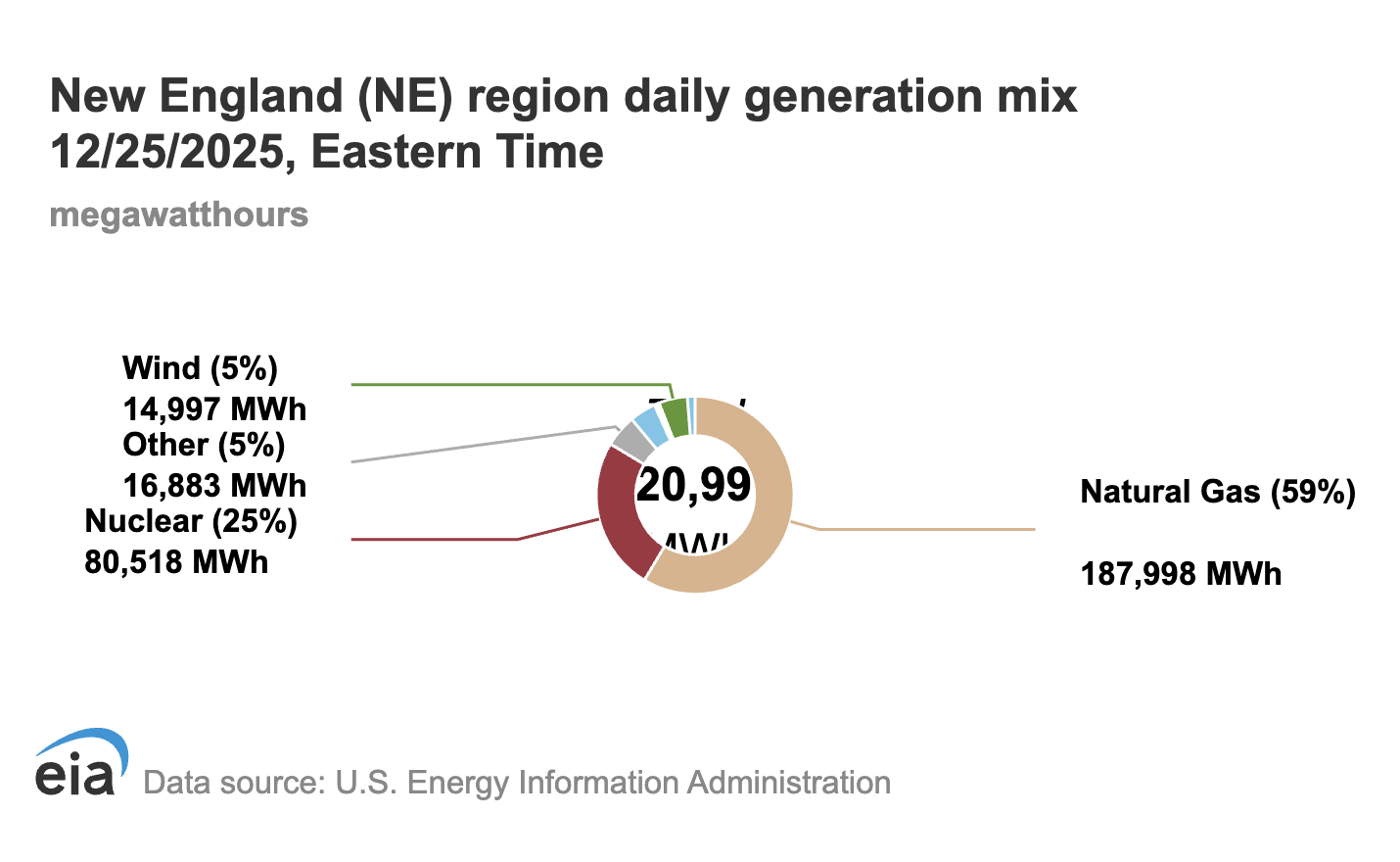
When Santa came to visit on Dec. 25, most of the electricity Granite Staters used to light the trees that greeted him — 59 percent — was generated by natural gas.
But when those Christmas merrymakers get their electricity bills next month, they may want to put somebody on the naughty list. New Hampshire and the rest of New England consistently pay the highest electricity prices — outside of California — in the continental United States, and those costs continue to climb.
Why? U.S. Rep. Chris Pappas says the solution is federal spending on wind and solar, while green energy advocates blame New Hampshire’s high electricity bills on the volatility of natural gas prices.
EQT President Toby Rice says the volatility is the result of politics, not unreliable supply.
“The highest natural gas prices in the world are going to be paid this winter not by Europe, not by Japan. The highest natural gas prices in the world will be paid in Boston and New York City,” Rice said at an energy conference earlier this month.
“And what’s even more remarkable about that stat is that these areas are right next to a region in the United States that is going to pay the lowest price for natural gas, in Appalachia.”
Energy groups like the National Rural Electric Cooperative Association say it is long past time to fix the problem by reforming the infrastructure permitting system.
“Federal environmental permitting has become increasingly complex, unpredictable, and unworkable over time,” said NRECA CEO Jim Matheson. “It interferes with co-op efforts to maintain the infrastructure that is essential to keeping the lights on and to build new infrastructure to meet growing demand. These hurdles delay critical projects and can significantly increase costs for electric co-op consumers.”
The pressure has grown so intense that Democrats from California to Maine supported two permitting reform bills that passed the U.S. House earlier this month.
Six Democrats backed the Promoting Efficient Review for Modern Infrastructure Today (PERMIT) Act, and 11 supported the Standardizing Permitting and Expediting Economic Development (SPEED) Act. Both bills push back on regulatory excesses tied to legislation from the 1970s, such as the National Environmental Policy Act and the Clean Water Act, that have created years of delays — or even killed — infrastructure projects like roads, pipelines, and solar power facilities.
Two Democrats who did not cross the aisle were U.S. Reps. Maggie Goodlander and Pappas.
Supporters of the two bills say the need to fix the permitting process is obvious. According to a study by the Council on Environmental Quality, from 2013 to 2017, it took an average of four years to complete a typical environmental impact statement.
As a result, said TC Energy CEO François Poirier, “our cost of obtaining permits and addressing litigation along the way is higher in many instances than the steel I purchased to build the pipeline. You know that there’s something wrong when that’s the case.”
Yet Pappas and Goodlander still say no. Pappas has argued that Granite Staters should become more reliant on wind and solar. But the math is problematic at best.
On Christmas Day, for example, natural gas and nuclear power alone provided 84 percent of the electricity on the ISO-New England grid. Wind accounted for just 5 percent, and solar about 1 percent.
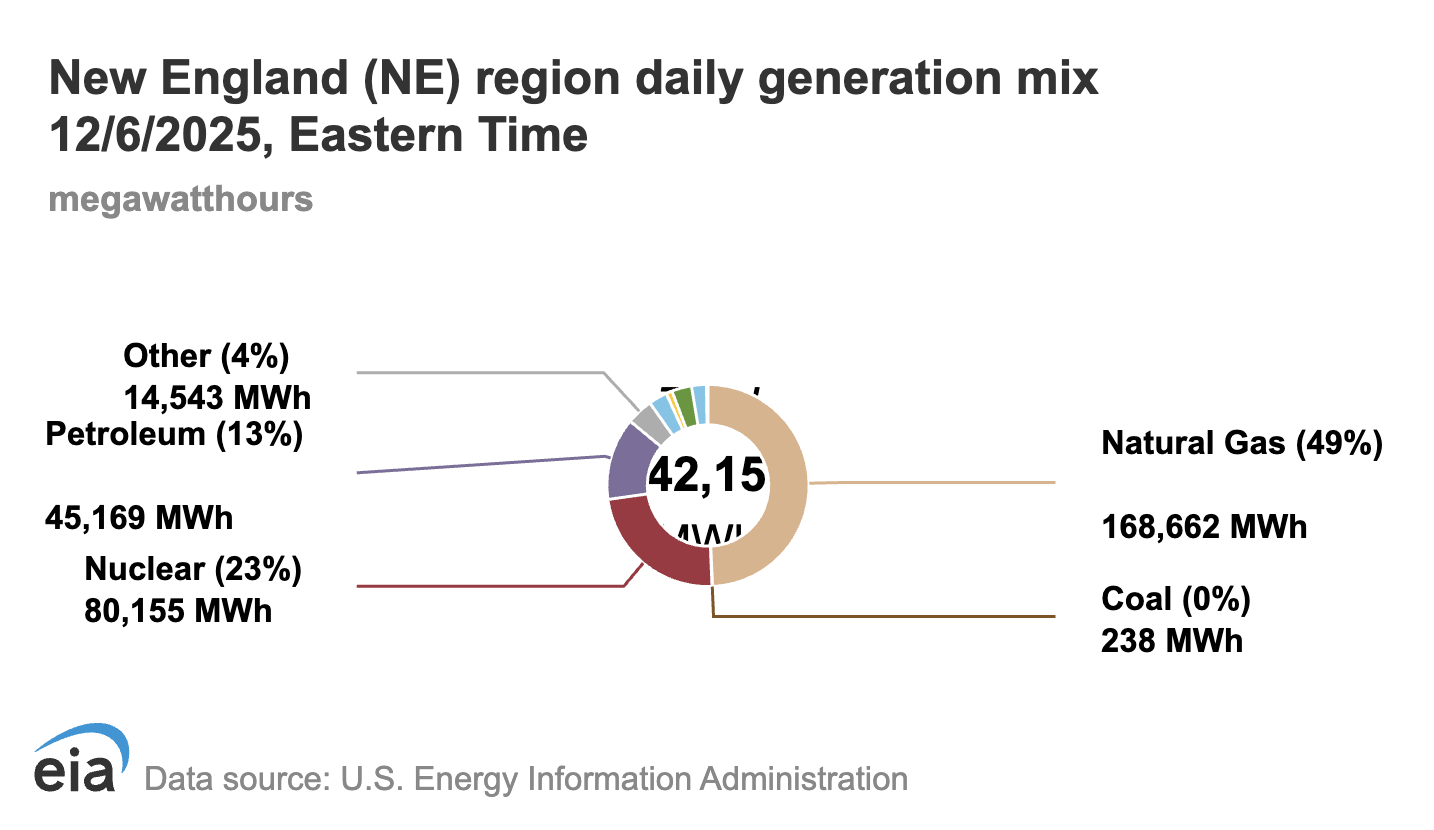
On Dec. 5-6, when subzero temperatures blanketed the state, the grid got 12 times more power from burning oil than from wind or solar.
Neither Goodlander nor Pappas responded to NHJournal’s questions about their votes against permitting reform.
Pappas is the likely Democratic nominee for U.S. Senate and would take his energy policies to the upper chamber if elected. Republican would-be competitors and potential replacements have made it clear they would have voted for the reforms.
GOP Senate candidate John E. Sununu said the two bills “would have my support (in the Senate) and deserve the full support of our entire delegation.”
“Whether it’s shutting down the government or keeping New Hampshire energy costs too high, Pappas is more interested in politics than solutions,” Sununu added.
Scott Brown, who is also running in the GOP U.S. Senate primary, praised “the bipartisan coalition in the House for getting something done on badly needed permitting reform.”
“Bringing down energy costs requires a long-term commitment to the American energy dominance agenda of the Trump administration, something that Rep. Pappas has opposed at every turn when he was loyally supporting the Biden administration’s extreme green agenda that drove energy costs to record highs and gas over five dollars a gallon.”
Pappas’ voting record on increased oil and natural gas production is mixed. He supported the Biden administration’s energy policies, including shutting down the Keystone XL pipeline, banning gasoline-powered vehicles, and imposing green-energy mandates on states. However, when it appeared that the 2022 midterm elections would be difficult for Democrats, he told radio host Jack Heath that he supported increased oil and gas production.
Republicans running to replace him told NHJournal that Pappas cannot be trusted to put lower prices ahead of progressive political pressure.
“New Hampshire faces the fourth-highest cost of energy in the U.S.,” said Republican Hollie Noveletsky, owner of Novel Iron Works. “As a business owner, I feel it in the cost of doing business, and my employees feel it every day in the cost of living. Shame on Pappas and Goodlander for voting against the SPEED Act and the PERMIT Act and actually voting against lowering the cost of energy.”
Pappas has announced some energy policy positions in recent weeks, calling for funding for weatherization assistance and for the Low Income Home Energy Assistance Program, which provides money to low-income residents to help pay heating bills.
Bedford Republican Melissa Bailey said policies like those involve more spending but do nothing to lower energy costs.
“It makes no sense to claim you want lower prices while voting against bipartisan reforms that would do just that — lower energy costs by cutting bureaucracy and increasing supply,” Bailey said. “The Democratic Party’s approach is to keep costs high and then use subsidies and handouts to mask the damage, taking more of our hard-earned money and calling it a solution. That’s not affordability. That’s dependency.”