


Once limited to surgeons, electricians, and other high-risk professions, occupational licensing has quietly expanded into a major barrier to work across the U.S. economy — and New Hampshire is no exception.
That was the message delivered this week during a panel discussion hosted by Americans for Prosperity–New Hampshire (AFP-NH), where lawmakers and policy advocates argued that while licensing is meant to protect public safety, it has increasingly been used to restrict competition, drive up costs, and block people from entering the workforce.
“In the 1950s, about one out of every 20 occupations required a license,” said Sarah Scott, deputy state director for AFP-NH. “Right now, one out of every four people in the workforce has a license for something. This is something that has just continued to grow and grow.”
Those numbers come from the Bureau of Labor Statistics, which also shows that two-thirds of the increase over that period was due to more occupations requiring a license, rather than a growing number of people joining already licensed professions.
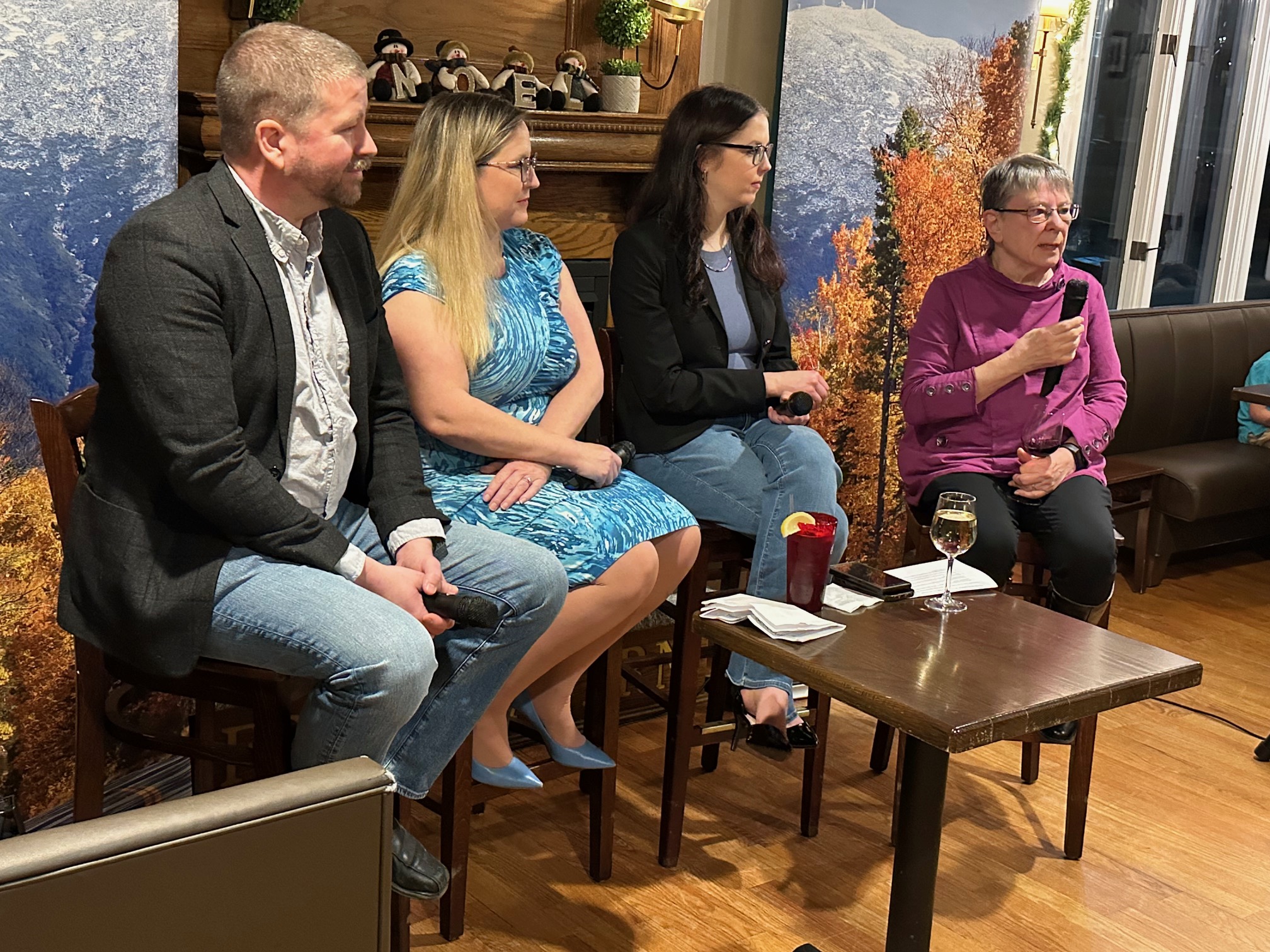
At the forum held in Derry, the panel focused on how occupational licensing affects workers, entrepreneurs, and consumers, examining both reforms already enacted in New Hampshire and the barriers that remain.
State Rep. Erica Layon (R-Derry), chair of the House Executive Departments and Administration Committee, said licensing began with legitimate goals.
“There are times when you need to put trust into a professional, because your health or safety may be at risk,” Layon said. “The idea was that the state could step in and make sure the person knows what they’re doing.”
But she said the system has drifted far from that original purpose.
“We’ve gone from licensing people who are doing truly dangerous things, like surgery, to licensing someone blow-drying hair or applying makeup at a department store,” Layon said. “At this point, it’s gone a little bit far.”
Dee Jurius is executive director of the New Hampshire Office of Professional Licensure and Certification (OPLC), which supports more than 50 professional boards covering fields from medicine and engineering to real estate and personal services. She told NHJournal there are about 220,000 active licenses in a workforce of around 750,000 people. Those licensed workers pay the state about $15 million each year.
Rep. Jeremy Slottje (R-Merrimack), who serves on the same committee as Layon, questioned whether licensing actually improves outcomes.
“Does a license make people safer? Probably not in all cases,” Slottje said. “The only real accountability is the court system, malpractice lawsuits, and reputation. I don’t see licenses being pulled very often when something goes wrong.”
Even in highly regulated fields, Slottje added, quality comes from professionalism, not paperwork.
“Are doctors better because they have a license, or because they want to be good doctors?” he asked.
Rep. Carol McGuire (R-Epsom), who has worked on licensing reform since 2009, said the problem is structural. While lawmakers once carefully evaluated new licenses, she said industry insiders have increasingly driven the process.
Most new license requests come from professionals already in the field who want to “keep the riffraff out,” McGuire said. By raising requirements — demanding master’s degrees where a bachelor’s once sufficed or requiring thousands of hours of training — established professionals can limit competition and drive up prices.
“The claims of safety are somewhat exaggerated,” she said. “A license is a guarantee of the minimum requirements. That’s it.”
One area that has drawn repeated attention is cosmetology. Until recently, New Hampshire required 1,500 hours of training to become licensed — more than many emergency medical technicians. The legislature reduced that requirement to 1,200 hours last year in a bipartisan move.
“That bill was brought forward by a Democrat,” Scott noted. “This is not a partisan issue.”
Layon said some of the strongest opposition to reform comes from training schools that profit from mandatory hours.
“If you were short just a few hours coming out of a CTE (career and technical education) program, they’d transfer very little credit and require you to pay tens of thousands of dollars to a private beauty school,” she said.
Scott said licensing debates often pit experienced professionals against newcomers.
“There’s this attitude of, ‘I had to go through it, so everyone else should, too,’” she said. “But when you compare the training hours for EMTs and hairdressers, it’s not even close. That tells you safety isn’t always the real focus.”
There is a national movement to reform the occupational licensing system led by libertarians who support free markets and progressives who see licensing mandates as an obstacle to economic equity.
In recent years, New Hampshire has enacted a series of reforms to reduce barriers to work. In 2023, lawmakers established universal recognition for professionals licensed in other states. They also consolidated some smaller boards under OPLC. For example, the Board of Auctioneers and the Boxing and Wrestling Commission were both transferred from the Secretary of State’s Office.
Former Gov. Chris Sununu attempted to go even further. In 2023, he proposed the outright elimination of 34 different licenses and 14 regulatory boards. That effort hit a bipartisan wall from special interests, and only minor changes were passed.
Clearly, more work remains, Scott told the roundtable audience.
“The default answer for too long has been, ‘Let’s just license it,’” she said. “There are other ways to protect public safety without blocking people from earning a living.”
For lawmakers like Layon, the challenge is restoring balance.
“Licensing came from good intentions,” she said. “But believing that a government permission slip guarantees safety is just not true.”