
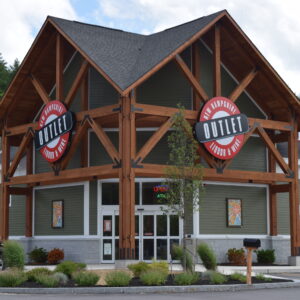
Whether you drink white wine, amber ale, or brown liquor, when New Hampshire legislators talk booze, they’re seeing green.
The Granite State gets a higher percentage of its government revenue from alcohol than any other state, and its per-capita alcohol sales — approximately five gallons per person per year — are nearly double the national average.
Neither of those numbers is an accident, according to panelists at a recent “Liquid Liberty” roundtable hosted by Americans for Prosperity New Hampshire. They are the result of pro-revenue policies, and as the national trend of declining alcohol consumption continues, the state should respond with new policies to promote responsible sales.
The policy working for New Hampshire is its state-run liquor sales system. Every other New England state charges a sales or excise tax — or both — and the state leverages its high-volume purchasing power to secure lower prices. Cross-border buying by residents of Massachusetts and Maine boosts the state’s per-capita sales figures.
Unfortunately for the state’s coffers, alcohol consumption is falling.

State Sen. Tim Lang (R-Sanbornton), Drew Cline of the Josiah Bartlett Center and AFP-NH Deputy State Director Sarah Scott discuss liquor regulation and economic impact at a roundtable in Concord, NH.
“You talk to young people, and they want to have a fun, social life. Drinking is just one part of that. It is not the goal,” said Drew Cline, president of the Josiah Bartlett Center for Public Policy. “New Hampshire legislators are going to have to catch up with the times.”
State Sen. Tim Lang (R-Sanbornton), who works in the entertainment industry, said Cline “is 100 percent right.”
“I have a 22-year-old son who doesn’t drink. It’s just not his scene,” Lang said. “Liquor revenues are down, and it’s because the younger demographic — the 21-year-olds, the 31-year-olds — aren’t drinking.”
National data back up Lang’s claims.
A Gallup poll taken in August found that only 54 percent of U.S. adults say they consume alcohol, the lowest rate since 1939. Drinking spiked during the COVID-19 pandemic but quickly returned to its downward trend.
With consumption falling, what can New Hampshire do?
AFP-NH Deputy State Director Sarah Scott pointed to cities taking advantage of the state’s new “social districts” law.
The law allows communities to create “sip-and-stroll” areas exempt from open-container or public-drinking bans, usually in downtown areas.
Scott noted that five cities voted on social district proposals in the November elections. The proposal failed in Keene, Nashua, and Portsmouth but passed in Concord and Laconia.
Cline said he was not surprised by the results. He noted that Portsmouth is already crowded with visitors downtown, while Keene “still has memories of Pumpkin Fest at Keene State.”
Concord, on the other hand, has a redeveloped downtown and is trying to encourage visitors to stroll the streets and stop in shops.
“They want Concord to become a picture-perfect Hallmark card town, and they realized social districts are a way to help do that,” Cline said.
Another area where legislators have helped keep alcohol revenues flowing is by reducing regulations on the craft brewing industry. According to the New Hampshire Brewers Association website, the state ranks seventh for breweries per capita in the U.S. The industry generates about 4,000 full-time jobs.
But it hasn’t always been craft-brew friendly.
“When breweries became a big thing, you could walk through a brewery and order as many flights as you wanted, but you couldn’t order two pints of beer,” Lang said. “That was literally the rule. You could sit there and drink flights all day long, but you could not order more than two pints. We changed that law.”
Scott said she was encouraged by the steady pace of reform.
“I’m encouraged that we have been making these small improvements year after year,” Scott said, adding that New Hampshire’s alcohol policies demonstrate “the advantages of being on the side of deregulation.”
But panelists agreed that more work remains to be done.
One significant obstacle to retail sales of cocktails and draft beer is the state mandate that businesses selling alcohol for on-site consumption must also cook and sell food. Depending on sales volume, at least 50 percent of gross sales in some establishments must come from food.
Earlier this year, a proposal to create a “tavern license” allowing businesses to sell only alcohol failed in the Legislature.
“So ‘Live Free or Die, ’ New Hampshire has no true bars other than cigar bars, which were grandfathered in,” Lang said. “I think there’s still some room to work in that area.”
One attendee asked the panelists how a state that prides itself on small government can justify operating a state-run liquor system. They acknowledged the ideological contradiction but said it is unlikely to change.
“It’s not the system I would design, but the system works for New Hampshire,” Lang said. “And if you think going to a free market will lower prices, I don’t think so.”
Cline recalled that when he first moved to New Hampshire to write editorials for the Union Leader, he planned to argue for ending the state-run liquor system. That column was never written.
The state simply generates too much revenue from alcohol, he said, and exiting the business could increase pressure for tax hikes elsewhere.
“Here’s how it works in New Hampshire,” Cline said. “You want lower taxes? Sell more liquor.”