Forget for a moment how few shopping days there are till Christmas; right now, there are even fewer grievance-gathering days until Festivus.
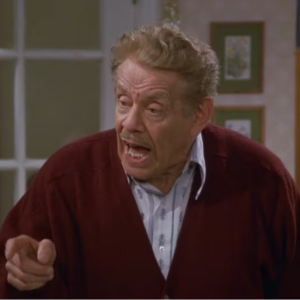
Festivus, on December 23, is the “holiday for the rest of us” that was popularized in a 1997 “Seinfeld” episode. That show’s Festivus celebration famously began with the airing of grievances; in the words of one character, George Costanza’s father, to his assembled guests, “I got a lot of problems with you people. Now you’re gonna hear about it.”
This leads us to President Trump, who, knowingly or not, may well be our foremost exponent of Festivus. His grievances against the press, elites and foreign trade had been noted long before he entered politics, but they became much more intense during his first term. As one detailed analysis in 2019 put it, Trump was obsessed with an “ever-expanding list of grievances.”
With Trump now in his second term, his list of grievances continues to expand. It encompasses growing numbers of individuals (politicians, celebrities and judges — some of whom Trump appointed), groups (most recently, Somali immigrants) and even countries.
And his anger has taken on new and unexpected forms. For example, when the Ontario provincial government publicized some quotes from Ronald Reagan on free trade in October, an enraged Trump abruptly shut down all trade negotiations with Canada.
Journalists have long been on Trump’s grievance list, but in recent months, Trump has become increasingly vitriolic, especially toward female reporters. A story on his health by one journalist led him to call her a “third‑rate reporter who is ugly, both inside and out.” When another reporter asked about the Epstein files, he angrily stuck his finger in her face and growled, “Quiet! Quiet, piggy!” A third reporter’s analysis of Trump’s treatment of female journalists earned her this response on X from the White House Rapid Response team: “How big of a scumbag you must be.”
In recent months, Trump’s airing of grievances has been eclipsed by the second element of Festivus — the feats of strength. In “Seinfeld,” these feats were physical such as George’s dad wrestling his hapless son (“Stop crying and fight your father!”).
Trump’s feats of strength, on the other hand, involve administrative and military muscle. For example, he often targets speech, an area that should be relatively immune to government intrusion. Trump has warned that the antagonistic jokes of late-night show hosts could jeopardize network licenses, and his Federal Communications Commission chief threatened to yank the broadcast licenses of uncooperative networks (“We can do this the easy way or the hard way”).
He’s also gone after the speeches of members of Congress, suggesting execution for some legislators who made allegedly seditious statements about illegal military orders.
Undoubtedly, there’s more to come. We still await the full unraveling of the Jeffrey Epstein files, and if the Supreme Court invalidates his swarm of tariffs (which themselves rest on Trump’s longstanding grievance against foreign trade), the sky’s the limit.
Festivus involves a third feature besides grievances and feats of strength — a bare aluminum pole in contrast to garish Christmas decorations. Trump’s holiday decorations definitely won’t include this decorative element, because it couldn’t be further from the gold embellishments that now increasingly adorn the White House.
While the coming White House ballroom may accommodate many Christmas trees, it will never feature a single Festivus aluminum pole. Just as the White House will never be the same once this ballroom is built, Festivus may never be the same after Trump.