
To paraphrase the late Sen. Everett Dirksen (R-Ill.), the Claremont school district is learning that a million here, a million there, and pretty soon you’re talking real money.
The district whose name has become synonymous with the foibles of the state’s education funding system finds itself on the verge of shutting down before the school year even starts, thanks to the discovery of a multimillion-dollar budget deficit.
How it got itself into fiscal trouble is just as astounding as the total dollar amount.
School Board member William Madden told NHJournal on Monday that failed federal grant applications make up a big chunk of the deficit. When school districts across the country were awash in federal grant money during the COVID-19 pandemic, Claremont managed to bungle the application and lose out, Madden said.
“It’s unbelievable and egregious,” Madden said.
During the pandemic, Claremont built its district budgets with a significant amount of money coming from the federal government via COVID-19 relief dollars. But district administrators failed to follow through and submit the applications for reimbursement, Madden added.
“It’s negligence and total mismanagement and lack of oversight.”
And that’s not even the entire, embarrassing story.
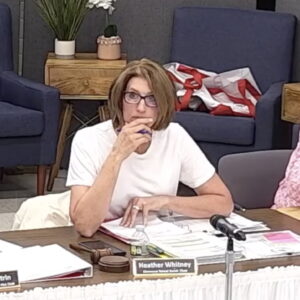
The Claremont School Board announced the discovery of the financial gap last week, perhaps as high as $5 million, according to Chair Heather Whitney.
“As of fiscal year ’25, we have a massive deficit anywhere between $1 and $5 million. This deficit leaves the district in a position where we are struggling to keep doors open and pay for fundamental aspects of payroll, health benefits,” Whitney said.
John O’Shaughnessy, the Drummond Woodsum attorney representing the district, blames prior district administrations for creating a hole in the budget that’s carried over to this year, though he declined to say exactly how that happened at last week’s meeting.
O’Shaughnessy did not respond to NHJournal’s request for an explanation, nor did Whitney.
The New Hampshire Department of Education and Gov. Kelly Ayotte’s office are both watching Claremont’s self-inflicted fiscal fiasco, but there is little the state government can do to intervene. Massive cuts in the district budget are coming, but they won’t be enough to cover the gap.
O’Shaughnessy said one option mentioned by the Department of Education is for the district to ask local taxpayers for more money. That would require Claremont to go to court and get judicial approval for a new district meeting, deliberative session, and ballot vote on more money — an extremely unlikely scenario, said board member Candace Crawford.
In addition to the taxpayers’ unwillingness to raise their own taxes even more, Crawford points out that the board still doesn’t know how deep the budget hole from unfunded spending actually is. That’s because Claremont is years behind on its financial audits. The last complete review was for the 2020-21 school year.
“We’ve been trying to get the ’22 audit done since God knows when,” Crawford said.
Voters already agreed to support more than $42 million in spending at the March school district meeting, an increase of more than $2.5 million over the prior year’s budget.
Claremont is currently setting up payment plans with vendors owed past-due bills, like its employee health insurer. The district is also looking to make cuts to any spending that isn’t legally mandated. That means sports and other extracurricular activities are likely to go.
“The money isn’t there. It is going to be catastrophic,” Crawford said last week. “Honest to Pete, I don’t have any idea what is going to happen.”
Superintendent Chris Pratt did not respond to a request for comment. Pratt has been on the job since 2022, when he took over after the board fired Superintendent Mike Tempesta. The reason for Tempesta’s ouster has not been made public. He started in Claremont in 2019, taking over after the district fired Superintendent Middleton McGoodwin.
Assistant Superintendent Michael Koski said when he started in his position, he discovered the district administration’s business and finance department was in complete dysfunction, with hidden errors already baked into the budgets.
“I remember when I arrived, other folks and I had to bribe the accountant to get account numbers to have bills paid,” Koski said. “It was such a chaotic system … I had no idea the extent of what was being done in that office, but those errors have carried forward.”
The board is set to meet on Wednesday night at the Stevens High School Auditorium. Madden hopes some kind of solution will be offered at that meeting to the public, who will ultimately have to pay for the district’s mistakes.
But Claremont parents ought to be considering education alternatives like the state’s Virtual Learning Academy for at least this school year, he said.
“If my son hadn’t graduated, he’d already be signed up,” Madden said.