
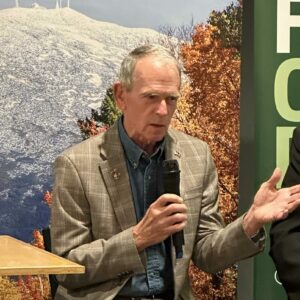
When New Hampshire House Energy Committee chair Rep. Michael Vose was asked to name the top three reasons the state’s electricity prices are double the national average, he didn’t hesitate.
“No natural gas. No natural gas. No natural gas.”
The line got a big laugh from the crowd at an energy roundtable hosted by Americans for Prosperity-New Hampshire on Wednesday. But Vose and his free-market allies say it’s no joke.
Despite promises from Granite State Democrats that more wind and solar will drive down costs, Vose says the data show states that have forced more renewable power onto the grid have seen their residential electricity rates soar.
The reason, said Rep. Keith Ammon (R-New Boston), is the need for redundant systems to back up the intermittent power from renewables.
“The wind doesn’t always blow, the sun doesn’t always shine,” Ammon said. “You go home at night, you turn the TV on. There are no solar panels giving you that electricity. So the ‘firmness’ of electricity supply is a key component. And the more intermittency we have on the grid, the more it costs us to build. It’s almost like a second layer to the grid to provide that power. So that’s where the extra cost comes from.”
Bjorn Lomborg, founder of the Copenhagen Consensus Center, has made the same point at the international level. There are no nations that have both a high percentage of power from renewables and low per-kilowatt costs.
Ammon and Vose acknowledged that Republicans have not passed legislation that lowers the cost of electricity, but they said they had avoided the mistakes other states in the region have made of expanding green energy policies. As a result, New Hampshire’s prices have remained flat while other states have suffered price hikes.
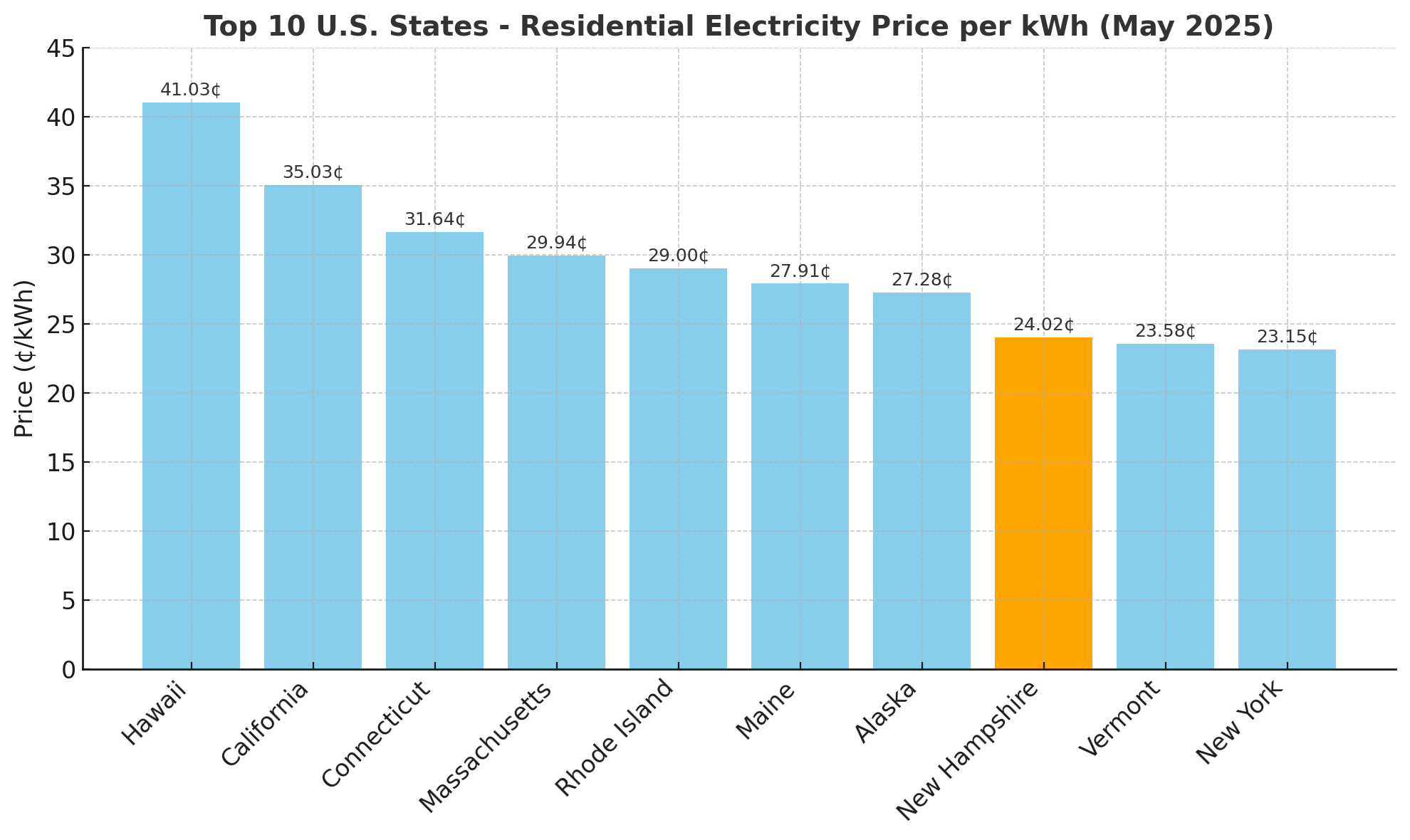
“Even though New England is known for high electricity prices, right now, New Hampshire and Vermont are virtually in a tie for the lowest electricity prices in the region,” Vose said. “In the case of Vermont, that’s because they get a lot of hydro power from Quebec, which they contracted for years ago through long-range purchase power agreements.
“But in the case of New Hampshire, we kept our energy costs low by being very conservative with our government policy. And we will try to be more conservative going forward.”
That means keeping the Renewable Portfolio Standard (RPS), a state-level policy that requires a specific percentage of power to come from renewable sources, for example. Massachusetts, which has set a goal of “net zero” emissions from power production, gets about twice as much of its power from renewables. Massachusetts also pays about 30 percent more for residential electricity.
“Democrats criticize us for not supporting renewable energy, but we think we’re doing the right thing. And the fact that we’re now tied with Vermont for the lowest energy cost in New England proves, in my mind, that we are because the other four New England states — their prices have skyrocketed. Maine, in the last year, their prices went up 36 percent.”
That eye-popping number comes from Axios.
“The nationwide average retail residential price for 1 kilowatt-hour of electricity rose from 16.41 cents to 17.47 cents between May 2024 and May 2025, per the latest available data from the U.S. Energy Information Administration, a gain of about 6.5 percent,” they report.
“The states with the largest increases were Maine (+36.3 percent), Connecticut (+18.4 percent) and Utah (+15.2 percent).”
Still, New Hampshire has the eighth-highest consumer electricity prices in the country, according to the latest data from the U.S. Energy Information Administration (EIA) and ChooseEnergy.com. And with rate increases approved by the Public Utility Commission, those prices are going up.
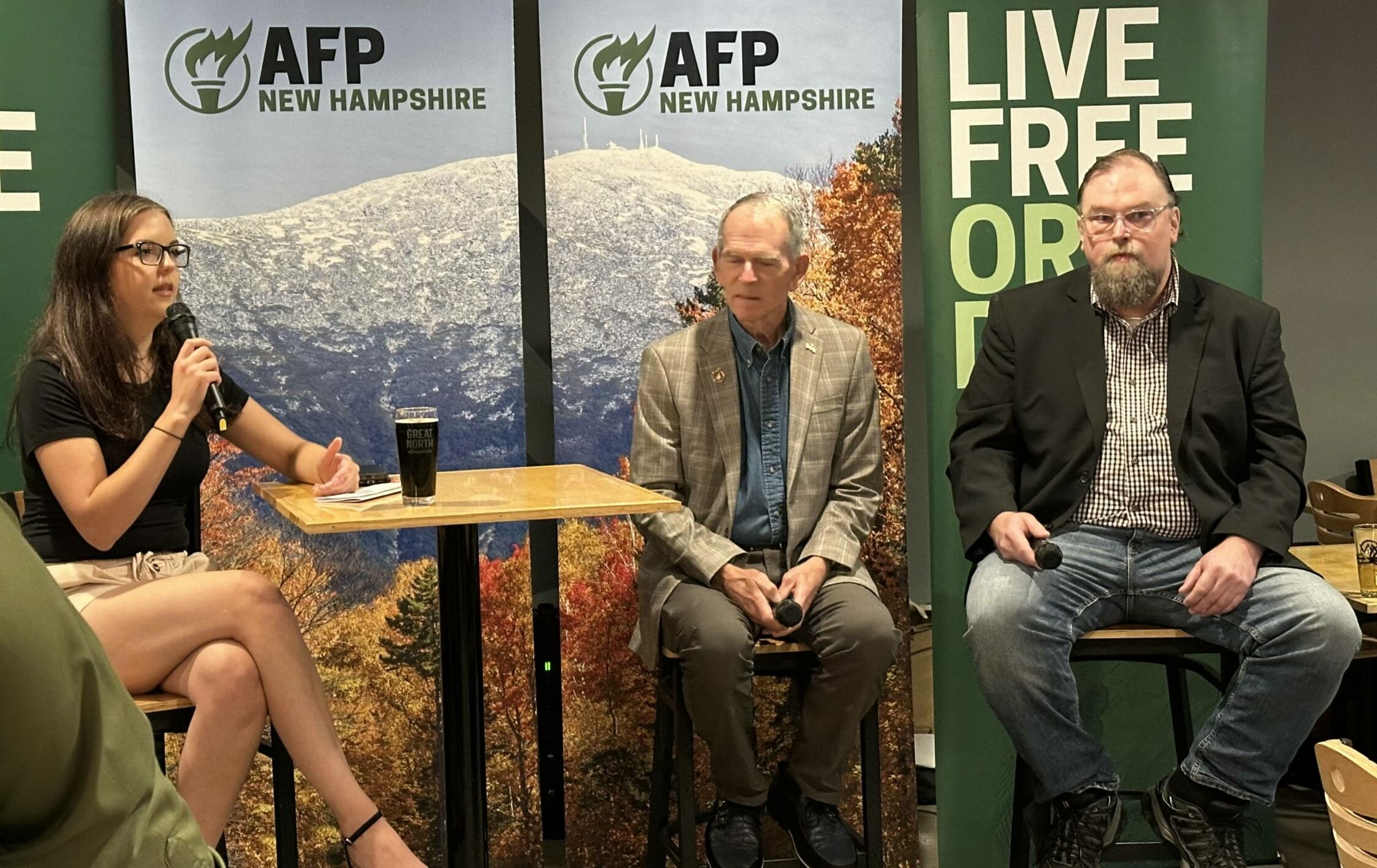
Sarah Scott, Deputy State Director of AFP-NH, moderates a discussion on energy policy with NH GOP House Reps. Michael Vose and Keith Ammon.
Which is why Vose blamed natural gas scarcity for the state’s high prices. The utility companies buy power and distribute it to their customers. Power producers in the mid-Atlantic are paying about half as much for natural gas as producers in the northeast.
That’s one reason EPA Secretary Lee Zeldin was in New Hampshire on Monday, touting the Trump administration’s plan to restart development of the Constitution Pipeline and bring cheap natural gas to the region. The pipeline was blocked by then-New York Gov. Andrew Cuomo (D) in 2016.
“The region’s last two operational coal-fired power plants are set to close by 2028 and be replaced with solar power plants and battery storage that can’t provide baseload power during harsh New England winters,” Zeldin warned in a Boston Globe op-ed.
“Harsh winters mean high heating bills, which are expected to rise over the next decade without adequate infrastructure.”
Gov. Kelly Ayotte agrees.
“I hope that New York and other states will take a look at it again, because all of us are facing energy prices that are too high, so we want to have more supply so that we can reduce people’s costs,” Ayotte told WMUR-TV.