

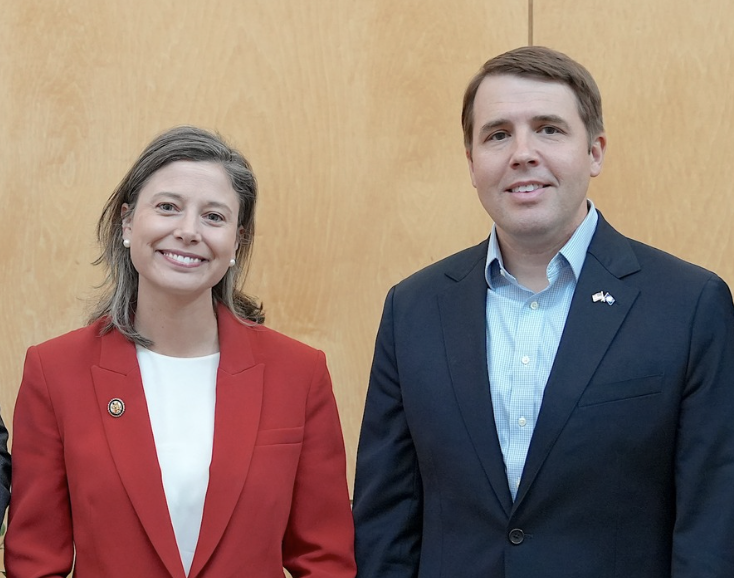
New Hampshire Democrats Reps. Maggie Goodlander and Chris Pappas voted Wednesday to keep one of America’s largest deposits of critical minerals in the Minnesota ground, rather than overturning a Biden administration moratorium on mining.
“Today, the House took an important step toward responsibly unlocking our nation’s mineral wealth and securing our domestic mineral supply chains while ensuring the strongest environmental protections for our nation’s public lands and waters,” said House Natural Resources Committee Chairman Bruce Westerman (R-Ark.).
“Unleashing Northern Minnesota’s vast deposits of copper, cobalt, and nickel will reduce our reliance on China for the minerals that power our economy and national security,” Westerman added.
Using the Congressional Review Act, the House voted 214-208, largely along party lines, to overturn the Biden administration’s decision to withdraw 225,504 acres of the Superior National Forest in northern Minnesota from mineral exploration and development.
The resolution, introduced by Rep. Pete Stauber (R-Minn.), targets a 20-year moratorium on federal mineral leasing imposed by the Biden administration in an area that sits atop the Duluth Complex, one of the largest known deposits of critical minerals in the United States.
According to federal and industry estimates, the Duluth Complex contains nearly eight billion tons of mineral-bearing rock, including:
-
95 percent of U.S. nickel reserves
-
88 percent of U.S. cobalt reserves
-
One-third of U.S. copper reserves
-
Approximately 75 percent of U.S. platinum-group metals
Those materials are essential components of electric vehicle batteries, renewable power systems, and advanced defense technologies. China has used its control of the supply of those processed minerals to leverage U.S. policy.
The problem is so significant that earlier this month, Democratic Sen. Jeanne Shaheen announced she has joined a group of Republicans, including Sen. Todd Young (R-Ind.), in sponsoring the SECURE Minerals Act, which would establish a Strategic Resilience Reserve for critical minerals.
“China’s global dominance of critical minerals supply chains gives it significant leverage and leaves the U.S. vulnerable to economic coercion,” Shaheen said in a statement. “This bipartisan legislation is a historic investment in making the U.S. economy more resilient.”
But when the House-passed CRA reaches the Senate, will Shaheen join her fellow New Hampshire Democrats and try to block this domestic production?
The story of the Minnesota mining leases follows a trajectory similar to the Keystone XL pipeline. Blocked by President Barack Obama as part of his opposition to fossil fuel production, the permit was approved by President Donald Trump, only to be pulled again on Biden’s first day in office.
The two Duluth Complex leases were approved under Trump, then canceled by Biden, whose administration later imposed Public Land Order 7917, formally withdrawing the acreage from mineral leasing for 20 years.
The administration cited environmental concerns related to sulfide-ore mining and potential risks to water quality in the Boundary Waters watershed.
Mining supporters counter that the withdrawal halted projects already undergoing extensive environmental review and did not allow the permitting process to reach a scientific conclusion.
Rescinding the withdrawal would not automatically approve any mine. Instead, it would allow environmental reviews and federal permitting to proceed under existing law.
Goodlander and Pappas did not respond to questions from NHJournal asking how their votes align with Democrats’ claims that they want to expand green energy production that relies on these minerals.
Pappas is running for U.S. Senate, and one of his potential GOP opponents called the vote “typical.”
“I’m not surprised,” said former Sen. Scott Brown. “It’s typical that Chris Pappas says no to everything that would give us the ability to be self-reliant. He just wants to tax and spend.”
Stauber, whose district includes Minnesota’s Iron Range, framed the vote as both an economic and national security issue.
“I’m thrilled the House has passed H.J. Res. 140 to repeal Biden’s illegal mining ban that locked up 225,504 acres in Northern Minnesota, directly threatening our way of life,” Stauber said. “This win allows for important proposed hardrock mining and helium projects to move forward in the state and federal permitting processes.”
“The Iron Range mined the iron ore that helped this nation win two world wars,” he added. “I am confident we’ll responsibly mine the critical minerals that will allow us to compete and win in the 21st century.”