Don’t believe the naysayers.
That was the message of a roundtable hosted by Americans for Prosperity last week about the GOP-passed budget reconciliation, known as the “One Big Beautiful Bill,” and its impact on health care policy.
“This is a great opportunity for New Hampshire,” said Executive Councilor John Stephen, former commissioner of the New Hampshire Department of Health and Human Services and a health care management consultant.
“I think it will give us the opportunity to innovate on many levels,” added fellow panelist state Rep. Mark McLean (R-Manchester), who sits on the House Health, Human Services and Elderly Affairs Committee. “We’re excited about it.”
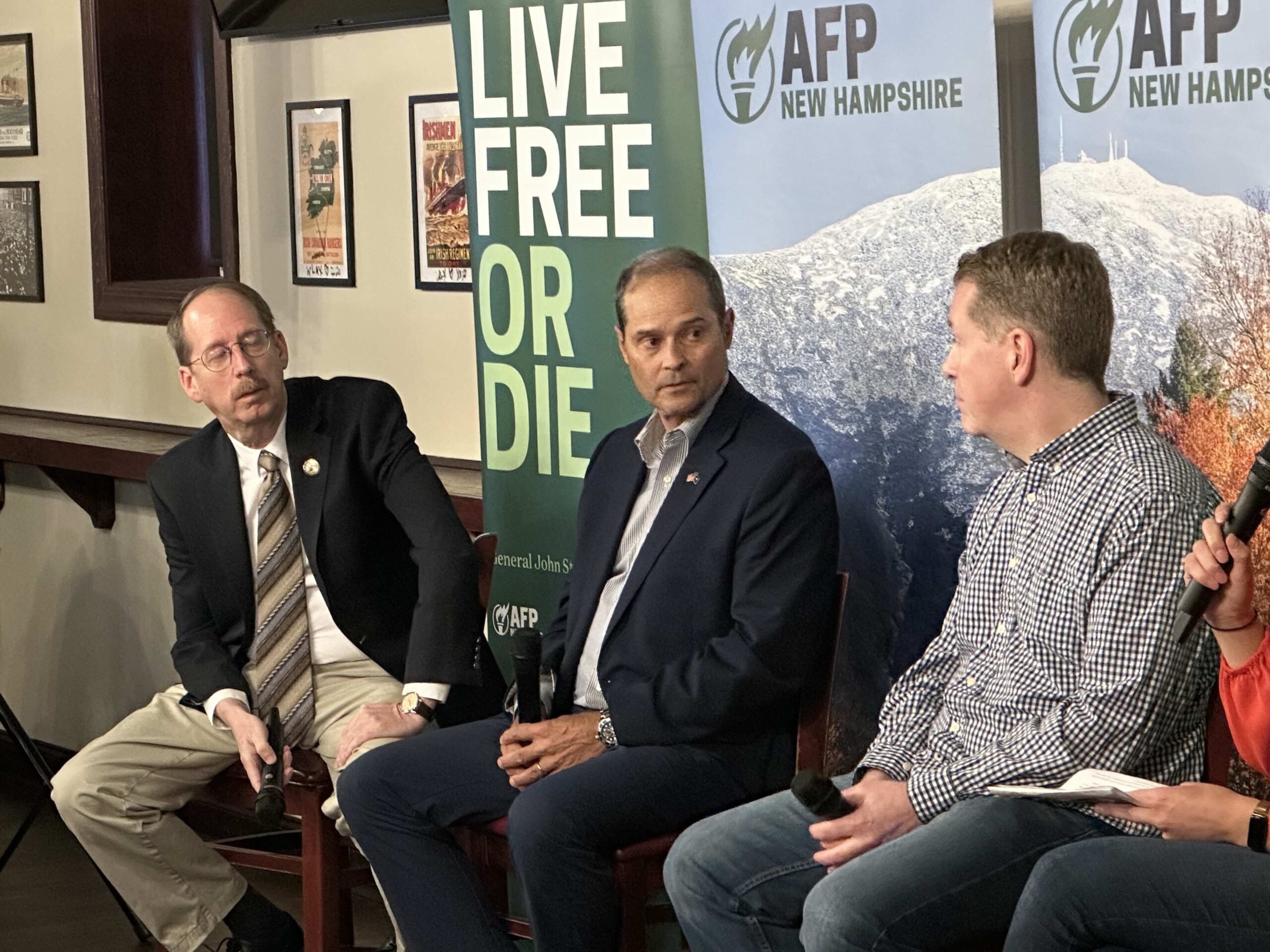
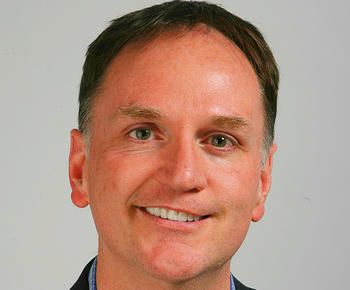
Rep. Mark McLean (R-Manchester) and Executive Councilor John Stephen (R-Manchester) discuss healthcare policy with AFP’s Greg Moore.
Democrats at both the state and national levels have been hammering the health care provisions in the new law, particularly the Medicaid reforms.
“The health care cuts contained in the Big Ugly Law will have severe repercussions across New Hampshire communities, from our hospitals to our rural health care centers to our nursing homes,” Rep. Chris Pappas said at a healthcare roundtable in Nashua last month. He went on to brag that he “voted against Republicans’ reconciliation bill every time it came to the floor.”
AFP Regional Director Greg Moore said one goal of the roundtable was to help people understand what is—and isn’t—actually in the bill.
Moore told attendees about a media report that had just come out, “listing how many people in New Hampshire will die as a result of the Medicaid cuts. You can’t make this up.”
The issue isn’t “cuts,” the panelists argued, but changes in eligibility.
For example, Moore pointed out, “People who are here illegally cannot be eligible for Medicaid under the new law. Good news: that’s already been illegal in New Hampshire for years.”
Another change is the work requirement for able-bodied adults. The new law mandates that able-bodied adults must meet community engagement requirements to maintain Medicaid eligibility. The required 80 hours per month can include work, job training, education, or community service.
When New Hampshire Democrats claim that “more than 46,000 Granite Staters will lose their health care coverage through Medicaid and the Affordable Care Act,” the panelists noted that number includes people projected to drop out of Medicaid rather than meet the minimal work requirements. Not, Moore noted, “losing” their coverage.
Another top focus was the new law’s Rural Health Transformation Program (RHTP). It authorizes $50 billion in federal funding between 2026 and 2030, to be administered by the Centers for Medicare and Medicaid Services. The $10 billion a year in grants is designed to give states more flexibility—investing in new models, infrastructure, partnerships, preventive care, chronic disease management, and leveraging emerging technologies, including AI, to help rural providers furnish high-quality care closer to home.
With Medicaid reforms cutting billions of dollars out of overall spending, it’s likely federal Medicaid funding will go down, the panelists acknowledged. But the RHTP money can be used to bring in new technology and new ways of delivering care that increase quality while reducing costs.
“The federal government was smart,” Moore said. “They wrote this law in a way that says you’re not just going to use it to backfill spending cuts. It has to be sustainable. It has to be transformative. It has to be innovative.”
That’s necessary, Moore added, because of what he called the “dirty little secret” of health care providers: “They all have one goal in mind—how do I get paid more for doing exactly the same thing I’m doing today?”
Sarah Scott with AFP-NH pointed out that not all regulatory innovation is happening at the federal level. She praised Gov. Kelly Ayotte and the state legislature for expanding the state’s Right to Try laws. And several panelists said McLean’s recently passed legislation reforming the so-called “exclusion zone” around critical access hospitals will mean more health care providers in rural areas that need them.
“We had a bill, HB 223, which basically did away with that exclusion zone for everything except for another hospital, because we did want to preserve the federal critical access hospital status of these hospitals,” McLean said. “What it did do is allow for a birth center, a surgical center, an ambulatory care center, anything like that, to come into that exclusion zone and set up shop to provide some of the services that you’re just not going to be able to get at the critical access hospital.”
Moore also praised the Big Beautiful Bill for addressing the “provider tax” loophole that essentially allows hospitals to “tax” themselves into more federal funding for Medicaid expansion states. Under the new law, safe harbor thresholds for provider taxes will drop from around 6 percent to around 3.5 percent by 2032 for expansion states.
“How would you like a tax where you get taxed 100 bucks, and when you pay the tax, you get paid back your 100 bucks and then get another 100 bucks on top of that?” Moore asked attendees.
“What the new law means is that we’re not going to be able to scam the federal government for as much money as we used to.”
The overall message is that health care policy under the Big Beautiful Bill will provide states with both funding and flexibility. It’s up to leaders in New Hampshire to use it to create better outcomes, not just hunt for new financial input.
“The most important thing that we have to be looking at in terms of health care is outcomes,” McLean said. “What we have done is back ourselves into a corner where we are trying on all accounts just to preserve the existing model. That has become the goal, rather than improving the outcomes.”
Stephen believes New Hampshire can do it. He told attendees to “stop listening to the naysayers.”
“I know that we’re all going to have to work together, but this is one of the most monumental times in health care policy in the United States of America. So let’s not waste this opportunity. Let’s seize it, and let’s work together and make it happen.”