


When NHJournal/Praecones Analytics polled the Granite State just before the 2024 election, the results showed Donald Trump and Kamala Harris in a statistical dead heat. Harris won here by less than three points, making the NHJournal poll the closest in the field.
Just over a year later, the news from the latest NHJournal poll is far different for President Trump, finding the lowest job approval in the Granite State (32 percent) of either term in office. And Trump’s terrible numbers are pulling down support for the Republican brand at both the state and federal levels.
The good news for the New Hampshire GOP, however, is that it still holds very narrow leads on key questions.
Those are the findings of a new NHJournal/Praecones Analytica poll of 603 registered voters taken in the days after Christmas as Granite Staters reflected on their mood and looked ahead to 2026.
For Republicans, the NHJournal/Praecones Analytica poll of 603 registered voters taken in the days after Christmas is a fiasco at the federal level. Trump’s approval is underwater by 22 points (32 percent approve/54 percent disapprove), and Democrats are +11 (45 to 36 percent) on the generic ballot question of which party should control Congress. In July, the Democrats’ advantage was 41 to 36 percent.
Trump’s job approval number in New Hampshire is significantly lower than his 43 percent approve/53 percent disapprove in the national RealClearPolitics average.
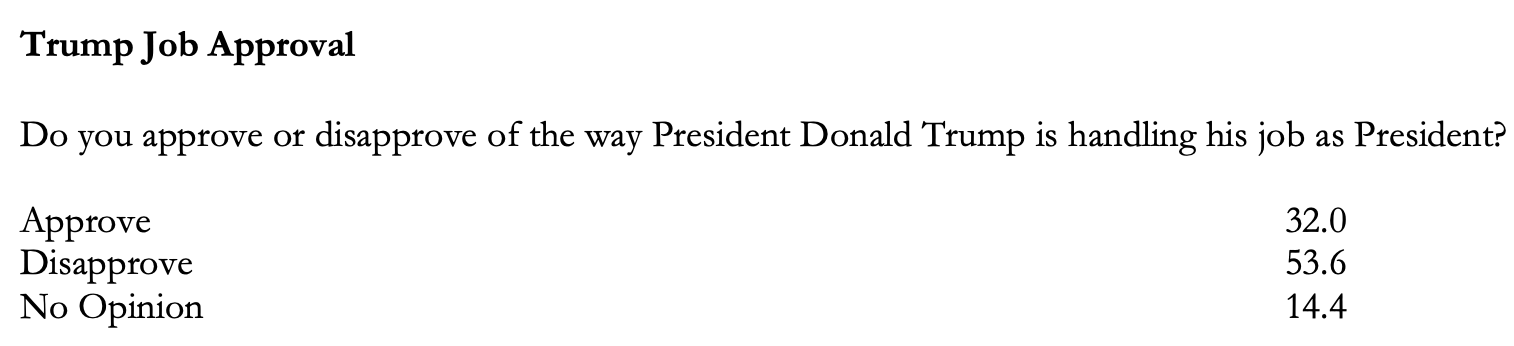
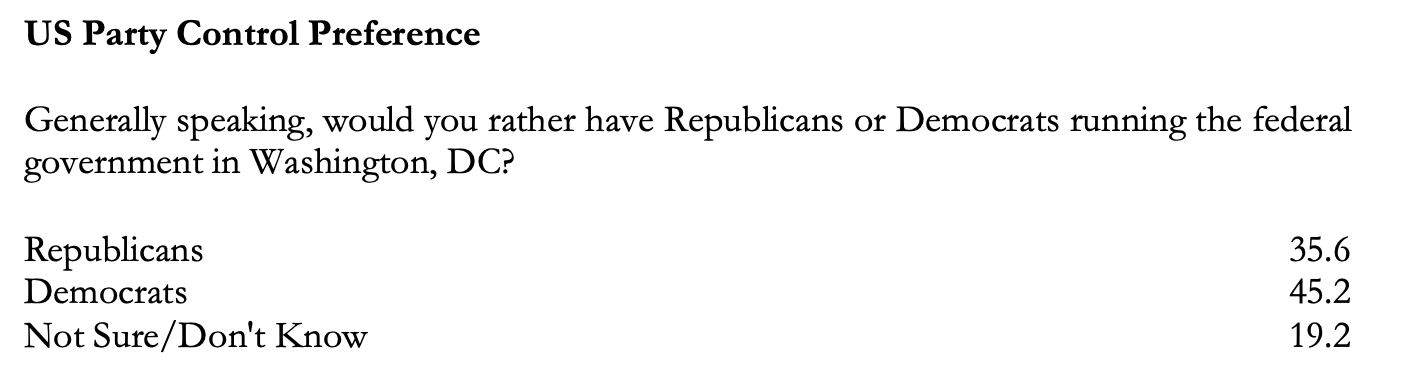
“These are the worst numbers for Republicans in our past three surveys of the state,” said Praecones Analytica pollster Dr. Jonathan Klingler. “The trends over time show the goodwill President Trump and the GOP enjoyed earlier in the year has gone, which should be alarming to New Hampshire Republicans.”
That includes a drop in GOP support at the state level as well. While Gov. Kelly Ayotte’s job approval is above water with Granite Staters (38 to 33 percent, with another 30 percent undecided), it’s noticeably lower than the +10 job approval (40 to 30 percent) she had in July.
Support for GOP control of Concord is down a bit as well, though it’s always been close.
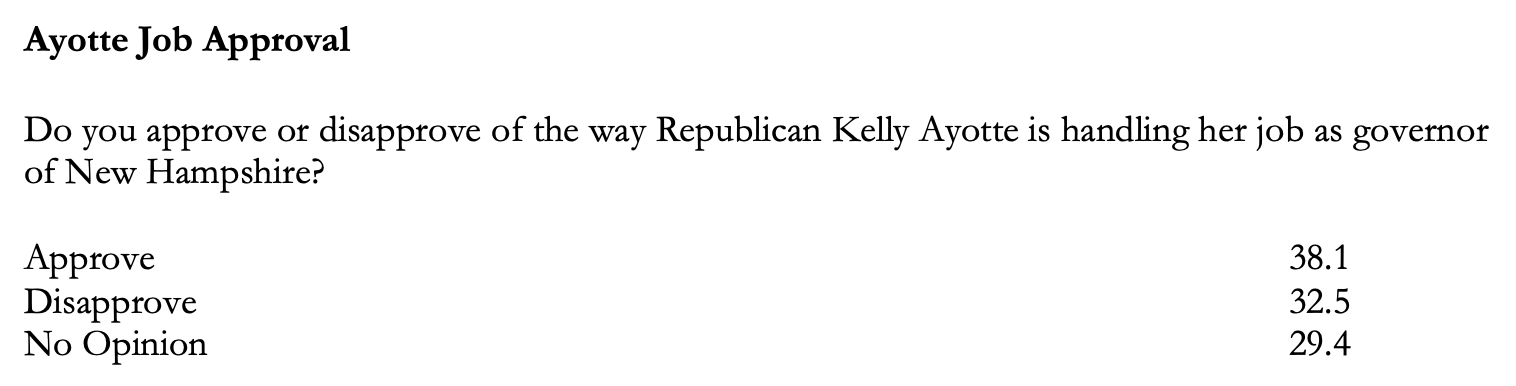
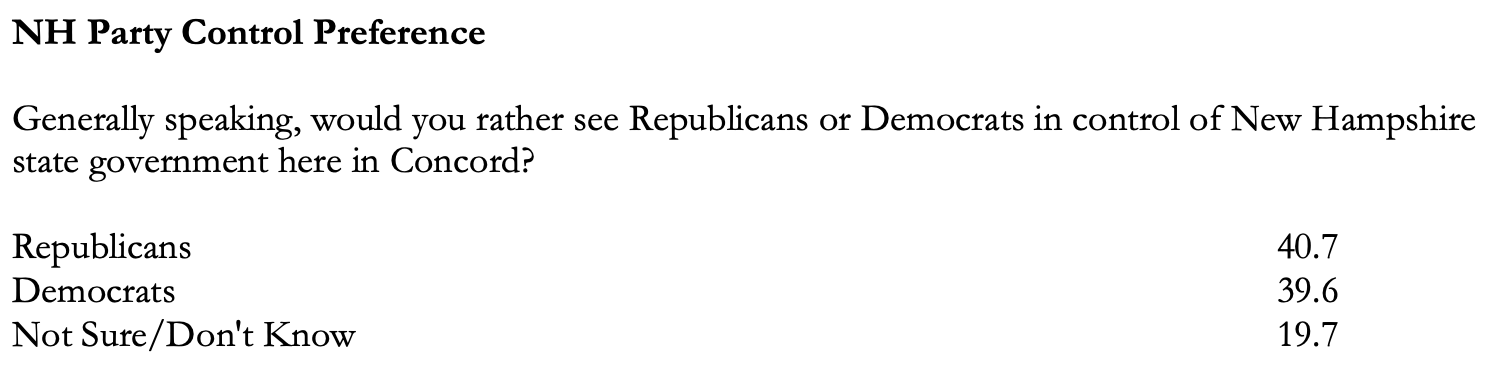
Democrat Chris Pappas is benefiting from this bump in his party’s standing, though he hardly has the race for U.S. Senate in the bag. He’s below 50 percent against both Scott Brown and John E. Sununu, though his margin against Sununu (42-36 percent) is significantly smaller than Brown (46-28 percent). In both cases, about a quarter of voters say they’re undecided.
In fact, about one in five voters (or more) are undecided/don’t know on most of the questions, yet another sign that Trump’s poor numbers are leaving voters generally discontent with their political choices. Add in the natural trend toward the party out of power in a midterm election — in this case, the Democrats — and the New Hampshire GOP numbers aren’t as bad as they first appear.
“Obviously, the national Republican Party is struggling in New Hampshire,” said Klingler. “On the positive side, the state party preference is tied, and Gov. Ayotte is in the green, suggesting that Granite State Republicans have been able to distinguish themselves with voters from the national GOP. That may help them withstand a tough moment for the national party.”
Another sign that the NH GOP is in better shape than these numbers indicate: No major Democratic candidate has entered the race for governor.
Given the nonstop drumbeat of the affordability issue over the past year, it may not be a surprise that more Granite Staters (30 percent) picked “the cost of groceries and other basics” as their top issue for 2026, followed by the cost of housing (25 percent). No other issue reached 20 percent.
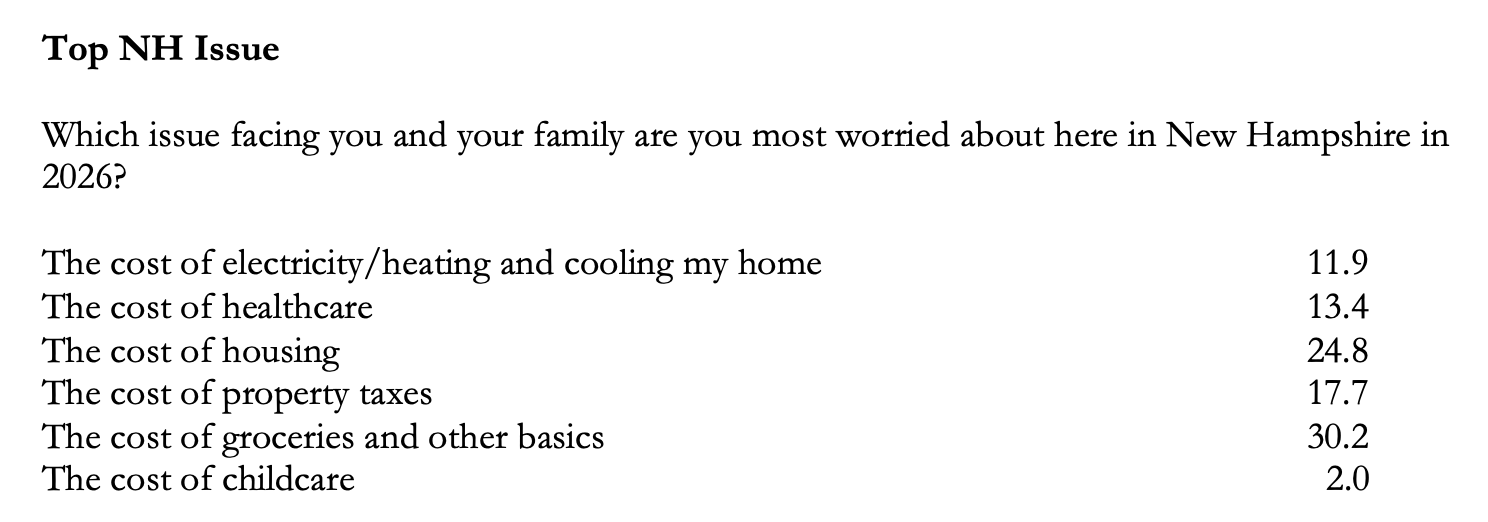
Worth noting: As the New Hampshire House GOP attempts to pass a school spending cap, the issue of property taxes came in third (18 percent), far ahead of one of the New Hampshire Democrats’ top issues for 2026, the cost of childcare (2 percent).
For decades, pollsters have been trying to gauge how Americans actually feel about their personal quality of life. Questions about whether America is on the right or wrong track have evolved into proxies for partisanship: When a Republican is in the White House. GOP voters say “right track,” and Democrats say “wrong.” Change the party in power, and those poll results change, too.
With the poll in the field December 26-28, NHJournal tried a different question to gauge Granite State voters’ mood: “How was your Christmas?”
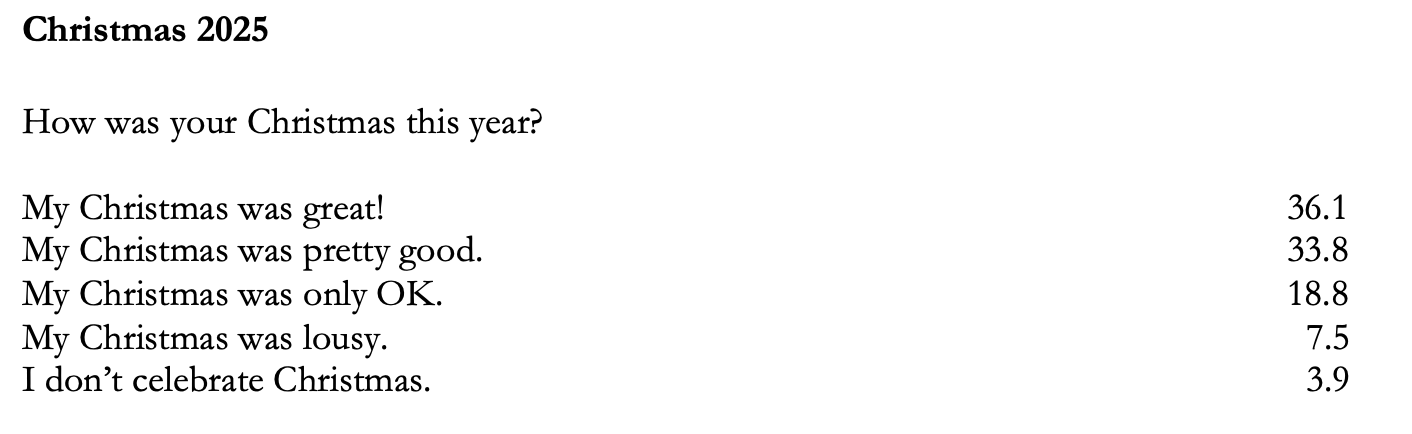
About 70 percent of respondents said it was “great” or “good,” while just 26 percent said “OK” or “lousy.” That’s very different from the “right track/wrong track” RealClearPolitics average (38 -56 percent). Could it be that Granite Staters are generally happy with their lives and economic circumstances, but unhappy with the political culture?
And what about next year? About the same percentage (26 percent) say they expect their family to be better off next Christmas as expect to be worse off (30 percent). The other 44 percent expect to be about the same. In other words, twice as many people say the country is on the wrong track as say they believe their family will be worse off a year from now.