New Hampshire families and businesses are being crushed by the highest electric rates in the country. Energy independence is no longer a luxury; it is a necessity for our economy, our security, and our future. This is not an issue that can wait until the next election cycle. That is why I am working now to deliver real solutions.
Last week in Washington, I met with Bryan Kellogg, deputy assistant secretary at the Department of Energy, to discuss building small modular nuclear reactors (SMRs) in Seabrook and in the North Country, such as Berlin. The Department of Energy is enthusiastic about this project and eager to work with utilities to make it a reality. Even more encouraging is its willingness to provide financing at an extraordinary rate of three-eighths of a percent over market for a 25-year term. The capital to move forward is there.
To make sure New Hampshire is ready, I have formed a nuclear team that includes state Reps. Michael Vose, chair of Science and Technology; Michael Harrington, who worked at Seabrook for two decades; Doug Thomas, vice chair of Science and Technology; and Steven Kesslering, who is also serving as my campaign manager. As this effort grows, more leaders and experts will join our team. I am committed to delivering results for every Granite Stater, and that takes strong, dependable leadership.
So, what is an SMR? The simplest way to think of it is as a smaller version of the reactor that powers a nuclear submarine. It is about one-third the size of Seabrook Station, but with powerful advantages that make it the future of nuclear energy.
Key characteristics of SMRs include:
- Smaller size, with output around 300 megawatts.
- Factory-built modular construction that lowers costs and speeds deployment.
- Passive safety systems that use natural forces for cooling.
- Flexibility in deployment, including remote areas and integration with other power sources.
- Scalability, allowing multiple units to be combined as needed.
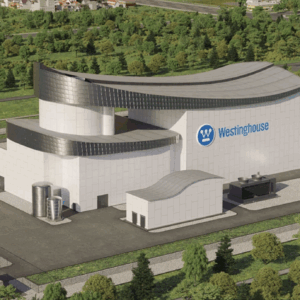
These reactors are state-of-the-art, and they can use the nuclear material already stored at Seabrook as fuel. That means we do not have to start from scratch. Michigan is already moving forward with this type of project at Palisades, where they are restarting an existing reactor and building two SMRs from Holtec. Other companies, including Westinghouse and GE Hitachi, are also developing 300-megawatt models.
The advantages go beyond clean, reliable, and affordable power. By siting a reactor in Berlin, we can help revitalize the North Country. The decline of the logging industry has left too many communities struggling. But companies in fast-growing fields such as artificial intelligence and advanced manufacturing will move where energy is abundant and affordable. Bringing SMRs to Berlin will not only secure our energy future, but it will also breathe new life into the North Country economy.
This vision does not stop at meeting our own needs. New Hampshire has the potential to become an energy leader for all of New England. With SMRs in place, we can generate surplus electricity to sell to neighboring states, strengthening our economy while reducing rates for our people.
I am looking forward to an exciting opportunity in early October to meet with NextEra, the team behind Seabrook, to explore the path forward for nuclear energy in New Hampshire. With strong leadership, thoughtful planning, and collaboration, this project has the potential to become a reality.
Energy independence is a top priority of my campaign for Congress and a responsibility I take seriously as a legislator today. Lower electric bills for our families, a competitive edge for our businesses, and a chance for New Hampshire to lead — these are the possibilities we are working toward.
Nuclear energy is not just part of the solution; it is the solution. I am eager to see our state take the lead.