
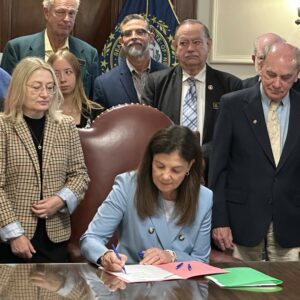
Gov. Kelly Ayotte on Wednesday signed sweeping new legislation expanding New Hampshire’s “Right to Try” policy, aimed at making the Granite State the nation’s leading location for terminally ill patients seeking access to cures and treatments for terminal illnesses and rare diseases.
The bill, formally titled the John Lewicke and Michael Yakubovich Right to Try Act, honors two state legislators battling life-threatening illnesses. It builds on the original law signed in 2016 by then-Gov. Maggie Hassan by removing liability barriers that have discouraged doctors and manufacturers from making experimental treatments available.
Flanked by Lewicke and Michael Yakubovich’s wife, Marika, Ayotte reminded supporters at the signing that “New Hampshire was one of the first states to enshrine Right to Try into law.”
“Today, we’re strengthening that law by empowering patients to pursue life-saving treatments without unnecessary red tape. We’re putting patients first, encouraging innovation, and ensuring families know our state will fight alongside them to pursue a cure,” Ayotte added.
Supporters say the new law will allow patients to waive certain civil liability risks, including in clinical trial settings, making it more likely that both doctors and pharmaceutical companies will participate. HB 701 also permits New Hampshire-based providers to conduct remote pre-screenings for out-of-state patients, sparing families the burden and cost of traveling only to learn they are ineligible for a trial.
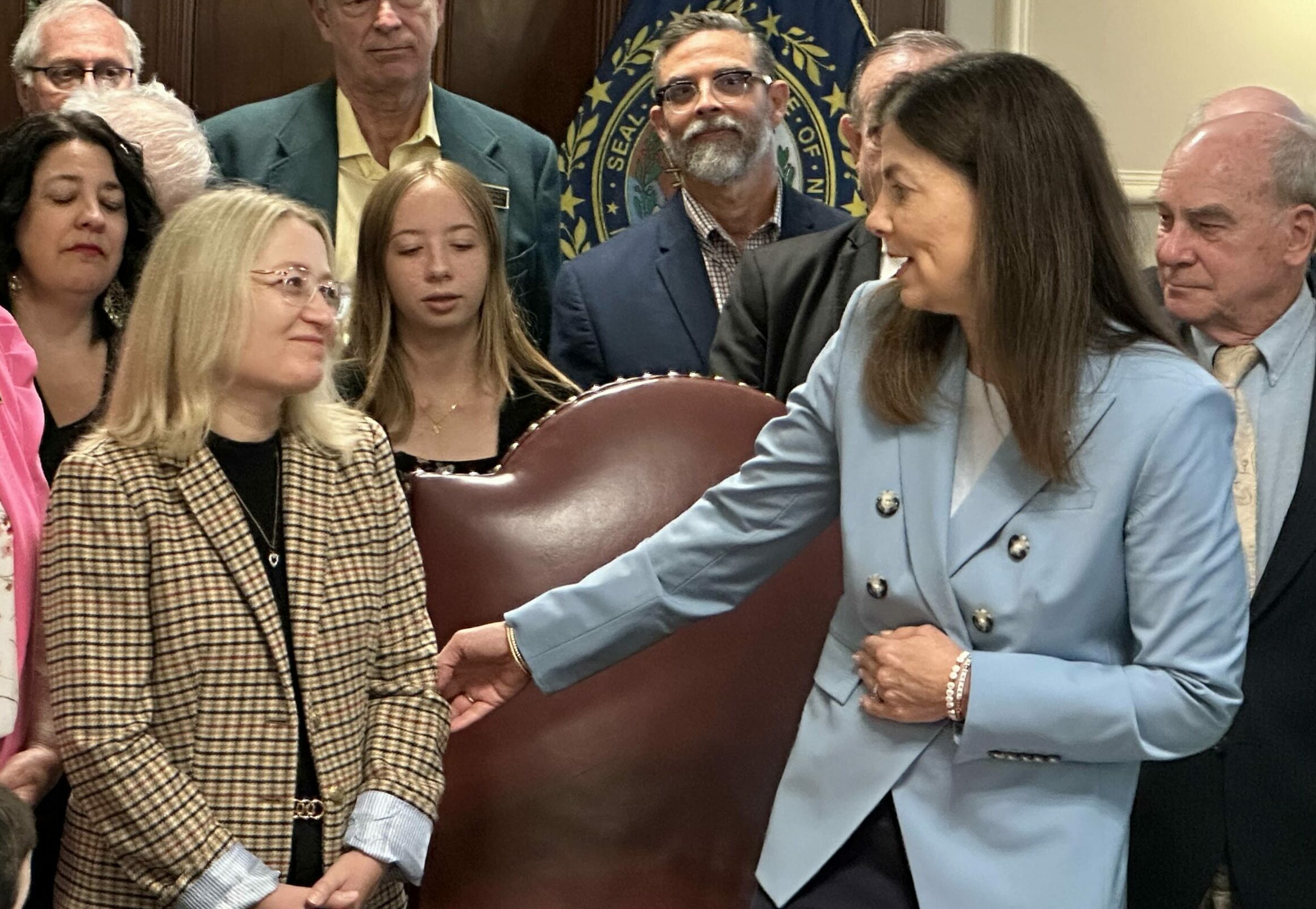
Gov. Kelly Ayotte speaks to Marika Yakubovich after signing Right To Try legislation named after her husband, Rep. Michael Yakubovich (R-Hooksett).
Lewicke, who is battling prostate cancer and has been forced to receive non-traditional treatment out of state, expressed gratitude.
“I’d just like to thank the legislature, the governor, and all of those who have been working on this,” Lewicke told the crowd. “We passed HB 1300 in the previous session, and this is an extension of that. It’s going to allow people to get the treatment they need. Unfortunately, I’m one of them.”
Sarah Scott of Americans for Prosperity–New Hampshire, a strong supporter of the measure, called the law a breakthrough.
“In the past, suffering patients have spent their last months flying around the country just to be told they don’t qualify for treatment. Now they’ll be able to do that first interview remotely,” Scott said. She also pointed to liability protections as a major step toward encouraging innovation.
Another New Hampshire advantage, she said, is geography.
“Boston is already a biotech hub, and with this law, New Hampshire can leap ahead of other states like Montana that recently passed similar legislation,” Scott said.
State Sen. Tim McGough (R-Merrimack), CEO of a medical device company, was on hand for the signing. Asked if the life sciences industry is watching what New Hampshire is doing, McGough said, “Absolutely.”
“Venture capital, private equity—they look at this type of legislation when they consider investing in New Hampshire, particularly in innovative or so-called ‘risky’ businesses,” McGough said.
“Investors or strategic partners like Thermo Fisher Scientific and United Therapeutics, two subsidiaries that are right here in Manchester—when they look at making investments and the risk of gathering data on a terminally ill patient, they look for this type of indemnity, or this ability to gather data. That’s why this type of legislation is so important.”
Yakubovich, who has Stage 4 cholangiocarcinoma, was out of state receiving treatment and was unable to attend the signing, but he provided a statement.
“HB 701 means patients like me don’t have to sit back and wait for certain death. This law gives families hope, removes unnecessary barriers, and makes New Hampshire a place where innovation can reach patients when they need it most. The law will not guarantee miracles, but it will make them possible. I’m grateful to see this day.”
Rep. Lisa Mazur (R-Goffstown), one of the bill’s sponsors, said the law “ensures that barriers to access are lowered and that families know nothing is being left on the table.” Rep. Steve Kesselring (R-Manchester) added that HB 701 makes New Hampshire “a destination for cutting-edge research, investment, and jobs.”
Cornerstone, a nonpartisan, nonprofit Christian advocacy organization, also praised the law, thanking Ayotte for “placing our state first in the nation for making available emerging treatments that will provide critical hope and help for the dying.”
While Scott works on many policy issues for AFP, she said this Right to Try cause was more personal for her.
“I’ve seen the struggles that Michael [Yakubovich] and another friend have gone through just to get treatment. I’ve seen the strain it puts on their families,” Scott said.
“Another component that’s personal to me is that a lot of the potential treatments are for rare genetic diseases. When you look at rare disease in general, about 80 percent are genetic in nature. I think five percent have an FDA-approved treatment, and a lot of those diseases primarily affect children. I’ve seen so many stories of families traveling across the country, bringing their whole family along, trying to find treatment for their kids.”
Some in the medical field fear that bypassing traditional safeguards could expose patients to risky treatments and complicate long-term research. But Ayotte told NHJournal she didn’t hesitate to sign the bill.
“Without this bill, patients are left waiting on an FDA process that can take years while they die,” she said.
“This law gives them a chance—and it encourages innovation, especially in rare disease areas where there’s little commercial incentive to pursue full FDA approval.”