

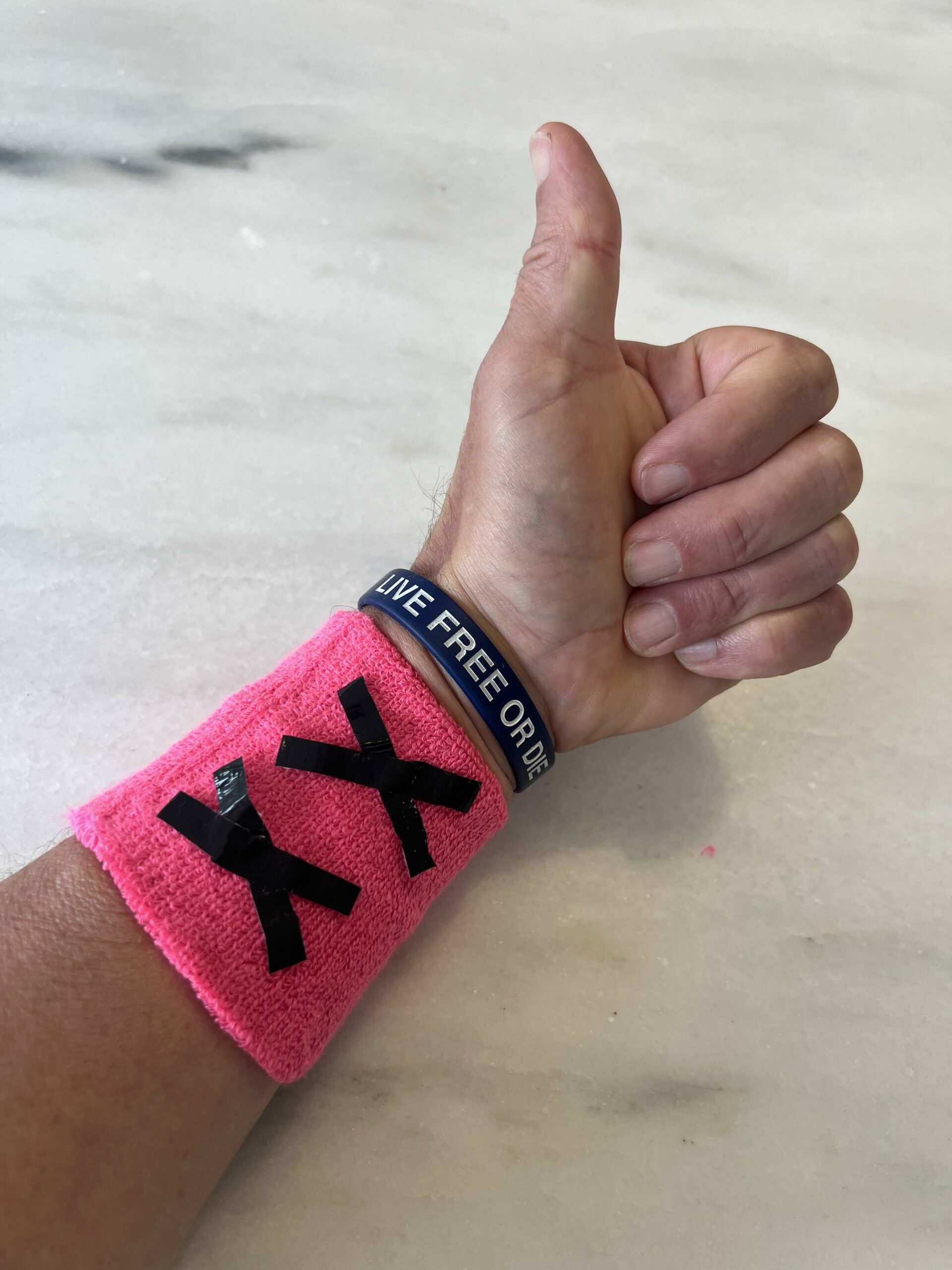
The parents punished by SAU 67 administrators for wearing pink “XX” wristbands to a Bow High School girls’ soccer game have an appeal hearing scheduled before the First Circuit Court of Appeals in Boston.
Anthony Foote, Kyle Fellers, Nicole Foote, and Eldon Rash are appealing U.S. District Court Judge Stephen McAuliffe’s ruling in favor of the district. McAuliffe ruled that SAU 67 has the legal authority to restrict its protest to protect a biological male playing on a girls’ soccer team.
“Because gender identities are characteristics of personal identity that are ‘unalterable or otherwise deeply rooted,’ the demeaning of which ‘strikes a person at the core of his being,’ and because Bow school authorities reasonably interpreted the symbols used by plaintiffs, in context, as conveying a demeaning and harassing message, they properly interceded to protect students from injuries likely to be suffered,” McAuliffe wrote in his April ruling.
Del Kolde, a lawyer with the Institute for Free Speech representing the parents, argues McAuliffe’s ruling gives the district permission to engage in unconstitutional viewpoint discrimination.
“Bow school officials violate this rule by banning adult spectators from silently protesting against biological males competing in girls’ sports by wearing XX wristbands on the sidelines or displaying signs in a parking lot, while allowing other spectators to display Pride flags or ‘inclusionary’ sociopolitical messages at those same events and in the same places. In a limited public forum like a school sporting event, such restrictions amount to textbook viewpoint discrimination,” Kolde wrote.
The appeal is scheduled for a Nov. 5 hearing in Boston.
Fellers, the Footes, and Rash were disciplined by school officials during a game last September when Bow played Plymouth High School, which featured male student Parker Tirrell, who identifies as female.
Bryan Cullen, SAU 67’s attorney, said the district has the authority to curtail the parents’ right to silently protest because a transgender athlete was on the field.
“While plaintiffs cast their conduct at the Sept. 17 [2024] game as ‘silent protest,’ the district reasonably viewed it as intimidation aimed at [transgender student] 15-year-old Parker Tirrell,” Cullen wrote in his brief filed Friday.
The parents were ordered to remove the wristbands or leave the field. Anthony Foote and Fellers were later served with no-trespass letters banning them from all future after-school activities.
McAuliffe overturned the ban on Fellers and Foote attending games or other activities, but sided with the district by allowing school officials to ban any protest that could be deemed as targeting transgender players.
Tirrell, the central figure in both Cullen’s argument and McAuliffe’s ruling, made headlines last year with a high-profile lawsuit against the state of New Hampshire. Tirrell successfully challenged the 2024 law preventing biological boys from playing on girls’ teams. With help from GLAAD and the ACLU of New Hampshire, Tirrell and fellow transgender student Iris Turmelle won the right to try out for and play on their respective girls’ teams.
Bow officials anticipated a disruption at the game after Foote and Fellers made their concerns known about biological boys competing against their daughters. Cullen argued that Bow had a duty to protect Tirrell from potential harassment, including protests involving the pink wristbands.
Even if Tirrell was not on the field, Cullen argued that protests such as wearing XX wristbands need to be banned at essentially every game because a transgender student could be participating without school officials’ knowledge.
“As the district explained at the preliminary injunction hearing, it is not always known to school officials who may identify as transgender or whether transgender students will or will not be attending a given event. The district needs the leeway to restrict plaintiffs’ message from all school events because school officials are unable to know which students will be attending which events,” Cullen wrote. “Plaintiffs have no constitutional right to ‘silently protest’ school-sponsored events, whether it is the girls’ varsity soccer games or other events throughout the academic year.”